

5 Prog Rock Bands Who Went Mainstream With A Pop Hit
The classic albums that define progressive rock are united by their instrumental virtuosity and epic, multi-part song structures, not catchy hooks and eye-candy frontmen. Over the years, the genre that has long been the province of music students and sci-fi/fantasy nerds has gone through one rise and fall in popularity after another. And each time, little thought was given to the mainstream sensibilities that get artists to the top of the charts. Yet no matter how many times prog is left for dead and then brought back to life, it always manages to score some hits along the way. Most of those don't leave the genre behind altogether, though: Songs like Tool's "Schism" or Rush's "Tom Sawyer" are still full of shifting time signatures and unorthodox arrangements.
With that in mind, we wanted to look at the times prog-rockers managed to cross over into mainstream success with bona fide pop hits. Whether it's a Scottish poet waxing nostalgic about the one that got away or '80s headbangers soothing our fear of the dark, here are five prog artists who went pop and scored a big hit.
Marillion — Kayleigh
By the early 1980's, "progressive rock" was so unfashionable that it bordered on the profane. Punk and new wave had become the new kings of cool, and with the exception of legacy acts like Pink Floyd, labyrinthine epics played out on massive arena stages with big-budget theatrics were passé in the extreme. What's a newly formed prog act to do?
Enter Marillion, the progenitors of "neo prog." The new, listener-friendly genre of progressive rock showcased masterful musicianship and odd time signatures as set pieces for songs that focused on singable melodies and poetic, introspective lyrics. The group had enjoyed mounting underground success with 1983's "Script for a Jester's Tear" and 1984's "Fugazi," but it was 1985's "Misplaced Childhood" that produced "Kayleigh," the group's most enduring hit.
"Do you remember chalk hearts melting on a playground wall? / Do you remember dawn escapes from moon washed college halls?" ponders vocalist Fish in the gentle, sentimental ballad that summarizes the album's themes of adult reflection on innocence and young love. It's a heartwarming piece that sounds far closer to Sting and the Police than Yes or Pink Floyd — until guitarist Steve Rothery erupts with a majestic solo reminiscent of David Gilmour. The album and song both became huge hits for the band, with the latter peaking at No. 2 on the U.K. singles chart.
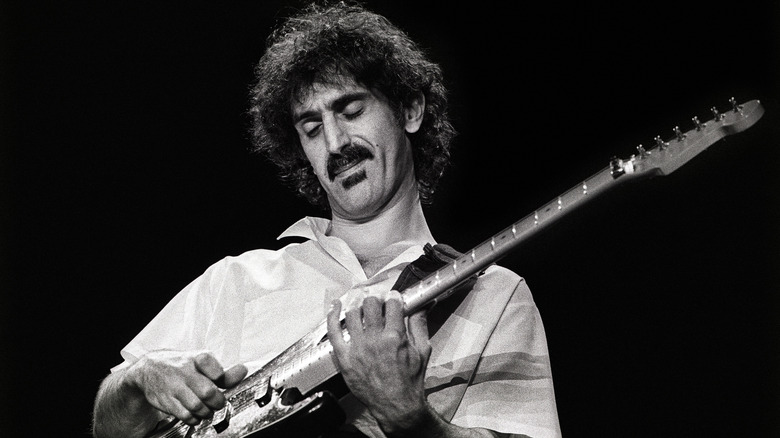
Frank Zappa — Valley Girl
By the 1980s, new wave had arrived in a big way, and Frank Zappa wanted a slice of the pie. Since the 1960s, Zappa and his band, the Mothers of Invention, had garnered a massive (and lucrative) cult following. Tracks like "Peaches En Regalia" and "Let's Make the Water Turn Black" felt less like rock songs than madcap classical compositions played on electric instruments. That maniacal intricacy had earned Zappa and his collaborators the undying respect of musicians and progressive rock aficionados, but access to the hit-singles-driven world of MTV remained elusive.
Enter "Valley Girl," the second track off 1982's "Ship Arriving Too Late to Save a Drowning Witch." A witheringly sarcastic ode to teen girl superficiality, the song is held together by spoken word sections from Zappa's then 14-year-old daughter, Moon Unit. Having spent her life surrounded by the culture of Encino, California, Moon Unit delivers a, like, totally, on-point skewering of the world of popularity chasing and endless clothes shopping.
The song became a massive hit, even getting Zappa a Grammy nomination. For Moon Unit, it was simply an opportunity to spend an evening with her workaholic father in his natural habitat: the recording studio.
Yes — Owner of a Lonely Heart
Yes' second guitarist, Steve Howe, was a disciple of the intricate playing of jazz master Tal Farlow. But it was his replacement, Trevor Rabin, who gave the band one of the most air-guitar-worthy riffs in rock history on 1983's "Owner of a Lonely Heart." It's a deeply satisfying distorted power chord run that ranks alongside Deep Purple's "Smoke on the Water" and Black Sabbath's "Iron Man" for its arresting hard rock presence.
The dramatic refining of Yes' sprawling, orchestral sound doesn't stop there: The rest of the band joins in with a backing bed that feels more at home among the Talking Heads and the B-52s than the maze-like sonic worlds found in vintage Yes albums like "Tales From Topographic Oceans." Lead singer Jon Anderson's wispy voice — normally reserved for guiding listeners through fantasy realms of forest nymphs and celestial visitations — sits nicely in the more adult contemporary confines of the track.
The official music video interrupts the track periodically for unexplained sections of cinematic surrealism. But the song itself became a massive mainstream hit for a band whose traditional sound was deeply unfashionable in the early 1980s. The track spent two weeks at No. 1 on the Billboard Hot 100, the group's highest — and only Top 10 — appearance on the chart.
Queensrÿche — Silent Lucidity
Nobody could accuse Queensrÿche of being in the right place at the right time. Throughout the 1980s, when hair metal and its lascivious tales of rock star decadence reigned supreme, Queensrÿche were churning out socially conscious science fiction metal that ultimately found mainstream success when "Eyes of a Stranger" became the unlikely hit off of 1988's "Operation: Mindcrime." That album's breakthrough success gave the band an opportunity to reevaluate their trajectory and consider how their signature take on progressive metal could be adapted to mainstream audiences.
Enter 1990's "Empire," the band's most commercially successful album to date, owing in no small part to the soft rock ballad "Silent Lucidity." A gentle acoustic ballad with orchestral backing, the song is a gentle reassurance to a child that has just awoken from a nightmare. It's a track that fits more comfortably alongside the likes of Seal and Michael Bolton than Iron Maiden and Fates Warning.
The song reached No. 9 on the Billboard Hot 100 and was nominated for a Grammy for best rock performance by a duo or group with vocals. "Empire" peaked at No. 7 on the Billboard 200, and its successor, "Promised Land," fared even better, reaching No. 3 on the same chart. Though the group soared high for most of the decade, a lukewarm response to 1997's "Hear in the Now Frontier" — along with the departure of lead guitarist and core songwriter Chris DeGarmo — left the group a shadow of their former selves in the new millennium. Shifting musical tastes notwithstanding, "Silent Lucidity" remains a mainstream favorite.
Savatage/Trans-Siberian Orchestra — Christmas Eve/Sarajevo 12/24
By 1991, Savatage had become the kings of progressive metal theater. Beginning as a versatile thrash band in the '80s, they eventually began exploring large-scale narratives that had all the structure, pomp, and circumstance of Broadway musicals. Principal songwriter Jon Oliva's newfound love of Andrew Lloyd Webber led the band in a more theatrical direction with 1990's "Gutter Ballet." That was soon followed by 1991's "Streets: A Rock Opera," which told the story of an inner-city lowlife turned rockstar.
Enter 1995's "Dead Winter Dead," a concept album telling the story of a young Muslim girl and a soldier from the Serbian Militia. The album was full of all the heavy metal grandiosity for which Savatage was known, but it yielded an unexpected focus track, the instrumental "Christmas Eve/Sarajevo 12/24." A haunting instrumental based on "Carol of the Bells" and "God Rest Ye, Merry Gentlemen," the piece soon became a favorite on adult contemporary radio.
There was just one problem: Nothing else on "Dead Winter Dead" sounded like "Christmas Eve/Sarajevo" — the album otherwise came off like Metallica covering "Les Misérables." Knowing that middle-American Christmas celebrants wouldn't be interested in a pitch-black concept album about Bosnian political upheavals, the creative core of Savatage — Oliva and producer Paul O'Neil — quickly rebranded as Trans-Siberian Orchestra. In no time flat, the now world-renowned Christmas-themed rock-band-plus-orchestra outfit was dominating the Christmas season like a hard-rock Mannheim Steamroller.