

Quote Of The Day By Joan Baez: 'I Have Hope In People ...'
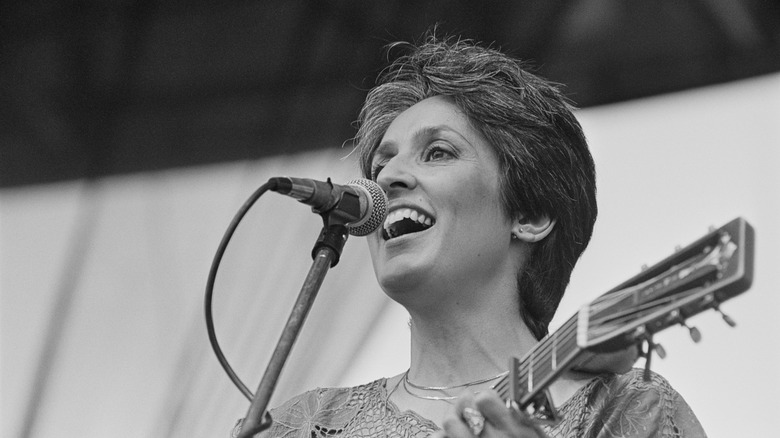
Born in 1941, Joan Baez was lauded as a philosophical visionary and titan of the folk scene and protest culture of the 1960s. The singer-songwriter is known for her fierce stance adjacent to optimism and a belief in humanity. Participating in public protests for decades in addition to expressing opposition to war and support for social causes in song, Baez characterizes her attitude as "realism."
Baez's hard-hitting, truth-to-power-speaking works weren't the kind of things that typically topped the pop chart, but she managed a few hits in the 1960s and 1970s with material she both wrote herself and interpreted. She helped popularize the Civil Rights Movement anthem "We Shall Overcome" and covered works by her friend and collaborator Bob Dylan (who Baez said threw temper tantrums before shows). She had a No. 3 hit on the Billboard Hot 100 in 1971 with her cover of the Band's essential folk rock song "The Night They Drove Old Dixie Down" and reached the Top 40 for the last time in 1975 with her own composition "Diamonds and Rust," a song that captured the poetic soul of folk rock.
Through it all, Baez has never stopped calling attention to injustice. She believes (and hopes) that other powerful voices are out there, and they'll emerge when needed. And that's why Joan Baez is today's quote of the day.
Quote of the Day by Joan Baez
"I have hope in people, in individuals. Because you don't know what's going to rise from the ruins."
In a 2006 interview with The Guardian, Joan Baez was asked how she can keep on protesting and calling out despicable institutional behavior if it sometimes feels like it's not doing any good. In response, the singer essentially admitted defeat. "It's not even lack of progress, it's a downward slide toward the apocalypse," she said.
But then Baez offered up a caveat in the form of those hopeful words: She's confident that she's not alone in her stance — those who will call out abominable behavior could be lurking anywhere in society. And before long, they will speak out.
Deeper Meaning of Joan Baez's Quote: Truth-Tellers Can Come From Anywhere
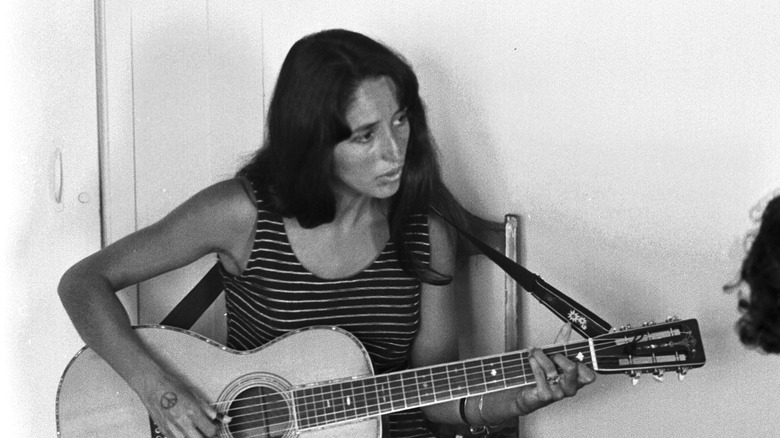
While Joan Baez prefers to be labeled a "realist," she exhibits the behavior and attitude of an optimist. It's an adjective not often applied to the folk music movement that sent the singer-songwriter to fame and stature. That genre was largely associated with pointing out the problems of the world and what needed to change, rarely offering solid solutions to such ills. Baez was different. Into the 2000s, she's kept alive hope as well as the notion that humanity could, would, and — most importantly — will change.
In the context of Baez's grumbling about a fractured (but not broken) society, "the ruins" refers to the world in general. Everything has seemingly crumbled and keeps getting worse, Baez suggests, but from out of that chaos, goodness and power will emerge. The world on the whole simply needs to look out for the artists and truth-tellers — no matter their unlikely or surprising point of origin. By paying attention and taking heed of their words when they do speak out, we can help change hearts and minds.
More Quotes From Joan Baez
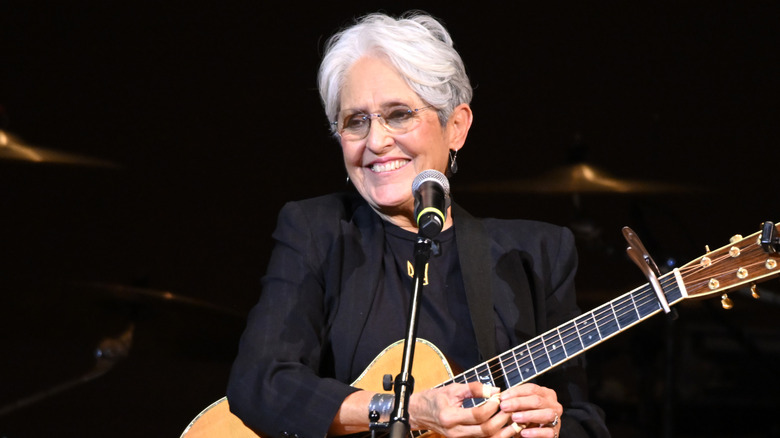
"Action is the antidote to despair."
"If it's natural to kill, why do men have to go into training to learn how?"
"To love means you also trust."
"Someone had to change the world. And obviously, I was the one for the job."
"I've never had a humble opinion. If you've got an opinion, why be humble about it?"
"You don't get to choose how you're going to die. Or when. You can only decide how you're going to live. Now."
"If people have to put labels on me, I'd prefer the first label to be human being, the second label to be pacifist, and the third to be folk singer."