

The Top 10 Hits That Took Over Summer 1975
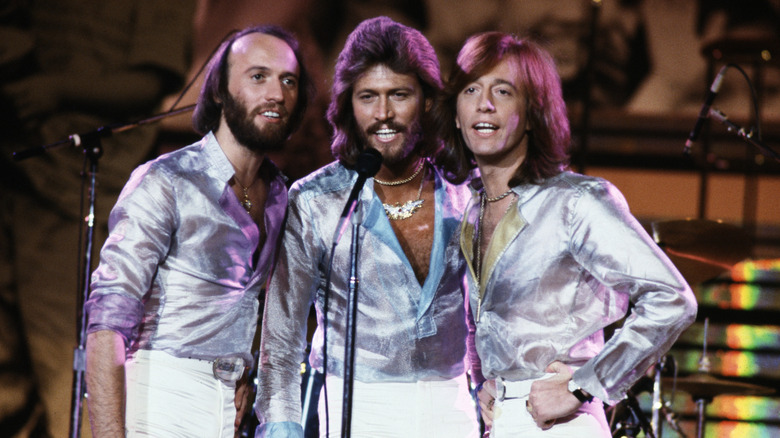
In the summer of 1975, "Jaws" was scaring moviegoers, Arthur Ashe won at Wimbledon, and disco was making inroads into the music scene. But you may be surprised to learn that summer there was a distinctive country-rock vibe flowing from the airwaves with hits from the Eagles, America, and Freddy Fender, among others. Pop ruled as well with the Captain and Tennille's long-running No. 1 Billboard hit "Love Will Keep Us Together" that was finally knocked from its perch by a former Beatle when Paul McCartney and his new band Wings peaked at No. 1 with "Listen to What the Man Said."
Still, disco was beginning to make itself felt. "The Hustle" by Van McCoy & the Soul City Symphony beat out Wings only a week later. It was a sign of things to come. The Bee Gees soon took over the summer with the smooth and funky "Jive Talkin'." And there was a whole lot more that summer, including a John Denver classic that had music fans of all stripes bopping to the beat.
The Captain and Tennille — Love Will Keep Us Together
In the summer of 1975, it was hard to miss the Captain and Tennille's version of the Neil Sedaka song "Love Will Keep Us Together." With Daryl Dragon's ever-present sunglasses and captain's hat and Toni Tennille's pageboy haircut and bright smile, the couple was seemingly omnipresent. Their iconic love song held the No.1 spot the longest on the Billboard Hot 100 at four weeks, and spent 23 weeks on the chart in total. This upbeat, piano-driven title track from their debut album just wouldn't quit and became Billboard's No. 1 song of the year.
John Denver — Thank God I'm a Country Boy
John Denver was one of the biggest stars of the 1970s. In the summer of 1975, he proved this with "Thank God I'm a Country Boy," which topped both the pop and country charts. With its bluegrass-inflected country-pop sound, there was a lot of toe-tapping and hand-clapping going on that June when it hit No. 1 on the Hot 100 and went into heavy radio rotation. This version from his live album "An Evening With John Denver" was nominated for a Grammy and helped Denver achieve the Country Music Association's Entertainer of the Year. It's a nearly-perfect John Denver song that time shouldn't forget.
The Eagles — One of These Nights
The Eagles dominated the '70s with ease with a string of hits that included "One of These Nights" from their fourth album of the same name. The song hit No. 1 on the Hot 100 in early August 1975 and spent 17 weeks total on the chart. The song expanded the band's sound with a smoother R&B-inflected feel. Like John Denver's hit that summer, this soft-rock tune helped prove that disco wasn't yet ascendent. But the Bee Gees were about to knock the Eagles off their roost.
The Bee Gees — Jive Talkin'
Long before disco reached its peak in 1979, the Bee Gees were helping to popularize this new sound that was all about getting folks on the dance floor with a sound that added R&B and soul into the combustible mix on the band's album "Main Course." "Jive Talkin'" hit No. 1 on the Billboard Hot 100 on August 9, 1975, where it stayed for two weeks. The song's signature rhythm was famously inspired by the sound their car made going over Miami's Biscayne Bay Bridge. Whatever the inspiration, the new sound helped propel the Bee Gees back to the top.
Freddy Fender — Before the Next Teardrop Falls
Freddy Fender, born Baldemar Huerta, was a trailblazing musician who combined country, rock 'n' roll, Tejano, and rockabilly. He had a No. 1 Billboard Hot hit at the beginning of the summer of '75 with a tune he sang in both English and Spanish, "Before the Next Teardrop Falls." Fender's crossover tune from the album of the same name had already hit No. 1 on the country chart that March when it spent two weeks at the top of the Hot 100 into early June. The tune earned Fender the CMA Single of the Year, edging out John Denver's "Thank God I'm a Country Boy."
Van McCoy & the Soul City Symphony — The Hustle
"The Hustle" by Van McCoy & the Soul City Symphony has become a beloved classic that epitomizes 1970s disco. McCoy had already had a long career in the music business as a singer, producer, and writer who'd penned tunes for Aretha Franklin and Irma Thomas, among others, before he and his group of talented musicians took the airwaves by storm in July 1975 with this signature song. The incredibly infectious tune went to No. 1 on the Hot 100. It set the bar for the genre and proved that disco was becoming an unstoppable force.
K.C. & The Sunshine Band — Get Down Tonight
Besides Van McCoy & the Soul City Symphony's "The Hustle," Miami's K.C. & The Sunshine Band helped get folks to shake it out on the dance floor in the summer of '75. Led by Harry Wayne Casey and Richard Finch, the band's "Get Down Tonight" hit the No. 1 spot on the Hot 100 in late August. The song, off of their self-titled album, featured punchy brass, a unique synth-like guitar sound, and funky vocals. The album provided them with another No. 1 hit, "That's the Way (I Like It), later that year, kicking off a series of huge hits into the late '70s.
Paul McCartney & Wings — Listen to What the Man Said
With its signature breezy soprano sax part and joyful sound, "Listen to What the Man Said" seemed destined to be a hit in the summer of 1975 for Paul McCartney & Wings. It began marching up the Billboard Hot 100, and by July, the song claimed the No. 1 spot. "Listen to What the Man Said," off of the band's album "Venus and Mars," became their third No. 1, helping to solidify the band's reputation. This classic tune is about the power of love, and that summer it resonated with his fans and helped push "Venus and Mars" to the top as well.
America — Sister Golden Hair
By 1975, America, made up of three Americans who met in London, England (Dewey Bunnell, Gerry Beckley, and Dan Peek), had already found massive success with their 1972 song "A Horse With No Name." "Sister Golden Hair," off their album "Hearts," began its climb to the top and reached No. 1 in June 1975. The tune, produced by George Martin of Beatles' fame, had the perfect sound for the era. It combined soft rock, folk, and country and featured close harmonies that defined the California sound with lyrics that intertwine love and darker themes like depression.
Hamilton, Joe Frank & Reynolds — Fallin' In Love
While the bulk of the artists who dominated the summer of '75, including Paul McCartney, the Eagles, and the Bee Gees, are still beloved today by fans, the last group on our list isn't as well known. With its easy-to-stumble-over name, Hamilton, Joe Frank & Reynolds, and an oh-so-'70s soft rock sound, this California trio didn't have the same kind of staying power as other hitmakers of the time. Still, that summer they reached the pinnacle of the Billboard Hot 100 with "Fallin' In Love." The song from the album of the same name on Playboy's record label (yes, that Playboy) knocked "Jive Talkin'" off the top in August. It became another song that dominated that summer so long ago.