

5 Popular Love Songs From The '70s That Have Nothing To Do With Love
It's easy to be fooled by songs that seem to be about love but actually have nothing to do with the subject. Musicians in the '70s had a particular talent for this act of deception, disguising songs about other topics as timeless tunes we've all since mistaken for straight-up love songs. It made us happy, and it made them money, so everybody won, even if there was trickery afoot.
Songwriters are often inspired by strong feelings that translate into a love song more easily than another format, which helps them resonate with listeners — the whole point of songwriting. You've likely sung one of Dolly Parton's signature songs to your special someone, even though it was about her breaking away from a very successful stint on a TV show. Or perhaps you've added a certain romantic Joe Cocker ode to a mixtape for your sweet boo, even though it's about songwriter Billy Preston's mother? If this sounds familiar, well, congratulations; you've been fooled by popular '70s love songs that aren't about love at all.
You Are So Beautiful – Joe Cocker
"You Are So Beautiful" is no doubt a standard at wedding receptions and anniversary parties, dedicated to a true love who overwhelms their partner with their beauty. But this stand-in for a romantic love song isn't about that kind of love at all. It's actually a sweet celebration of songwriter Billy Preston's mother, which is about as anti-romantic as you can get. Preston co-wrote the tune with Bruce Fisher and recorded it for his 1974 album, "The Kids & Me," performing it solo with just a piano as a backing track. Even today, the overly simple lyrics and heartbreaking melody make it sound like a mash poem to a paramour, even if that wasn't Preston's intention.
It was Joe Cocker's version that became famous, a signature song that can bring a roomful of listeners to tears no matter the occasion. He enlisted songwriter and composer Jimmy Webb to help with the arrangement, which slows the tempo and adds the distinctive piano-based character. Paired with Cocker's gritty, impassioned vocals, it gives the music a thread of romantic longing, despite the song's original significance.
No matter how this tune is used, it's one of Cocker's best-known works, a No. 5 Billboard hit that helped bolster his career. The passion he infused it with helps make it a musical greeting card for anyone with deep feelings to share for the beautiful ones in their lives.
Silver Springs – Fleetwood Mac
"Silver Springs" may sound like a love song if you're not paying close attention, but it's really a musical hex from the fairy queen of rock herself. Stevie Nicks gave ex Lindsey Buckingham a silken, poetic piece of her mind, disguising a tune that reminded him of how good he could have had it.
"You could be my silver spring," Nicks begins her ode to betrayal — with emphasis on the word "could" — before calling him on his business: "And don't say that she's pretty / And did you say that she loved you? / Baby, I don't wanna know." Clearly, Buckingham will not be Nick's spring, silver or otherwise. By the time she hits the chorus with "Time cast a spell on you / But you won't forget me," everyone knows Nicks isn't wishing him well; she's wishing him hell.
The tune was created as Nicks' counterpoint to Buckingham's scathing "Go Your Own Way," a song that sprang from the now-famous feud that fed Fleetwood Mac's historic 1977 LP, "Rumours." Since there was no room on the album for "Silver Springs," Nick's side of the "he-said-she-said" story became a B-side to the single "Go Your Own Way," giving fans both sides of the story at once. Only when released as part of 1997's live Fleetwood Mac album "The Dance" did this not-a-love-song get its day in the sun.
I Will Always Love You – Dolly Parton
The title may dupe listeners into thinking Dolly Parton was serenading an ex about her everlasting love, but the real meaning behind "I Will Always Love You" is more nuanced. The tune was actually a musical appreciation note to Porter Wagoner, whose show Dolly had been a part of; she wrote it to thank him and let him know how much he meant to her as a friend, mentor, and supporter. So yes, there's love in this country No. 1 from 1974, but as many times as it's likely to have been dedicated to a paramour or an ex, it's actually about an all-encompassing admiration rather than romantic love, even if Wagoner didn't exactly take kindly to Parton's departure.
That didn't keep Parton from racking up the bucks when Whitney Houston's cover from the 1992 film "The Bodyguard" (which Houston also starred in) gave it a heartbreaking, romantic shimmer. That version became a historic hit, becoming a No. 1 single on the Billboard Hot 100 for a staggering 14 weeks and cementing Houston's place as one of pop music's greatest successes. It also reminded the world what a talented songwriter Parton was; no matter how she writes about love, whether it's platonic or romantic, she always manages to hit us directly in the feels.
Love is the Drug – Roxy Music
Roxy Music took a bit of a sleazy direction with their jaunty, punkish tune "Love is the Drug" and made it sound like the intoxicating power of the deepest bond in the land. That's not really where the song is aiming, however; this danceable pre-new Romantic classic is about looking for quick action on the club scene, comparing the hunt for carnal companionship to a search for illicit substances. Whether listeners knew what they were singing along to or mistook it for an honest-to-goodness love song, they helped carry the single all the way to No. 30 in 1976, making it the band's highest-charting U.S. single.
Listen in on the creepy subtext, which is essentially resting on the surface of the lyrics, and you'll discover a bleak take on the sexual liberation of the '70s. The line "Love is the drug / And I need to score" sums it up pretty directly. It's not actual love the narrator is looking for; it's a feeling of elation that comes from a brief partnership. If that was still in question, the rhyme in the final verse, "I say 'go', she say 'yes' / Dim the lights, you can guess the rest," puts the issue to bed — literally.
Mary Jane – Rick James
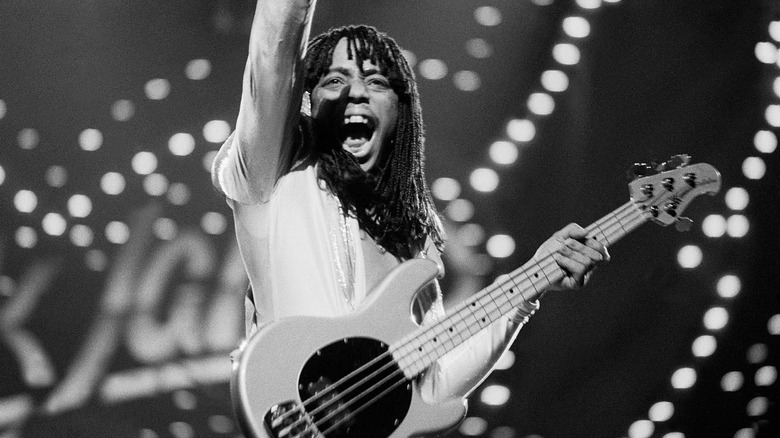
Rick James dropped a pseudo-love song in 1978 called "Mary Jane," a questioning mid-tempo jam in which he professes his adoration to the titular figure. But the name Mary Jane doesn't reference a woman; it's a not-so-sly nod to marijuana. "I'm in love with Mary Jane," James croons, "She's my main thing / She makes me feel all right / She makes my heart sing." His funky ode to his favorite herb certainly sounds like a love song, with a chorus in which he asks, "Do you love me, Mary Jane?" He even named his raunchy-for-the-times girl band protégés the Mary Jane Girls to commemorate his passion for weed.
If you were none the wiser, you'd swear it was a musical valentine to a real woman — and many listeners may have believed it so much, they likely serenaded their own Mary Janes with the tune through the years.