

5 Doobie Brothers Songs That Prove 1976 Was The Best Year Of Their Career
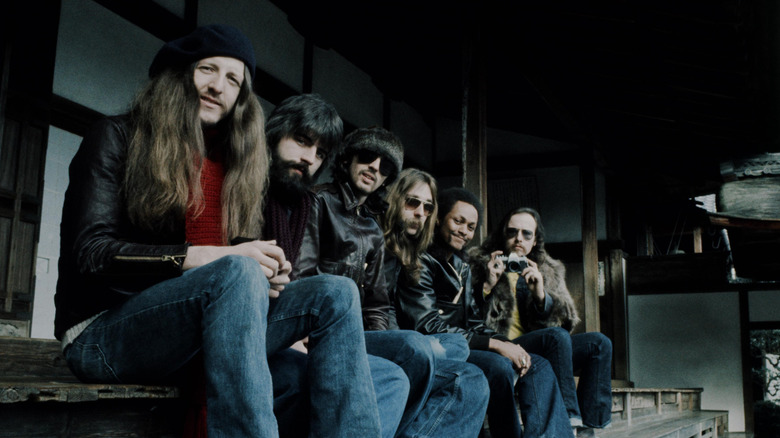
With studio releases stretching from their 1971 self-titled debut to 2025's "Walk This Road," the Doobie Brothers have blazed their own trail. And while they've seen multiple peaks in this span, 1976 was undoubtedly when they hit their zenith. Songs off their album "Takin' It to the Streets" showcase a band evolving while still anchored to their roots. That year, the boogie rock that made their name gave way to the R&B-inflected soft rock template that came to define their voyage.
The Doobie Brothers rank among bands whose legacies changed when a new member joined. Founding guitarist and vocalist Tom Johnston was behind early boogie and southern rock hits like "Listen to the Music" or "Long Train Runnin'," and their 1975 chart-topper "Black Water" was written and sung by Patrick Simmons, the band's only constant member. But with baritone crooner and keyboardist Michael McDonald taking the helm, they became the classic rock behemoth we still groove to today.
McDonald's delivery and funky sensibility on songs like "It Keeps You Runnin'" are foundational to "yacht rock:" that sub-genre of smooth, soulful '70s and '80s soft rock in the vein of Toto and Christopher Cross. At the same time, on songs like "Wheels of Fortune" — one of the last with Johnston on vocals until their late '80s reunion — the band tapped into their down-home roots. The songs the Doobie Brothers put out prove that 1976 was the best year of their career. As the torch was passed, and the curtains rose on the band's mighty second act with McDonald, it was a high point. We're still coming down.
Takin' It to the Streets
While "What a Fool Believes" off of 1978's "Minute By Minute" is the Doobie Brothers' biggest single, it ran because the title track of "Takin' It to the Streets" walked. Or maybe "strutted" is the better word. A driving, jazz funk anthem, this song exemplifies the band's mid-'70s shift from rootsier rock to a polished, more R&B-inflected sound. Climbing to No. 13 on the Billboard Hot 100 and helping the album top the Hot 200, it showed the world what the group could be with Michael McDonald in front.
Originally filling in on vocals and keyboards when a stomach ailment forced Tom Johnston to back out of a tour in 1975, he thought the gig was temporary. But as the original frontman's involvement diminished and eventually stopped, McDonald became not just a full-time Doobie but also a centerpiece. "It wasn't tough for me because they were so welcoming," McDonald told The Hollywood Reporter. "They seemed so willing to hear anything that I might have." With him, they strutted into their golden era.
Producer Ted Templeman was skeptical at first, but after a few bars of "Takin' It to the Streets," he was sold. "His eyes just got wider and wider, [turning] into big saucers," Patrick Simmons told Ultimate Classic Rock. The song became a proof of concept: A supernova brimming with possibilities as the band inaugurated their new sound. The McDonald makeover that defined the Doobie Brothers' late '70s commercial peak had set sail. Maybe that's why "Takin' It to the Streets" sounds even cooler today than it did in 1976.
Wheels of Fortune
Even though "Wheels of Fortune" features lead vocals by founding Doobie Brothers Tom Johnston and Patrick Simmons, the first track of "Takin' It to the Streets" isn't a throwback. While it shares some sonic DNA with earlier hits like "Jesus Is Just Alright with Me," the imprint of the group's newer members is unmistakable. Jeff "Skunk" Baxter, Michael McDonald's Steely Dan bandmate who joined in 1975, co-wrote "Wheels of Fortune," and his frenetic guitar work perfectly counterbalances the harmonized vocals. The bedrock of it all, of course, is the rhythm section — bassist Tiran Porter and drummer John Hartman (another co-writer) — who push the song into jazz territory.
With world-wary lyrics about life's ups and downs, "Wheels of Fortune" is about soldiering on. "I'm so tired of losin' / But I still play the game," sings our jaded, road weary narrator, "And I know there's no reason / Still I go on searchin' just the same." In that sense, it's ingenious as an opener for an album by a band surviving, evolving, and charting a new course. "Let fate decide if this new thing is going to work out," they seemed to be saying. The expansive group vocals, pop harmonies, and guitar riffage that brought them prominence are there, but the boogie rock gives way to prog rock breakdowns. Newer grooves guide the effort. The Doobie Brothers may not have known what direction their wheels were spinning, but they soon found out.
It Keeps You Runnin'
Undoubtedly, part of the recipe that's made the Doobie Brothers so enduring is that they were never afraid of adopting new techniques and sounds. A Michael McDonald composition featuring his lead vocals, "It Keeps You Runnin'" opens with an arcade-like synth and drum machine groove, which becomes the bedrock for a transcendent, gorgeous jam. Driven by keys rather than guitars, the song encapsulates the funky shift in the group's sound. With the Doobie Brothers' many mid-'70s lineup changes, change was inevitable, and it had arrived.
However, letting your music evolve and grow is risky — you might alienate the very fans that got you to where you are. That never concerned Patrick Simmons. "Some people like the guitar band, some people like the keyboards and the band with Mike," he told Ultimate Classic Rock. "But looking at both audiences, they recognize that it's good quality singing and playing and writing."
Simmons wasn't wrong that fans liked where the ship was sailing. Along with the title track, "It Keeps You Runnin'" became the second Top 40 hit on the Billboard Hot 100 charts off of "Takin' It to the Streets," reaching No. 37 in January 1977. As McDonald sings, "From here I can feel your heartbeat / Oh, you got me all wrong," you can hear the tenderness, ache, and emotion that make his voice like none other in music. He'd sparked something, and the Doobies kept running.
Turn It Loose
"Takin' It to the Streets" stands out within the Doobie Brothers' catalog because it pointed to their new direction while still drawing from the toolbox that established them. "Turn It Loose" does the latter, and it's the only song on the album with original frontman Tom Johnston as solo writer and lead vocalist. Health problems and a grueling tour schedule didn't help matters, but his role in the band had become peripheral, and he was never sold on the new sound. By 1977, during the recording of "Livin' on the Fault Line," he quit outright. "I decided I didn't fit with what was going on," he told Rolling Stone. But the beauty of the Doobie Brothers in 1976 is that Johnston was still there.
"Turn It Loose" urges listeners to feel empowered and follow their spirit: "You got to be the real thing / It flows with the tide," Johnston sings, "You are the person / With the answer inside." More akin to the group's 1972 album "Toulouse Street," it wouldn't have fit on 1978's "Minute By Minute," the crown jewel of the Michael McDonald era. Still, it slots perfectly into "Takin' It to the Streets," adding to its many textures. Even as the band was getting jazzier, more soulful, and more sophisticated with a new face at the helm, Johnston took them back to their roots. It wouldn't be until their third act — a reunion of the early '70s lineup in 1989 — that he'd again be a Doobie.
For Someone Special
The most ethereal and heart-wrenching moments on "Takin' It to the Streets" come on "For Someone Special," written and sung by bassist Tiran Porter. On top of a groovy, jazz funk arrangement, his mellow baritone delivers anguished lyrics about moving on from a toxic, impossible relationship. With lines like "And you know that we're loyal / Through the years of hard toil we stood by / But our licks' gotten better," it could be about firing a musician from a band. But on the "Old School Guys Talking Old School Music Podcast," Porter made clear that it was inspired by seeing a friend experiencing addiction. "Once upon a time, a fan asked me: 'Is that for the woman you love?'" he recalled, "And I said: 'You weren't listening.'"
One of just a few Doobies songs with the bassist on lead vocals, "Turn It Loose" seems too raw to be sung by a crooner like Michael McDonald. If this weren't the Doobie Brothers, the shifts in sound and theme on "Takin' It to the Streets"— and indeed throughout their career — would be jarring. But the beauty of the 1976 Doobies was that they were versatile — they had new tricks and old. Like their peers in Steely Dan or Hall & Oates, they freely dipped into many styles of music — funk, R&B, jazz, blues, pop, and rock — to craft their own vessel and set sail. Fifty years on, their music continues to collect passengers.