

Quote Of The Day By Cat Stevens: 'There Is A Powerful Need For People To Feel ...'
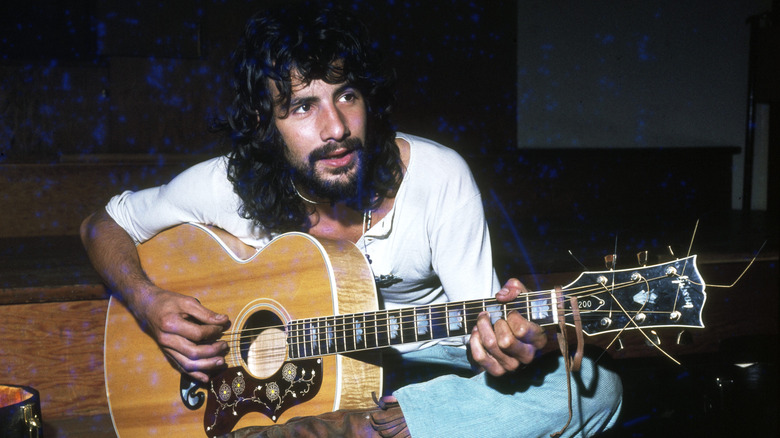
Devout Muslim, activist, and educator Yusuf Islam's path has been long and winding as he's grown from a teenage pop star into an iconic folk rocker. With the stage name Cat Stevens, he stormed the folk rock and pop world in the early '70s, with hits like "Wild World" and "Peace Train." But after converting to Islam in 1977, he left his old sound, stage persona, and legal name behind to focus on spirituality, activism, and family.
Born in 1948 to a Greek Cypriot father and Swedish mother, Stephen Demetre Georgiou basically grew up in his parents' London restaurant. By age 18, he'd scored '60s pop hits in the U.K., including "Matthew and Son," which reached No. 2 on the U.K. singles chart. But when he was 19, a severe bout of tuberculosis side-lined him, and he gained an interest in Buddhism, sending him on a path toward spiritual self-discovery.
In the early '70s, the success of platinum-selling albums like 1970's "Tea for the Tillerman" and 1972 Billboard 200 chart-topper "Catch Bull at Four" made him a folk-rock sensation but left him feeling empty. After receiving a Quran as a birthday gift, he found what he was seeking in Islam. After officially changing his name to Yusuf Islam in 1978, he walked away from the music industry. "I didn't give it up," he told Mojo in 2017, "I just suspended it."
Yusuf returned to pop and folk music in the early 2000s and has remained active in education and humanitarian relief efforts. In 2025, he published an autobiography, put out an accompanying greatest hits album, and played massive stages. Garnering controversy and accolades and always on his own path, Cat Stevens is our quote of the day.
Quote of the Day by Cat Stevens
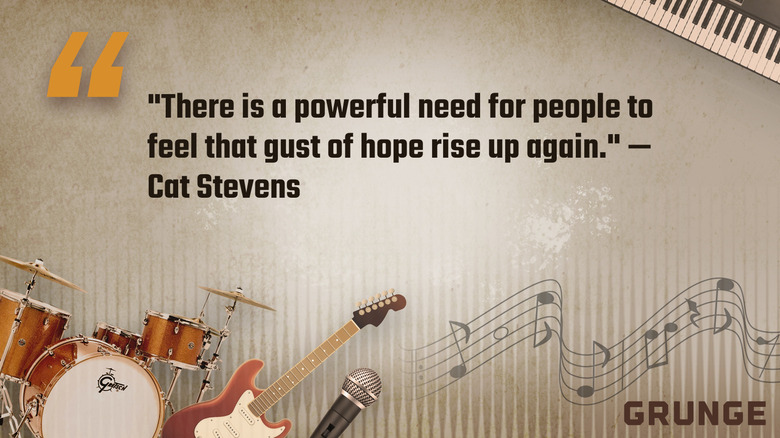
"There is a powerful need for people to feel that gust of hope rise up again."
In 2003, Yusuf Islam talked to Billboard about rerecording and rereleasing "Peace Train," the standout single of 1971 Cat Stevens album "Teaser and the Firecat." He reflected on the durability and remaining relevance of the song, which is one of his best known. Promoting hope and peace, the songwriter said its message "continues to breeze thunderously through the hearts of millions."
At the time, Islam was reentering pop music and donating royalties from reissues and box sets to the September 11th Fund and Small Kindness, a program providing humanitarian relief worldwide. He saw the rerelease as advocacy, telling Billboard, "[T]his is my contribution to the call for a peaceful solution to the dangerous path some world leaders today seem to be taking." In the face of current events and continued conflict, the "gust of hope" in his song seems more critical than ever.
Deeper Meaning of Cat Stevens'/Yusuf Islam's Quote
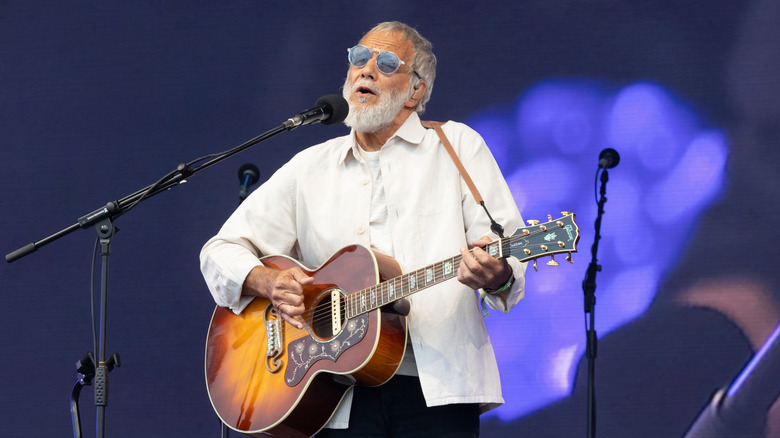
"Peace Train" was released against the backdrop of the Vietnam War, and it was rereleased as the War on Terror expanded to Iraq in 2003. Over 20 years later, the news remains fraught with horrors, wars, and injustices. But to Yusuf Islam, succumbing to despair can't be an option. Without the hope that things will get better, what do you have?
One of the things that made "Peace Train" such a hit for Cat Stevens is that its relentless optimism captured the cultural sea change that burst out of the late '60s. The lyrics are akin to the Beatles' "All You Need Is Love": If we can shift the consciousnesses — get on a path of love and peace — then we can turn this thing around. "Cause out on the edge of darkness / There rides a peace train," Islam sings. "Oh, peace train take this country / Come take me home again."
Islam got on a train of his own to find hope, meaning, and a calling. "I had found the spiritual home I'd been seeking for most of my life," he told Rolling Stone in 2000 of his Muslim faith. "And if you listen to my music and lyrics, like 'Peace Train' ... it clearly shows my yearning for direction and the spiritual path I was travelling." Islam's humanitarian and activist efforts are a part of this journey, too — an effort to move beyond the world of material things and leave it a better place.
Though it's easier than ever to despair, we can only move forward with the belief that things can change and get better. Only with hope in our hearts and actions can we rise above the hate and fear so we can heal.
More Quotes From Cat Stevens/Yusuf Islam
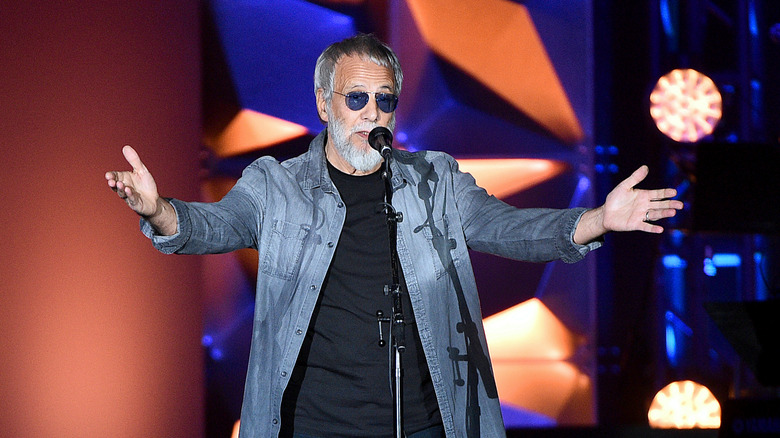
- "There are some crooked paths, for sure, but they're all paths towards something higher, ultimately divine. I just keep going."
- "Explaining things is a dry way of communicating. I'm in my best element when I'm actually singing my heart out."
- "One cannot discount any moment in one's life. There is no moment that is not important... You can find it from anything. It's like meditation, you can look at a piece of paper and find anything you want in the piece of paper."
- "I am more mature now, and so is my attitude, I've managed to make peace with my past, as my past is making peace with me. I think there is a sense of mutuality for both artistic phases of my life."
- "If you want to know me, then listen to my music, especially my lyrics, they mostly revolve around peace and humanity. That hasn't changed — they are still the things I believe in."
- "God created death and life in order to test you. In capitalistic terms, there's a payday. That could be good or bad, depending on what you did. It's an expression of karma, because what you do is going to have an effect. If you sum up the ultimate effect of your life, that's what we should be working toward: raising that value."
- "Albums, like children, all have something different to say and are equally valid. However, due to the way life goes, some grow bigger, some die, some are good and some are not quite so."
- "You go through stages. ... You know, you change, your attitude changes according to circumstance. Context is key."