

Legendary Bands That Really Did Start In Somebody's Garage
Rock music and garages have a deep connection. There is, of course, the musical genre that had its heyday in the 1960s. The term "garage rock" was coined by music journalists to describe the scrappy, sometimes amateurish, but always exuberant music made by young people, often in their family's garage, where they wouldn't disturb their parents quite so much.
The gritty, wild, sometimes muddy sounds of bands, such as the Kingsmen, became synonymous with the genre, whether they actually began in a garage or not (for instance, we were unable to find any evidence that this was true of the Kingsmen). Nonetheless, they changed rock history by helping to inspire proto-punk and punk bands in the coming years.
Beyond garage rock, there were plenty of other legendary bands that you wouldn't necessarily connect to the genre who actually started in a garage. While the MC5, for example, definitely do sound like they began in a garage, the music of the Beach Boys and Credence Clearwater Revival don't fit into that particular sound, but both indeed began life in garages, proving just how deep the connection between these spaces and the music made inside of them really goes.
MC5
The Detroit proto-punk band MC5 did everything louder, faster, harder, and with more ferocity and revolutionary verve than anyone who came before them. With the dueling electric guitars of Wayne Kramer and Fred "Sonic" Smith, the thundering drums of Dennis Thompson, and the rumbling bass of Michael Davis, they blasted their way into music history. They shocked their elders with their first release, "Kick Out the Jams," in 1969. The titular tune, which featured singer Rob Tyner shouting "kick out the jams motherf***ers," made it a controversial song to some, but a call to arms for the band's rabid fans.
The MC5's origins began in the garages of the suburban working-class Lincoln Park homes of Kramer and Smith, high school friends who would jam together at their respective family homes in the early 1960s. Although they were in different bands, by 1964, they joined forces with a new outfit they dubbed the Motor City Five before shortening the name and finalizing the classic lineup the following year. By 1968, the tight knit group had become a huge draw for their live shows fueled by the endless hours spent practicing in home garages. The band released three albums before burning out way too soon.
Creedence Clearwater Revival
Creedence Clearwater Revival rode a wave of popularity in the late 1960s and early '70s with a signature sound that combined rock, swamp pop, blues, country, and rockabilly. The band's string of Top 10 hits include "Proud Mary," "Bad Moon Rising," and "Green River," among others. While these tunes have a particularly Southern sound, the band began life in the El Cerrito, California, family garage of brother Tom and John Fogerty. John and his fellow junior high friends Stu Cook and Doug Clifford, on bass and drums, respectively, began as the Blue Velvets in 1959. Later, Tom, four years older, joined the band to become Tommy Fogerty and the Blue Velvets, and then the Golliwogs.
By 1967, they'd changed their name to Creedence Clearwater Revival and left the garage behind for a unique sound with John on vocals. John's gravely, but powerful, singing style and songwriting, which focused on dark Southern themes, helped set the band apart from their contemporaries. Unfortunately, internal tensions between the brothers saw Tom leave CCR in 1971, with a final breakup of the rest of the band a year later. Still, Creedence Clearwater Revival had gone from teen rockers practicing in a suburban garage to bonafide musical legends in a little more than a decade.
The Beach Boys
With their gorgeous close harmonies and Brian Wilson's studio wizardry and obsessive perfectionism, it may seem hard to believe that the Beach Boys started in the garage of the Wilson family's Hawthorne, California, home. Brian and his brothers, Dennis and Carl, their cousin, Mike Love, and friend, Al Jardine, formed the Pendletones in 1961.
While the Wilsons' parents, Murry and Audree, were away on vacation during the long Labor Day weekend, the young men spent the grocery money their father had left them to form a band and bought a drum kit with the cash. After five days of obsessive practice, Murry and his wife returned to find their kids nearly starved, but triumphant. Murry immediately hooked the band up with Hite and Dorinda Morgan, music industry veterans, who recorded several of the band's early tracks. This included the band's first original, "Surfin'," which went to No. 75 on the Billboard chart for the band that had been rechristened the Beach Boys, with Murry managing them.
After Brian wrested control of the Beach Boys from his overbearing and physically abusive father, the band emerged from the surf rock scene to become something truly unique, with such classic albums as "Pet Sounds" and singles like "Good Vibrations." "Pet Sounds" is considered a masterpiece by critics and fans alike, with such classics as "Wouldn't It Be Nice" and "God Only Knows" proving 1966 was the best year of the Beach Boys' career — and it all started in a garage.
Nirvana
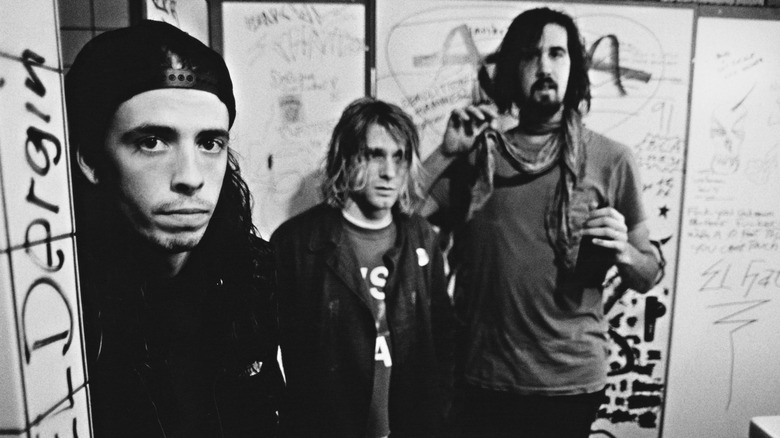
Before Nirvana reached the pinnacle of rock stardom, took grunge mainstream, and Kurt Cobain unwillingly became the poet laureate of Generation X, he and bassist Krist Novoselic, and a series of drummers, sometimes practiced in the Novoselic family garage in Aberdeen, Washington. In these early sessions, the two friends worked out their noisy sound that would come to be a cross-fertilization between 1960s pop and '70s metal — and it apparently didn't go over well with the neighbors. "When they started, they used to practice in my garage ... I got lots of complaints" Kristo Novoselic would later recall (via "Nirvana FAQ: All That's Left to Know About the Most Important Band of the 1990s").
Cobain and Novoselic also practiced at a host of other spaces while playing under various band names, including the Sellouts and Skid Row, before settling on Nirvana in 1987. They jammed in an upstairs room of a hair salon owned by Novoselic's mother, and different bedrooms, among other spaces. By May 1988, when drummer Chad Channing joined the band, they were playing in Krist's basement in Tacoma, Washington. Channing recorded the band's first album, "Bleach," before being replaced by Dave Grohl to form Nirvana's classic lineup. Two more studio albums followed, along with massive success, before Cobain's death by suicide in April 1994.
If you or someone you know is struggling or in crisis, help is available. Call or text 988 or chat at 988lifeline.org.
Weezer
Long before Weezer became a beloved alternative rock band with monster hooks, clever songwriting, and more than 35 million in worldwide album sales, they were a bunch of guys hoping to make it in the Los Angeles music scene. The band formed there in 1992. Guitarist and singer Rivers Cuomo, drummer Patrick Wilson, Matt Sharp on bass (Scott Shriner has been the bassist since 2001), and guitarist Jason Cropper (who was replaced by Brian Bell while recording their first album) spent their formative time practicing in a garage attached to a home on Amherst Avenue where Cuomo and Sharp were living with a friend.
It was there that Ric Ocasek of the Cars agreed to produce their first record after hearing them play, resulting in their breakout Blue Album. The multi-platinum selling album included hits like "Undone – The Sweater Song," which reached No. 57 on the Billboard Hot 100, and MTV staples "Buddy Holly" and "Say It Ain't So." Weezer has continued to enjoy immense success and, like the other legendary bands in this list, can thank a garage for helping to make it happen.