

Classic Rock Songs That Are Actually Solo Tracks In Disguise
It's musical identity fraud hiding in plain sight: Some of the best-known songs in the classic rock canon attributed to some of the most famous bands of all time were not, in fact, recorded by those groups. They're secretly and technically solo songs, released under the band's famous name, despite featuring just one member. The messed-up truth of the 1970s music industry involved a lot of behind-the-scenes drama in bringing records to life. Sometimes the people in the major bands that agreed or attempted a song weren't up to the musical rigors of the piece. Other times, the composition was so personal, low-key, or talent-specific that to include the members beyond the individual who conceived it would've been inappropriate. Or there just wasn't room on the track for rock instruments after the string section was hired.
At any rate, those songs, recorded during production for a major project or under contract, hit wax and then record stores bearing the name of a band that didn't have much to do with the song listed on the label. Here are some classic rock classics credited to a whole band — such as the Beatles, the Beach Boys, Blondie, Kiss, and Van Halen — that involved just one member of that group.
Yesterday — The Beatles
A No. 1 hit for four weeks in 1965 and one of the most covered rock songs ever, the Beatles' "Yesterday" is as iconic as it is simple. The sad guitar ballad is built on lyrics about longing for the good old days, back when the narrator had a strong romantic relationship and all his "troubles seemed so far away." Due to a contractual agreement, every Beatles song written by John Lennon or Paul McCartney, either alone or together, was credited to "Lennon/McCartney." But "Yesterday" was solely and wholly the work of McCartney, to whom the song arrived almost fully formed in his sleeping brain.
"When I woke up, I thought, 'I love that tune. What is it? Is it Fred Astaire? Is it Cole Porter? What is it?'" he wrote in "The Lyrics: 1956 to the Present." McCartney immediately hit a piano to develop the song, and to remember it better, he tossed in some phony lyrics: "'Scrambled eggs, oh my baby, how I love your legs.'" After asking musically knowledgeable associates to identify the song, McCartney determined that it was an original. He crafted "Yesterday" out of the melody line, but when he wanted to record it, the other Beatles weren't interested. George Harrison and Ringo Starr didn't think it needed their respective guitar or drum playing, and Lennon declared it a one-man piece, which is what "Yesterday" became (aside from the string quartet hired for the session).
Several tracks on Pet Sounds — The Beach Boys
The Beach Boys' progressive pop and sound-changing 1966 album "Pet Sounds" has enjoyed almost universal praise as one of the greatest LPs ever recorded. Most every detail of the elaborate project was overseen by band member and main songwriter Brian Wilson, who used studio musicians to supplement the work of his bandmates. Sometimes, Wilson and his paid professionals completely took over: Three songs on the LP didn't need any of the other Beach Boys whatsoever.
The dreamy, forlorn love ballad "Caroline, No" features Wilson on lead and falsetto vocals along with many multi-tracked studio players. Two months before the release of the Beach Boys' "Pet Sounds," "Caroline, No" was issued as a promotional single, attributed solely to Wilson, and it performed disappointingly, reaching only No. 32 on the Billboard Hot 100.
Wilson also arranged, produced, wrote the music for, and sang lead on "Don't Talk (Put Your Head on My Shoulder)," accompanied by 13 non-Beach Boys musicians. And then there's "Let's Go Away for Awhile," an instrumental on a Beach Boys album that doesn't technically include a single Beach Boy. Wilson was very hands-on, arranging and producing the song, which he composed, but he doesn't sing or play any instruments on it.
Call Me — Blondie
In 1979, Jerry Bruckheimer, producer of the 1980 Richard Gere sex worker drama "American Gigolo," asked composer Giorgio Moroder to come up with a theme song for the film. Directly writing about the plot and character, Moroder came up with "Call Me." He had already synced a polished instrumental track for the movie by the time he convinced Blondie, one of the biggest bands in the world at the time, to record the final version.
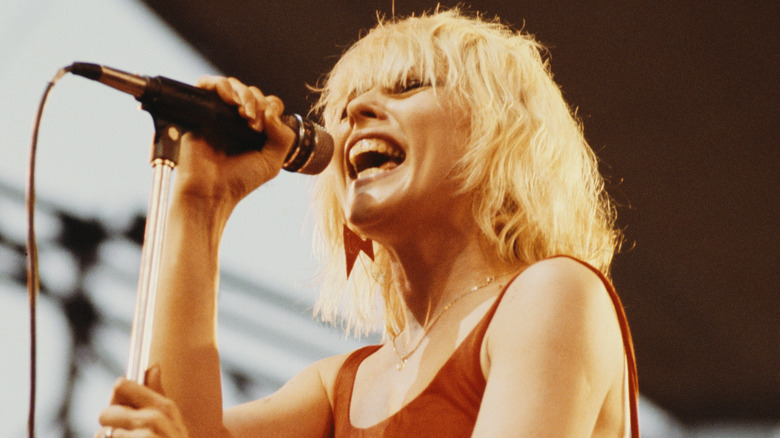
With a time crunch in mind, the members of Blondie were a little offended that there wasn't much for them to do with the almost-finished song. However, guitarist Chris Stein, keyboardist Jimmy Destri, and singer Debbie Harry all agreed to contribute. But then Stein's recorded guitar part was deemed too gritty and unusable, and Harold Faltermeyer's already-recorded keyboard solo was declared superior to Destri's concept. The only person in Blondie whose work made it into "Call Me" was Harry. It all worked out — "Call Me" became the best-charting rock single of 1980, spending six weeks at No. 1.
Beth — Kiss
Before he was the drummer in Kiss, Peter Criss was in Chelsea, for whom he wrote a folky tune called "Beck." Chelsea's rehearsals were often interrupted by phone calls from Becky, wife of band member Mike Brand. Criss wordlessly repeated the tune one day in advance of production on Kiss' 1976 album "Destroyer," and bandmate Gene Simmons thought it was good enough to record. As he was allocated one showcase tune on the LP, Criss recorded the song under the direction of producer Bob Ezrin. With some rewrites, Ezrin transformed "Beck" from a mocking tune into "Beth," a romantic one about longing during a separation. It was also Ezrin's idea to add a string section, a prominent piano part, and some barely audible acoustic guitar to accompany Criss' vocals.
A significant outlier in the Kiss catalog full of loud and heavy arena rock numbers about partying, rock, and fornication, the rest of the band — whose services hadn't been required — didn't care for the song and begrudgingly allowed its inclusion on "Destroyer." It was also used as B-side filler for the single "Detroit Rock City." But then so many DJs turned the record over that "Beth" garnered significant airplay. It may not sound like quintessential Kiss, but with a peak of No. 7 on the Billboard Hot 100 in December 1976, it's the band's biggest hit single ever.
Eruption and 1984 — Van Halen
Near the top of their first, self-titled album and at the beginning of its audaciously synthesizer-laden "1984" LP, Van Halen heralded their arrival and new direction, respectively. Both of these experimental and showy tracks starred only band namesake Eddie Van Halen.
Following the album opener "Runnin' with the Devil," 1978's eponymous Van Halen LP moves into the instrumental guitar shredding master class "Eruption." "It wasn't even supposed to be on the album," Van Halen told Guitar World of the concert staple that demonstrated his unique and innovative two-handed tapping technique that enabled him to play so quickly. "I showed up at the recording studio early one day and started to warm up because I had a gig on the weekend and I wanted to practice my solo guitar spot." Producer Ted Templeman excitedly recorded Van Halen's first take, and it went on the album. "I didn't even play it right," he admitted.
A weird fact about Eddie Van Halen is that he was a pianist before he picked up a guitar. In the early '80s, he built a home studio and delved deep into keyboards and synthesizers. His piano-derived work appears all over "1984" singles like "I'll Wait" and "Jump," but that's the only thing on the spooky and spacey lead-off title track. Less of a song and more of an ambience setter, "1984" the song gives listeners a taste of what's to come: Eddie Van Halen experimenting with futuristic sounds.