

Rod Stewart's 1971 Signature Hit Started As An Overlooked B-Side
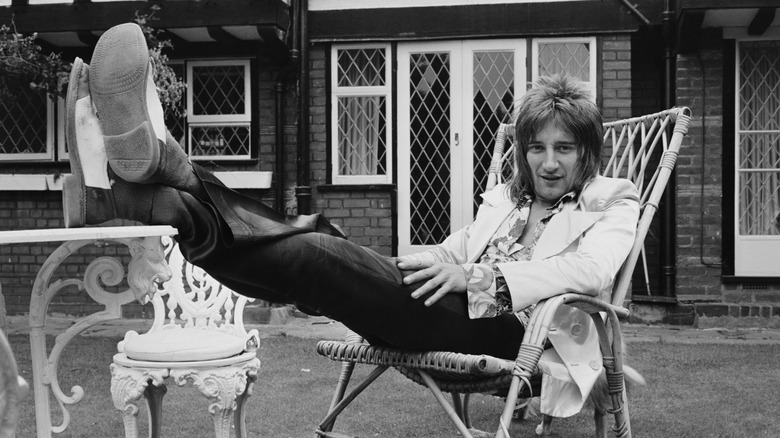
Often in rock 'n' roll, a single is recognized as a likely hit before its release, with artists and producers alike knowing very well what they have on their hands once they've recorded it. This wasn't the case for Rod Stewart's 1971 hit "Maggie May," which was buried as a B-side before rising all the way to the top of the charts and becoming a career-defining track.
The origins of "Maggie May" stretch back to an incident that occurred in 1961 at the Beaulieu Jazz Festival when Stewart was 16, with the name deriving from a Liverpool folk song (recorded most memorably by the Beatles). Stewart wrote the track in 1971 with Martin Quittenton, and though the song surely had promise, it was placed as the B-side behind "Reason to Believe," a folk song originally recorded by Tim Hardin in 1966. Stewart's version was released in July 1971, which was arguably the best year of his career. Soon after its release, radio DJs across the nation, from Cleveland and Chicago to Los Angeles and Seattle, started flipping over the record to play "Maggie May" instead, prompting the label, Mercury Records, to officially release the track as its own single.
The heights of Maggie May
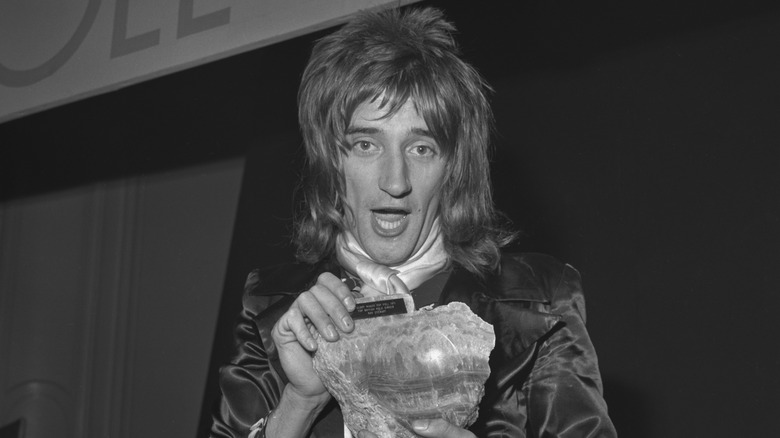
"Maggie May" entered into the Billboard Hot 100 in the U.S. in July 1971 and steadily rose until it reached No. 1 — the first song in Stewart's career to do so — during the first week of October. It remained in the top spot for five straight weeks as a startling success, spending a total of 21 weeks on the charts. The song reached the top spot in Stewart's native U.K. on October 9 and spent five weeks at No. 1 there as well.
Fans connected with the song thanks to its supremely catchy folk rock sound, driven by a standout chorus: "Oh Maggie, I couldn't have tried anymore / You led me away from home / Just to save you from being alone / You stole my heart and that's what really hurts." Stewart's voice is simultaneously gritty and pretty, gliding over the upbeat instrumental as he details the compelling narrative of the song. Even on a first listen, the absurd star power of "Maggie May" seems abundantly clear, with every instrument coming together in a perfect arrangement of early '70s folk rock.
Maggie May's long legacy

In the end, "Maggie May" became one of Rod Stewart's most recognizable hits, turning its 1971 chart success into a long stay in the minds of rock 'n' roll fans. Today, it's still around, stacking up streaming numbers of over 430 million on Spotify alone, second only to "Da Ya Think I'm Sexy" in Stewart's catalog. "Reason to Believe," the single's initial A-side, largely lounged in the middle tier of Stewart's discography, and is perhaps more known by other artists' renditions, with Neil Young, Johnny Cash, Cher, and more taking a stab at the Tim Hardin composition.
Though the label certainly made the wrong decision with the original release, as "Maggie May" seems as obvious a hit as can be found, it all worked out for Stewart in the end, and he's even still performing today, rocking as hard as ever. "Maggie May" has remained an essential early '70s hit, became Rod Stewart's signature song, and is without a doubt one of the most successful B-sides in rock 'n' roll history.