

The No. 1 Song On August 20, 1996 Sounds Even More Danceable Today
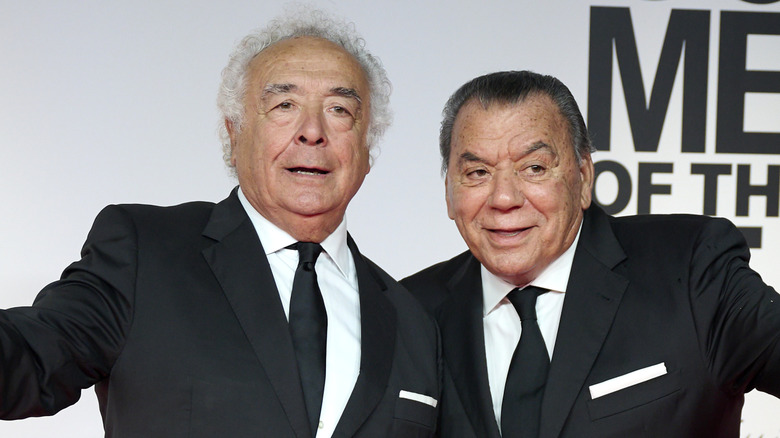
On August 20, 1996, Los del Rio — and the Bayside Boys for that matter — were enjoying the early weeks of an extremely long residency in the No. 1 position on the Hot 100 with a remix of "Macarena, a song as irresistibly catchy and dance-floor filling now as it was in the 1990s. The most significant song-with-a-dance fad since Chubby Checker's "The Twist," the No. 1 single of the '60s, "Macarena (Bayside Boys Mix)" fueled a cultural moment that lasted well into 1997. And that was the result of a song by a duo active since the 1960s who'd recorded the original version of the song back in 1993.
It all took off when a couple of Miami-based music producers, the Bayside Boys, fielded a request to turn a song by Los del Rio, a traditional Spanish music act from the Seville region, into a dance floor-filler. The final product would go on to sell 4 million copies in the U.S. alone, part of a nearly global sensation that also included an easy to learn and often performed solo dance. Here's the story of how "Macarena," a song about a flamenco dancer or a free-spirited woman, turned a '60s act into '90s one-hit wonders.
Macarena was a hit in a different form before it landed stateside
Los del Rio had issued around 30 albums of rhumba and other kinds of Spanish music by 1992, when member Antonio Romero glimpsed dancer Diana Patricia Cubillan perform a flamenco routine at a party in Venezuela. That night, he wrote "Macarena" about Cubillan, renaming her Macarena, a historically significant name in Seville. Included on Los del Rio's 1993 album "A Mi Me Gusta," "Macarena" found some extra popularity with a Fangoria remix. In the Americas, versions of "Macarena" became well known in a handful of areas, Puerto Rico in particular.
By 1995, "Jammin'" Johnny Caride, a DJ at Miami venue Baja Beach Club, was getting so many requests for it that he convinced his bosses at radio station Power 96 to let him play "Macarena," despite a no-non-English-songs rule. Some late night broadcasts were so well received that management asked Caride to come up with a new dance remix of "Macarena" with prominent English lyrics, and to have it ready for the air within two days.
A Macarena remix was one of the biggest hits of the '90s
Facing a time crunch, "Jammin'" Johnny Caride approached Mike Triay and Carlos De Yarza — Bayside Studios producers and jingle creators. De Yarza took care of the English requirement with a fictional firsthand account from Macarena about her nightclub exploits, performed by session vocalist Patricia Alfaro. The "Bayside Boys" also added a thumping beat and heavily processed synthesizers, retaining Los del Rio's original Spanish sections for the chorus. Within the week, this "Macarena" was the top request at Power 96, and then it spread to other radio outlets. It failed to make the national Top 40 until the carefully titled "Macarena (Bayside Boys Mix)" reached New York station WKTU. And then it became truly massive. Los del Rio's Rafael Ruiz scored his first No. 1 after age 50 when the remixed "Macarena" hit the top in August 1996, staying there for 14 weeks. It's Billboard's No. 1 song of 1996 and as of 2015, the eighth-biggest hit single of all time in the U.S.
But "Macarena" the song wouldn't have been so major if not for the "Macarena" dance. Reportedly devised by Los del Rio during a moment of improvisation while performing the original tune in the early 1990s, the moves spread virally as the remix climbed the charts, helped along by the highly instructive music video. From 1996 until well into 1997, that dance was performed virtually anywhere, at parties, weddings, cruise ships, and even at the 1996 Democratic National Convention.