

5 Deep Cuts That Prove This Overlooked Genre Is Even Cooler Today
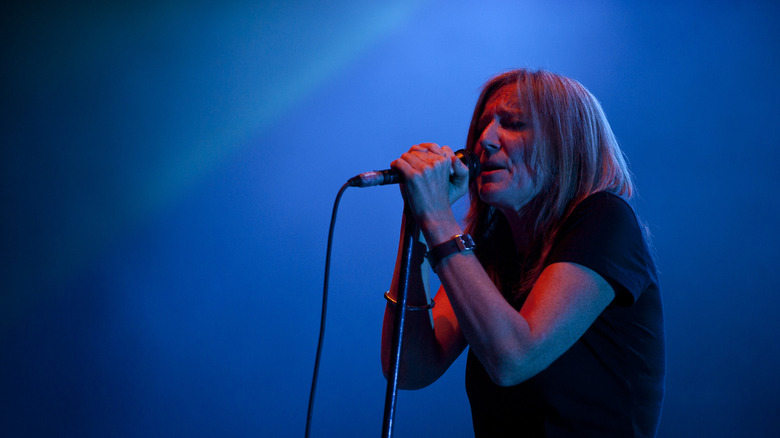
You're hoping we're going to talk about crunkcore, right? Most certainly we are not. Rather, we're going to highlight a legitimately overlooked branch of music that lived, breathed, and oozed cool. That's right, Bristol, England's own mid-to-late-'90s fusion of funk, jazz, post-hardcore, and more: trip hop.
To true, vinyl-sifting music nerds, trip hop might be an eye-rollingly lame "underground" music choice. Why not go with grebo, pub rock, romo, or a hundred other absolutely obscure musical genres? To such objections, we point to our main criterion: cool. Trip hop's grimy, lo-fi, downtempo darkness sounded absolutely killer in the '90s, and it still sounds fresh now. It sounds even cooler amidst an era of arguably overly manufactured, write-by-committee, glossy dross. Our choices need to represent its inherent coolness and also portray the full breadth of its styles. Those styles often straddle genres, as trip hop is inherently eclectic.
As for the second criterion, someone might ask: How could a type of music that spawned the theme song for "House" be overlooked? Because that song, Massive Attack's gorgeous "Teardrop," is trip hop's most commercially palatable form, down to its friendliest radio tendencies. There's always the lesser-known side, away from artists who breached the mainstream for some fragment of time. No matter the musical perfection of outfits like Portishead, including a '90s flop like "Over" that we can't help but love, it's deep cuts that demonstrate a scene's ultimate depth. And trip hop's deep cuts cut bone deep.
14 Nights — Puracane
Anyone who's heard artists like Tricky, Portishead, Massive Attack, etc., knows trip hop's creeping menace. The music broods, no matter all its swimmy motion, ambient textures, and fluid basslines. This is Puracane's "14 Nights" to a tee — a stellar, deeply cool deep cut from 2000's "Things You Should Leave Alone." The track demonstrates trip hop's abyssal depth, one where thoughts bubble to the surface along with the song's trumpet notes and scratchy sound effects.
Folks who have even a passing interest in dark downtempo like Sneaker Pimps (a more marketable alternative) ought to love "14 Nights." Though the track could work as an instrumental-only piece, Ali Rogers' vulnerable, graceful voice layers beauty on top of darkness — a contrast that draws out the song's pathos. She also doesn't sing scattered vocal lines like you might expect: "14 Nights" is a full-on song with distinct sections, yet no obvious, beat-you-over-the-head moments to tell the listener when it's time to pay attention. Lyrics include "Oh my Lord, you haven't changed / Lying blue and lying red / Broken glass in my bed / What did I get myself into?" At times, they come across like emo musings, but the song's musical depth grants it lyrical depth.
Puracane lived and died in a short period of time. We really don't know much about the New York City-based duo except that they toured with the likes of Depeche Mode and Jane's Addiction and used real instruments live rather than backing tracks. The band's roster grew from two to four by the time they self-released their last-gasp, 2011 EP "Evil for the Greater Good."
Fear of Flying — Bowery Electric
Fans of Bowery Electric know the deal by now: Everything up to and around 1996's "Beat" skewed ambient, downtempo, dark shoegaze full of swooshing textures, while 2000's "Lushlife" was straight-up trip hop. This is exactly why the instrumental "Fear of Flying" from "Beat" exemplifies the latter genre's more post-rock, shoegaze-crossover elements. It's chill enough to put on in the background to cleanse the soul and smooth enough that you might not even notice it's on until it ends, and then you'll immediately want to hear it again.
Sharing a name with New York City's sadly defunct Bowery Electric club venue, Bowery Electric formed in NYC in 1993, two years after shoegaze reached its peak in 1991 with songs that prove it was the subgenre's best year (My Bloody Valentine, Slowdive, etc.). Bowery Electric didn't intentionally borrow from shoegaze, instead setting out to fuse their own musical influences with electronic production and an overall vibe reminiscent of trip hop across the pond in Bristol. They're firmly "dub," i.e., highly produced studio musicians who craft music using cut and layered tracks that stutter, stop, and flow together. "The Wire" called their music a "sustained moodpiece," a spot-on description we won't try to top (per Brainwashed).
Amongst fans, "Fear of Flying" holds a special place in mind and history. Even without a single lyric, the song's drum loop, ascending bassline, trumpet-like synth blasts, and sweeping soundscape convey a feeling of weightlessness and fearlessness — perfect for the song title. The track varies little over its length, but this makes its lush composition hypnotic and meditative rather than boring.
Half a World Away — Esthero
Esthero represents a big tonal jump from outfits like Puracane or Bowery Electric. A track like "That Girl" (which gained some commercial traction) from 1998's "Breath From Another" is light and bright enough to resemble a dance-pop artist like Dido. But it's "Half a World Away" from that same album that portrays both Esthero's depth and trip hop's coolness. A dirty, jazzy fusion of dream pop and trip hop, the song sounds like a James Bond theme for an exotic locale infused with rumba and Afrobeats. The track ought to make it clear that trip hop is way more overlooked than it deserves to be, especially given its gloriously groovy, rolling bassline.
Like the other artists we've covered so far, Esthero didn't sit down one day and say, ""I shall make trip hop." Very much a free-floating, do-as-thou-wilt, even maverick spirit, it's more the case that the first two of Esthero's trio of albums (more the first) happen to meld well enough with the genre's brief '90s flare-up. As the singer said in an interview with 2020k following the release of her third and most recent album, 2012's "Everything is Expensive": "I like music from all genres. I go on a song-by-song basis."
Echoing Puracane's hands-on approach toward self-releasing their final EP, Esthero crowdfunded her final album. This adds a feather in the cap of both it and trip hop's authenticity — trip hop was never soulless corpo garbage. You can't get much cooler than that, nor cooler than a fused-genre track at the top of the heap like "Half a World Away."
Strange Hours — Recoil
Readers familiar with Recoil's "Liquid" (all zero of you) might find "Strange Hours" an odd choice for a song highlighting trip hop's overlooked coolness, and that's exactly the point. "Strange Hours" is a strange song, part loungy jazz track and part downtempo zone-out track with odd, even off-putting vocals. It's full of electric guitar shrieks, sax blurps, a saturated synth backdrop, and weird sounds that channel glitch (the electronic dance genre). "Strange Hours" sounds like what it feels like to be drunk in the woozy wee hours, staggering around in a haze of music and darkness.
In short, "Strange Hours" represents the more experimental side of trip hop. It comes to us courtesy Depeche Mode collaborator, arranger, and producer, etc., Alan Wilder, who was a member of the band from 1982 to 1995, making him the most recognizable name in this article. Like Trent Reznor (but without the janitorial story about how Reznor got started in music), Wilder has crossed over from electronic music to soundtrack music, like with Marvel's 2021 "Hawkeye." Recoil was his personal project, which arguably delivered its best album, 2000's "Liquid," on the back end of trip hop's wave. The album has Depeche Mode production elements all over it, in terms of the tonal quality, especially its percussion. And, yes, we all know that Depeche Mode has never ceased being peak cool, no matter their massive, global success. Their association validates trip hop's underground edge, not blunts it.
"Strange Hours" isn't even the weirdest track on "Liquid," but it's definitely one of the most eclectic collages. Aside from what we already described, there's even a beautiful, Massive Attack-like synth swell, a possibly sampled rockability segment, and an odd drum-and-bass tint to its beats.
Dum Dum Baby — Baby Fox
Our final choice goes truly dark and deep into the more disturbing recesses of the trip-hop rabbit hole and flexes our cred, to boot. At this point, Baby Fox is known more for being unknown than anything else — a lamented loss of bygone, peak trip hop days. But out of the entirety of the trio's very small, highly praised, two-album discography, we're going to give our nod to "Dum Dum Baby" from the 1998 album of the same name.
"Dum Dum Baby" is horror soundtrack music spun into a trip hop track. It crawls with menace, especially considering the album cover (browse as you like). We can only speculate what the song is about, as there aren't even any lyrics online, though the main refrain is "You're my baby, harlequin," Christine Leach sings it like she's stroking a decapitated doll's head. The track's background, brassy synth swells and explodes into noise again and again as crackly production sizzles atop an oceanic bassline that might blow your speakers. The drums sound totally organic, even though they're programmed. Add some extra instrumental flourishes to the mix and you've got a track that rivals the best of what big-name trip hop outfits like Portishead put out.
Per a reissued 1996 interview on Chaos Control Digizine, Baby Fox — Leach, Alex Gray, and Dwight Clarke — were more music nerds who liked tinkering with sounds and styles more than anything else. They worked across multiple projects and didn't have all their eggs in the Baby Fox basket. At the time, one of their biggest challenges was transferring studio-made music to a live stage. What they're up to now is anyone's guess.