

She Should Be As Famous As Janis Joplin, But Her Potential Was Never Realized
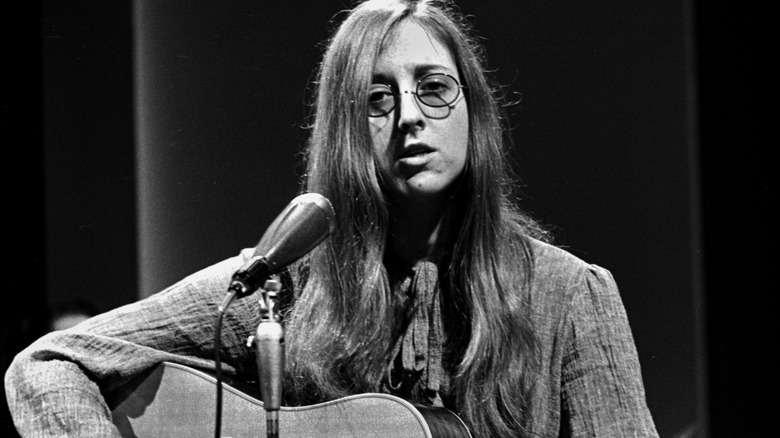
Judee Sill is a '70s musician we completely forgot about, because in her short career, she went underappreciated and underexposed. A would-be icon whose debut album flopped hard, Sill has been heralded by critics and other musicians as a genius who made masterpieces, similar to her contemporary and fellow generational talent Janis Joplin. Unlike Joplin, however, Sill wasn't widely loved while she was alive. Her legend has grown and made Sill a cult figure, following an untimely death that robbed the world of who knows how much remarkable, hard-to-define musical art.
According to a 1972 interview with the L.A. Free Press, one of a scant few she ever gave, Sill described her music as a combo of "occult, holy, Western, baroque, gospel" (via The Independent). Indeed, this mashup of folk (with sometimes dark, spiritual elements) with rock and country music, all arranged with extensive orchestrations and led by Sill on the piano, made her two albums: 1971's self-titled affair and 1973's "Heart Food" were unlike anything else released at the time, and arguably since. Here's the story of the often-tragic life, promising rise, and ultimate downfall of a truly overlooked and wholly unique luminary: singer-songwriter-pianist-arranger Judee Sill.
The following article includes references to domestic abuse, depression, and drug addiction.
Judee Sill had all the skills and support of a superstar in the making
Following multiple childhood traumas — her brother and father died, and her mother married a physically abusive man — Judee Sill found solace in music, thriving in piano and songwriting lessons. She also experienced periods of criminality, being unhoused, and heroin addiction. While serving three months in prison on drug possession charges, Sill acquired a determination to kick drugs and pursue music upon her release. In 1969, her song about same-sex love, "Lady-O," was released as a single by the Turtles, and it peaked at No. 78 on the Billboard Hot 100.
Among Sill's immediate fans were folk-rock icons David Crosby and Graham Nash, after he left the Hollies. During a live showcase, recording industry titan David Geffen was so impressed with Sill that he signed her on the spot and made her one of the first artists on Asylum Records, his burgeoning label for '70s singer-songwriters.
The first album issued by Asylum was Sill's 1971 self-titled debut LP, and its first single, "Jesus Was a Cross Maker," was produced by Nash, who claims his services weren't necessary. "She knew exactly what she wanted and performed it as if she had been recording all of her life," Nash told The Independent decades later. Despite an aggressive push, the single didn't chart, and the album sold a relatively paltry 40,000 copies.
The decline and rediscovery of Judee Sill
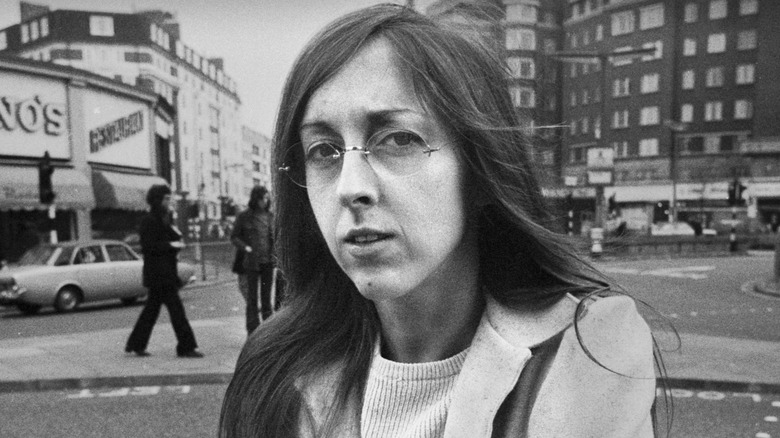
Judee Sill worked slowly but precisely, and it took about two years for her to ready her next album, 1973's "Heart Food." Sill had a creative vision for the LP and directed the orchestrations and arrangements, but it sold worse than her first album. To promote it, Asylum set up Sill as an opening act for multiple artists, which the musician took as a demeaning indignity. She also reportedly privately used anti-LGBTQ+ slurs to refer to David Geffen, whom she blamed for her lack of success, claiming he was spending too much time and effort on the label's other acts. Geffen actually departed Asylum just before Sill did, although her exit wasn't by choice.
Following her professional divorce from Asylum and a separation from the thriving singer-songwriter scene, Sill endured clinical depression, physical injuries, and domestic abuse. To self-medicate, Sill descended back into heavy drug usage. Her albums weren't even in production anymore in November 1979, when 35-year-old Sill died of a cocaine and opiate overdose.
All those songs that Sill never got to release in her lifetime were compiled into the 2005 collection called "Dreams Come True," and her catalog was reissued along with a live album, triggering new interest in the musician. The 2009 tribute album "Crayon Angel" features singer-songwriters and indie rockers like Ron Sexsmith and Beth Orton performing Sill's haunting, innovative, and progressive songs that still defy categorization more than 50 years later.
If you or anyone you know needs help with addiction issues, depression, or may be the victim of domestic abuse, contact the relevant resources below:
-
The Substance Abuse and Mental Health Services Administration website or contact SAMHSA's National Helpline at 1-800-662-HELP (4357).
-
The Crisis Text Line by texting HOME to 741741, call the National Alliance on Mental Illness helpline at 1-800-950-NAMI (6264), or visit the National Institute of Mental Health website.
-
The National Domestic Violence Hotline at 1−800−799−7233. You can also find more information, resources, and support at their website.