

Classic Pop Hits With No Known Authors
Some of the most famous and successful singles across the history of late 20th century music have mysterious origins that will probably never be fully explained: Nobody knows who wrote or originated these classic pop hits. From the sometimes-dark 1960s music industry to the messed-up 1990s recording business, commercial music has typically been carefully managed and tracked to ensure that everyone who can claim any kind of a credit on a song gets paid for their troubles, either upfront or in perpetuity via royalties. It's surprising, then, that over the span of contemporary pop music, there are a number of well-known and objectively popular hits that lack a full accounting of the personnel behind them.
These pop songs in question, all of which performed well on at least one major chart in the United States, are all adaptations of pre-existing tunes, ranging from folk songs to spirituals to work songs. They all managed to persist for decades, eventually arranged and covered by modern musicians and transformed into flashy pop hits. But they're all so old that the names of whoever wrote them have been lost to history. Here are some hits by Harry Belafonte, Rednex, and more that don't have an identified songwriter.
Day-O (The Banana Boat Song) – Harry Belafonte
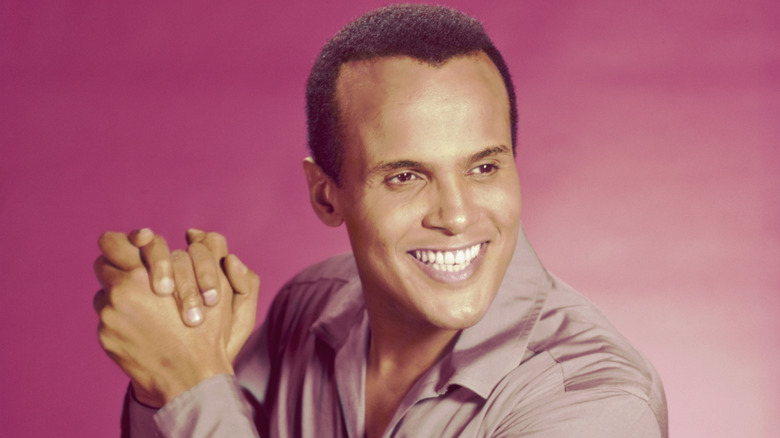
In the mid-1950s, calypso enjoyed a massive surge of popularity in the U.S. The traditional Afro-Caribbean music had a champion and superstar in Harry Belafonte. In 1956, his albums "Belafonte" and "Calypso" both went to No. 1 on Billboard's brand-new LP sales chart, with the latter occupying the slot for 31 weeks. Much of that was on the strength of "Day-O (The Banana Boat Song)," a Top 5 hit that depicts life on a Caribbean banana operation. In the call and response song, a night-shifter is exhausted from loading up export ships, and he wants his supervisor — the tally man — to arrive and inspect his haul so he can go home with the approaching dawn.
Belafonte didn't write "Day-O (The Banana Boat Song)," also published as "Banana Boat (Day-O)," but he and collaborators William Attaway and Lord Burgess adapted it from an old Caribbean song known as "Day-O." The source material is thought to have originated sometime around 1900, because that's when banana farming and exporting intensified in Jamaica. Versions more faithful to the original than Belafonte's reworking were released in the U.S. earlier in the 1950s, including those by Edric Connor and the Caribbeans and Louise Bennett.
Cotton Eye Joe – Rednex
Combining thumping, club-ready Eurodance with traditional American bluegrass doesn't seem like it would work, but it absolutely did for the Swedish outfit Rednex. In 1994, three producers hired two singers and two fiddlers to perform and record as the group, and with its initial single "Cotton Eye Joe," Rednex went to No. 1 in countries including Switzerland, Germany, Norway, Sweden, Austria, New Zealand, and the United Kingdom. In the U.S., the track peaked at No. 25 on the Hot 100 and No. 5 on the dance chart.
Beyond some juiced-up, show-off fiddling and the lead vocalist taking on an affected and overdone Southern American accent, all in constant competition with a propulsive dance beat, there's not much to Rednex's version of "Cotton Eye Joe." The lyrics mostly consist of four lines repeated over and over again (e.g., "If it hadn't been for Cotton Eye Joe / I'd been married a long time ago") and a couple of verses that create a mystique around the fractious title character. The melody and a slightly different refrain predate Rednex by more than a century, with "Cotton Eye Joe," or rather "Cotton-Eyed Joe," likely being written and spreading around the American South prior to the Civil War. It was commonly sung by enslaved people on cotton plantations, and it's not known who originally came up with the song.
Michael – The Highwaymen
For two weeks in September 1961, the No. 1 song on the American pop chart was a re-creation of a folk song from the 19th century. That song, "Michael," originated with enslaved people held against their will on coastal Southern islands who were ferried daily to the mainland to work on plantations. As they rode in boats, they'd sing songs like "Michael," a vaguely religious and rhythmically soothing song about the journey itself, notable for lyrics like "Michael row the boat ashore / hallelujah" and "sister help to trim the sail." The song made its way into print in the 1867 compilation "Slave Songs of the United States," but with no known author credited.
The Highwaymen were a folk and vocal group consisting of fraternity brothers from Connecticut's Wesleyan University. The act pulled its repertoire from many cultures and languages, such as French and Hebrew, but their biggest success by far was "Michael," a folk rock hit with no known author. Included on their debut album and issued as a single in January 1961, it flopped until a DJ at a Boston-area station discovered it half a year later and its popularity spread. The group scored just one more big hit, in 1962 with "Cotton Fields," another take on foundational Black American music.
The Bus Stop Song – The Four Lads
A simple and straightforward folk song emerged in the pop music mainstream in 1956, when the tightly constructed vocal act the Four Lads sang a version of "Paper and Pins" for the Marilyn Monroe romantic dramedy "Bus Stop." The track, with orchestrations by Ken Darby and no other songwriter credit, was used to underline the themes of the movie, and was so integral to the marketing of "Bus Stop" that it was released as a single under the title "The Bus Stop Song (A Paper of Pins)." A hit in its own right, it peaked at No. 16 on Billboard's popular music chart.
"A Paper of Pins" is a romantic courtship song believed to be of American origin from sometime in the 19th century. While the name of who wrote the original, which has since appeared in numerous songbooks and sheet music collections from the era, is a fact lost to time, its meaning is clear. The title refers to a paper package of sewing pins of various sizes, and it's used as a sort of starting bid in a hypothetical courtship, with the pins being offered as a gift to the object of the narrator's affection, who rejects them in favor of more valuable offerings.
The Boll Weevil Song – Brook Benton
Before he was a solo pop and R&B star, Brook Benton (real name: Benjamin Peay) was a member of multiple 1940s and '50s groups, such as the Camden Jubilee Singers and the Langfordaires. He finally landed a hit in 1959 with the No. 3-peaking "It's Just a Matter of Time," and in 1961, he'd go to No. 2 with "The Boll Weevil Song." It also made it up to No. 2 on the R&B chart and was the first No. 1 entry on the adult contemporary chart. With only the brief choruses sung, Benton talks his way through the jokey novelty record. It's framed as a conversation between a boll weevil, a scourge insect that plagues cotton crops, and a cotton farmer. Claiming that he's "got to have a home," the boll weevil threatens to destroy the whole field, prompting the farmer to wish eternal damnation upon the insect.
By the time the recorded music industry grew robust in the 1920s, "Boll Weevil" was already a folk and blues standard with its original author unknown to musicians of the era. Recorded in various permutations and with slightly different recollections of the talking boll weevil, some of the most notable versions were laid down by poet Carl Sandburg and blues musician Blind Lemon Jefferson about 40 years before Benton's contemporary pop version.