

5 Folk Rock Hits That Time Forgot
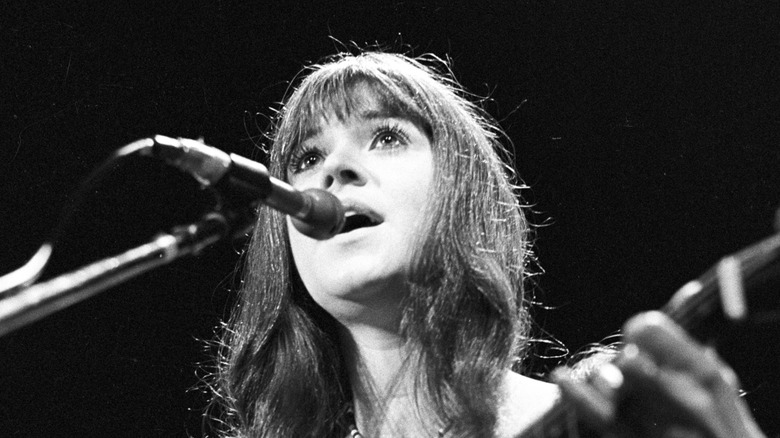
Back in the '60s and '70s, folk rock meant big business, with acts like Cat Stevens, Neil Young, and Joni Mitchell becoming some of the bestselling artists of the era. But while their discographies and those of many other artists continue to find a decent listenership in the 21st century, many other hit songs — like the ones we'll be covering — have largely been forgotten despite enjoying a degree of success back in the day.
For this article, we've dug through the archives of the '60s and '70s folk rock boom to uncover one-time hits that unfortunately have not managed to retain their place in the collective consciousness of today's music listeners — but which we believe certainly deserve revisiting, even if it's just for the sake of curiosity. But we're sure you'll agree these songs by now-neglected artists such as the Rose Garden, Pozo-Seco Singers, and even better-remembered musicians such as Melanie, show for themselves why they were once beloved singles, and that perhaps there is an element of luck involved in whether a song comes to be considered timeless or not. Each of these tracks once made it onto the Billboard Hot 100; see if any of them jog your memory.
Next Plane to London – The Rose Garden
The flower power era of the late 1960s birthed a huge number of bands who managed to blend rock and folk in radio-friendly ways, generating countless Hot 100 hits that today summon the spirit of the era in just a few syrupy bars. One of these was the Rose Garden, a Los Angeles-based folk rock outfit founded in 1963 that rose to prominence in 1967 with the charming single "Next Plane to London," which peaked at No. 17 on the Billboard Hot 100 and topped the charts in Canada.
Lyrically, "Next Plane to London" hits several popular themes of the era: the romance of travel, shattered dreams of stardom, and missing a romantic partner who's far away. The song plays on the fact that lead vocalist Diana DeRose claimed to be from Blackpool, England, in the promotional material around the band. Interestingly, however, this seems to have been an intentional fabrication by the American band, who were chasing the popularity of the post-Beatlemania British Invasion.
As well as DeRose's pleasingly naive vocal style, the song benefits from the 12-string guitar playing of lead guitarist John Noreen. While the track is catchy enough and has a certain homespun charm, much of the instrumentation is lost in the mix, which may account for its lack of later popularity. Nevertheless, it's an undeniably sweet song.
Master Jack – Four Jacks and a Jill
Four Jacks and a Jill went through a couple of name changes before enjoying their greatest success with the single "Master Jack" in 1968, notably settling for a while on the name "the Zombies" before the British outfit of the same name achieved fame in the mid-1960s. But the fact that the band's name chimed with the single may have helped to embed the South African group into the public consciousness long enough to help the single rise to No. 18 on the Hot 100 in the U.S. amid a wave of international popularity.
The song is underpinned by a pleasingly catchy yet intricate riff by lead guitarist Bruce Bark, which lends the instrumental a skewed quality that perfectly supports the strangely ethereal vocals of singer Glenys Lynne. Featuring mystical lyrics that some have suggested contain drug references, there is no wonder it appealed to listeners across the globe in the afterglow of the Summer of Love, but as with "Next Plane to London," the track's rickety production values may have hindered its popularity in later years.
Peace Will Come (According to Plan) – Melanie
The American singer Melanie Safka, aka Melanie, became a huge folk rock star after her breakthrough set at the Woodstock festival in 1969. Though she truly cemented her fame with the No. 1 smash-hit single "Brand New Key" in 1971, she had several successful singles prior to that, most notably her 1970 singles "Lie Down (Candles in the Rain)" and her cover version of the Rolling Stones' "Ruby Tuesday," which steadily built her profile.
"Peace Will Come (According to Plan)" was also released in 1970, striking No. 32 on the Billboard Hot 100 and featuring in several key live performances Melanie gave in the early 1970s. The single was the songwriter's response to the deadly turbulence of the times, such as the ongoing carnage of the Vietnam War, with funereal organs giving way to an upbeat acoustic-guitar-led singalong that prophesies that we may yet see peace in our lifetime.
Despite the admirable message the song carries, its mournful quality undoubtedly removes a good amount of its appeal out of its immediate historical context, with Melanie's heavy voicing a marked contrast to her more famous work. But if you just know Melanie for the hits, it is certainly worth checking out to see how she handles difficult subject matter.
Darkness, Darkness – the Youngbloods
Having cut their teeth in the New York folk scene of the mid-1960s, the Youngbloods became an East Coast folk rock band comparable to the Byrds, the Lovin' Spoonful, and Sopwith Camel in their ability to blend traditional and electric instrumentation to produce catchy folk-rock. They released several successful albums and singles released in the 1960s and 1970s, most notably their famous 1967 track "Get Together," which eventually peaked at No. 5 on the Billboard Hot 100 in 1969.
But other worthwhile tracks in the Youngbloods' discography have become neglected in the intervening years, not least the opening track to their 1969 album "Elephant Mountain," "Darkness Darkness," which peaked at No. 86 on the Billboard Hot 100 in May 1970. Though widely covered by prominent artists including Led Zeppelin's Robert Plant, the original by the Youngbloods arguably deserves far more attention than it receives nowadays. As well as a soulful vocal from songwriter Jesse Colin Young, the track features an evocative fiddle intro, subtle organs, and a fuzz-drenched guitar solo that together give the track a sense of depth and unpredictability. It's a track that's still rewarding to modern listeners.
I Can Make It With You – Pozo-Seco Singers
Texas folk rock trio the Pozo-Seco Singers were the first notable act of later country star Don Williams, with the group breaking into the charts with several singles in the mid to late 1960s. Their biggest hit, "I Can Make It With You" — penned by Chip Taylor, the writer of the garage rock anthem, "Wild Thing," — struck No. 32 on the Billboard Hot 100 in 1966, beating out a Jackie DeShannon version of the track, which stalled at No. 68 around the same time.
The Pozo-Seco single benefits from Williams' honey-tinged lead vocals, as well as huge Wall of Sound-style drums that sound more suited to a big band than a folk rock trio. The chorus is simple but catchy, and the two-minute track sounds like perfect radio fodder. The Pozo-Seco Singers had only a fraction of the success of similar groups of the era, such as Peter, Paul & Mary or the Searchers, but this track shows they had the performance chops when the right song came along.