

5 Classic Rock Hits That Were Way Bigger Outside The US
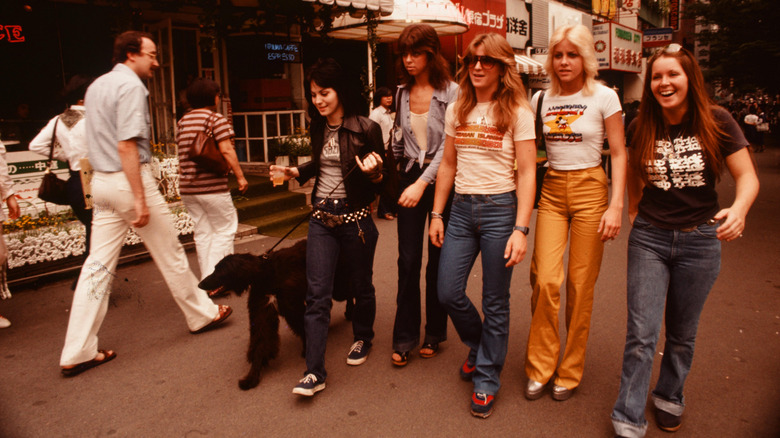
Let's admit it: When it comes to music, Americans can get pretty wrapped up in the scene around us, with plenty of talk about the Billboard Hot 100 and other songs trending stateside but only vague awareness of international trends. Perhaps that's understandable, given human nature, but let's not forget that there's literally a whole world out there. As some classic rock artists have found, the music industries and fans of other nations have been far more receptive to their work, eagerly sending singles and albums to the top of their own charts. Whether it's because some changes in genre simply didn't hit elsewhere (Japan never got into grunge in a mainstream way, for instance) or the timing was just right, songs like the Runaways' "Cherry Bomb" and Cheap Trick's "I Want You to Want Me" found their greatest success well beyond American shores.
That's not to say that hitmaking stateside was impossible for these artists and others like them. Yet, even when a particular single was doing well in the U.S., it could reach stratospheric heights of popularity elsewhere. Staying power is worth considering, too, as longer airplay and continued warm reception to a band's work goes a very long way to sustaining a music career.
While we're at it, we're taking the notoriously vague definition of classic rock and using the broad view here, applying it to rock singles that were released 30 or more years ago. So, take a moment to stand up and look around the globe, musically speaking. These musicians did, and they found quite a lot of success for the trouble.
Can the Can — Suzi Quatro
Suzi Quatro didn't do so badly in the U.S., with a mid-'70s appearances on "Happy Days" as Leather Tuscadero and a 1979 duet, "Stumblin' In," reaching No. 4 on the Billboard Hot 100. Yet it doesn't compare to her U.K. success, especially with her striking single "Can the Can." Originally from Detroit, Quatro formed a band with her sisters in 1964, then met a British producer who wanted to sign Quatro only. She told Classic Rock that "business wise, [it was a] no-brainer. Emotionally, it killed me."
Quatro found U.K. audiences were far more interested, however. "Can the Can," released in 1973, became her first single to hit No. 1 in the U.K., followed by the chart-topping "Devil Gate Drive" the next year. "Can the Can" gloriously epitomizes her leather-clad style, with its rowdy lyrics, catchy riffs, and rough-and-ready energy that reportedly inspired Joan Jett. Don't miss Quatro's distinctive vocals, which come with rough-edged character suited to the daring song referencing a rather tempting boyfriend.
Quatro did occasionally return to the U.S., including a 1974 Detroit concert that gave stage time to an up-and-coming Kiss, as well as opening for Alice Cooper on tour. Quatro claims she was even offered a spinoff "Happy Days" series, but declined it due to fears of typecasting — which, to be fair, didn't scan with the spirit established by her spicy first hit. Could Leather Tuscadero ever have directed someone to "Put your man in the can honey / Get him while you can," as "Can the Can" demands? Given Quatro's subsequent career — including time as a BBC radio presenter, a stage actor, and a published poet — it's clear she could never be so hemmed in.
To Be With You — Mr. Big
Yes, Mr. Big's 1991 single, "To Be With You," was a No. 1 hit in the United States for three weeks in early 1992. But it's hard to overstate just how much bigger it was in Japan and how much longer the band remained relevant there. It began in 1988, when bassist Billy Sheehan departed David Lee Roth's band and started assembling his own group, including vocalist Eric Martin. Eventually, Martin suggested a song he'd written based on an unrequited teenage crush, though he was initially reluctant to share the sappy friend-zone ballad. But band members dug it, so "To Be With You" closed out Mr. Big's second record, "Lean Into It."
The song is pure cheese, with much soulful singing, clapping, and a folk rock tinge that coalesced into a major hit, lingering at the top of the charts in the U.S. and 14 other countries. But all that success fizzled, with subsequent albums never performing to the same level in the U.S. To some, Mr. Big appeared to simply fade away.
You wouldn't have guessed that talking to Japanese fans, who kept "To Be With You" in their regular rotations, took Mr. Big's albums to gold and platinum status, and still packed arenas years after the group's signature hit. But winning that adoration wasn't easy. "We shook every hand, signed every autograph, answered every fan letter," Sheehan told Songfacts of Mr. Big's fanbase, which included other nations, too. "In fact, I get more email from Indonesia than any other country in the world," Sheehan said. "Italy had five Mr. Big copy bands at one point, and South America is out of control for us."
Cherry Bomb — The Runaways
Today, it's impossible to talk about the Runaways without discussing their biggest single, "Cherry Bomb." But this bold, explosive declaration of their intent didn't make a big splash in the States upon its debut. Yet, it turns out the Runaways really were bigger in Japan, as audiences there turned them from a bit of a novelty act — as they were often dismissed back home — to legitimately beloved rock stars.
For a case study of just how well "Cherry Bomb" worked there, listen to the Runaways' "Live in Japan" album, released after a 1977 tour. You can tell there's something special here going by the audience reaction and the band's boisterously energetic performance of "Cherry Bomb" in particular. Eventually, "Cherry Bomb" took the top spot on Japanese charts, compared to a U.S. position of No. 6 on the Bubbling Under Billboard chart, meant for songs lingering just below the Hot 100 (making the actual Billboard ranking of "Cherry Bomb" No. 106).
Curiously enough, what became the Runaways' standout track was assembled on the fly. Future lead singer Cherie Currie — then only 15 years old – intended to perform a Suzi Quatro song for her audition. Instead of the more obvious "Can the Can," she picked Quatro's cover of "Fever," which was greeted with skepticism by guitarist Joan Jett and other band members. Together with producer Kim Fowley, Jett wrote a new track in about 20 minutes. Its title, "Cherry Bomb," references Currie's given name and, delivered in Currie's aggressive growl, became the band's thesis statement. American audiences may not have keyed into that, but Japanese listeners sure knew what was up.
This Town Ain't Big Enough for Both of Us — Sparks
Sparks began as Halfnelson in Los Angeles, featuring brothers Ron and Russell Mael. They never broke the Top 10 at home, though, so a name change and major move were in order. As Ron told the BBC in 1985, "We had had a couple albums out in America and they were what are known as bombs, duds, losers in the States. And so out of desperation, we decided to come to England."
It all changed after a 1974 appearance on "Top of the Pops" introduced British viewers to "This Town Ain't Big Enough for the Both of Us," Sparks' delightfully quirky single that, along with other 1974 tracks, sounds even cooler today. It was a long shot, to the point where Elton John even bet against their success. But Sparks' performance was pure glam and prog rock fun, thanks to Russell's falsetto vocals delivering wry lyrics, not to mention Ron's eye-catching mustache and arch looks aimed directly down the camera lens.
Viewers took notice: The single hit No. 2 in the U.K., while its album, "Kimono My House," cruised to No. 4. Eight of Sparks' songs hit the U.K. Top 40 in a row, but "This Town Ain't Big Enough for the Both of Us" remains the band's beloved type specimen, with its tense music, sparkling glam vibes, and unapologetic use of sound effects. There's Ron's cheeky writing to enjoy here, too, with winking lines like "As 20 cannibals have hold of you, they need their protein just like you do." Sparks has kept cultivating a loyal fanbase, making 28 albums as of 2026.
I Want You to Want Me (Live at Budokan) — Cheap Trick
In the late '70s, Cheap Trick was facing the end. As lead singer Robin Zander told Classic Rock, "We were in debt by about a million dollars" as touring drained their finances. But, in Japan, they were stars, with massive success for their now-signature track, "I Want You to Want Me." When the band toured there in spring 1978, the reaction was so overwhelming that onlookers recalled the famously intense manner of '60s Beatles fans.
Cheap Trick recorded a show at Tokyo's Nippon Budokan arena as part of a deal with their record company. The result, "Cheap Trick at Budokan," captured the energy of their live shows and especially "I Want You to Want Me." That track generated little notice upon its original 1977 release, having meandered out with a rather slow tempo and muted energy. But the live Budokan performance transformed it into a frenetic paean to obsessive love, with much faster music and higher energy fed by the adoring crowd. The Budokan performance carried the live track of "I Want You to Want Me" to No. 1 in Japan and, eventually, No. 7 in the States, turning a flop '70s song into a smash hit.
Technically, the turning point album was recorded in Osaka, not Budokan. Producer Jack Douglas, appearing on the podcast "Magnificent Others With Billy Corgan," said that "Budokan sounded terrible. It was just so poorly recorded. I don't know, like the mics were off, they were pointed the wrong direction." Little matter, though, as the success of "I Want You to Want Me" and the rest of the live album still proved to be Cheap Trick's savior.