

This Powerful 1984 Pop No. 1, Initially Rejected By Tina Turner, Topped The Charts 42 Years Ago Today
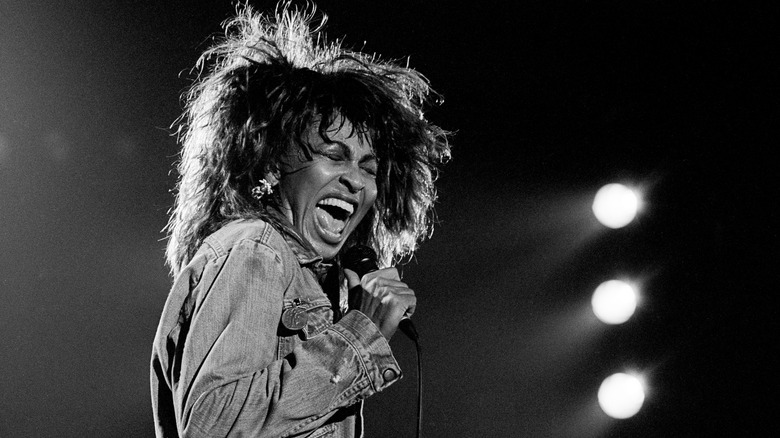
In 1984, Tina Turner pulled off one of the most sensational comebacks in music history, starting with the song "What's Love Got to Do With It." Originally revered as the main vocalist of the husband-and-wife R&B duo Ike & Tina Turner in the '60s and early '70s, the iconic raspy-voiced chanteuse separated from Ike and launched into a full-time solo career in 1976, but the first few albums and singles of this new era didn't make much of a mainstream splash. After both 1978's "Rough" and 1979's disco-inflected "Love Explosion" failed to chart at all in the U.S., Turner was dropped by United Artists and dismissed by many as a relic, her ongoing hotel and nightclub shows written off by music journalists as the work of a nostalgia act.
Then, something shifted. Following a new deal with Capitol Records in 1983, Turner released a cover of Al Green's "Let's Stay Together" that rescued her career and allowed her to get to work on a new studio album. Recorded over two weeks and released in May 1984, "Private Dancer" re-introduced the 44-year-old Turner not as the torch-bearer of a nostalgic musical past, but as the pop rock star of the future. Its most successful single, "What's Love Got to Do with It," climbed steadily in the charts over the course of the year and eventually reached No. 1 on the Billboard Hot 100 in September 1984. It was the first and only Tina Turner song to earn that particular distinction, years into what most commentators had dubbed an irrevocable and inescapable commercial twilight for a midcentury singer already in her 40s. And it completely rewrote the rulebook for pop stardom.
Tina Turner found the heart of What's Love Got to Do with It
Written by Terry Britten and Graham Lyle, "What's Love Got to Do with It" was originally recorded by Bucks Fizz, the English quartet that became notorious for winning Eurovision in 1981. Their new wave-tinged version had a man's point of view, with male vocalist Bobby G sassing through the bitter lines about the irresistible pull and underwhelming payoff of love. Before this take on "What's Love..." could see the light of day, however, Tina Turner recorded and released the definitive version, which sent shockwaves through the lyrics by yoking them to the perspective of a female narrator pulling herself back up.
Issued to radio stations weeks prior to the release of "Private Dancer," Tina Turner's "What's Love Got to Do with It" became the second-biggest single of 1984 in the U.S. — no small feat for what may have been the decade's best year for music. Given cool, spacious support by Britten's own production, which put an improbably perfect reggae rhythm to the cascade of synths and jangly guitar chords, Turner leveraged every verse into a case for her enduring prowess as an interpreter. Her voice is gravelly, hesitant, and filled with choked-back angst in the opening trudge through minor chords, then explodes with riotous passion in the chorus, taking on such dramatic authority that it feels as though she's giving her all to convince herself, in addition to us, that love is not all it's cracked up to be. It was an undeniable calling card: No one but Tina could sing a pop song like this.
The song was a turning point for Turner and for women in music
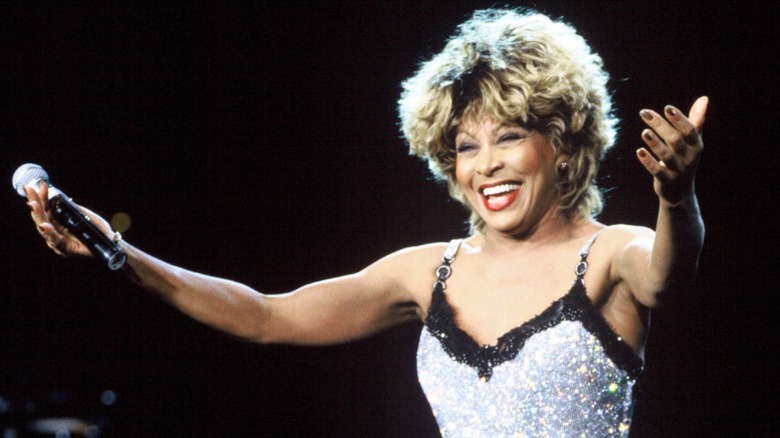
After being barred from the top of the charts by an uncanny succession of iconic releases including Cyndi Lauper's "Time After Time," Prince's "When Doves Cry," and Ray Parker Jr.'s "Ghostbusters," "What's Love Got to Do with It" finally made good on three months of chart stability and earned Tina Turner her first No. 1 on the Billboard Hot 100 on the week of September 1, 1984. It then stayed at the top for three consecutive weeks, and in total, it spent a whopping cumulative total of 28 weeks on the chart.
By year's end, "What's Love ..." was such an astronomical hit that it had effectively inverted the axis of Tina Turner's relationship to the public and the recording industry: No longer the recipient of however much goodwill they saw fit to grant her, she was once again a pop institution beckoning the world to attentively follow whatever she might do — and with more control, independence, and creative freedom than she'd ever had before in her career.
This reinvention jumpstarted a decade of worldwide glory that put Turner decisively in the pantheon of rock immortals, culminating in her breaking the Guinness World Record for biggest paying audience for a solo artist with a Rio de Janeiro concert in 1988. If women like Bette Midler, Cher, Madonna, Sia, and Beyoncé were later able to defy the odds for female artists and earn their own No. 1s after 40, Tina Turner and "What's Love Got to Do with It" are largely to thank for blasting the door open.