

The Voice Behind Chicago's Biggest Ballads Was Born 82 Years Ago Today
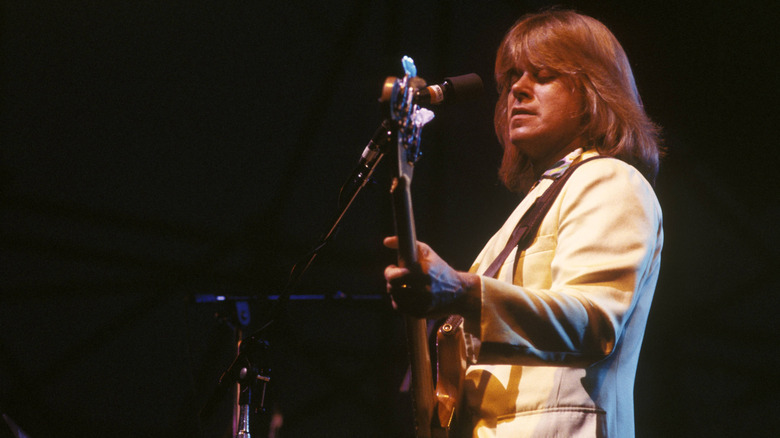
The Windy City has been the home to many powerful, memorable singers, but only one man can claim the title of "the voice of Chicago." Born on this day, September 13, 1944, and raised on the South Side, Peter Cetera would become synonymous with his hometown when, as a young man, he joined a group called the Big Thing. But that band would later rename itself the Chicago Transit Authority, before simply shortening it to Chicago.
Cetera performed as the band's bassist and vocalist from late 1967 all the way up to July 1985. During that nearly 20-year tenure, Cetera's voice helped cement Chicago's legacy as jazz-inspired soft-rock titans (and one of the rock bands with the most Billboard hits of the 1970s). Cetera sang lead on 1970s "25 or 6 to 4," the band's first Top 5 hit on the Billboard Hot 100. He would also sing on some of Chicago's biggest ballads: from Top-10 hits like "Baby, What A Big Surprise," "Hard Habit to Break," and "You're The Inspiration," as well as the chart-toppers "If You Leave Me Now" and "Hard to Say I'm Sorry."
On his birthday, look at how the man became the voice and face of Chicago — who entered the Rock & Roll Hall of Fame in 2016 and continues to tour to this day — and why he hasn't played with the group in four decades.
How Peter Cetera Became Part of Chicago
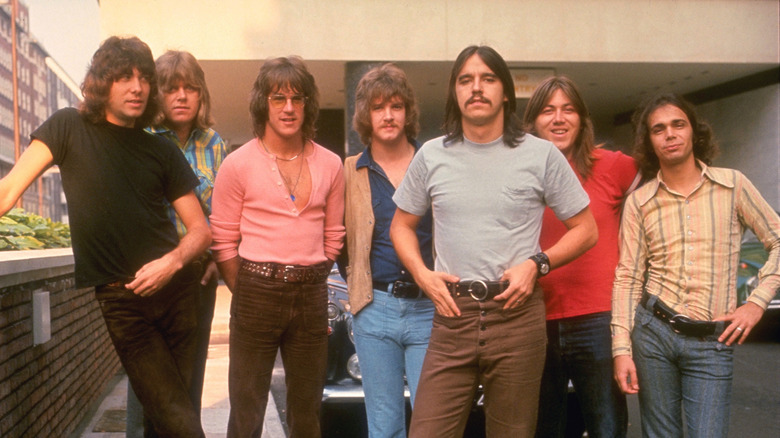
Had things gone differently, Cetera would have been known as the "Voice of Polka," instead of a soft rock legend. "I was kind of a polka prodigy," he told For Bass Players Only in 2015. As a child, Peter's blue-collar parents didn't think rock 'n' roll was a good hobby and pushed him towards the accordion. While Cetera said he excelled at the squeezebox, he admitted that it "wasn't really my first love." Once he became a teen, he put down the accordion and picked up the bass. Cetera played with a handful of local groups, including one band called the Exceptions.
Cetera's life would change in December 1967, when the Exceptions played at a venue called Barnaby's. The opening band that night was the Big Thing, featuring Robert Lamm, Lee Loughnane, James Pankow, Walter Parazaider, Terry Kath, and Danny Seraphine. The six-piece was making a name for themselves as they had everything — except a bass player and a tenor voice. "When Peter joined the band, that solidified our vocals," said Loughnane (via Chicago's official website). "You could get more color, musically, and we started building from there."
And what Cetera and Chicago built was a legacy that included chart-topping hits and iconic classic rock tracks. Their manager renamed them the Chicago Transit Authority, until the official CTA threatened legal action, With the shortened name, Chicago and Cetera began to release over a dozen eponymous albums, four of which, "Chicago V," "Chicago VI," "Chicago VII," and "Chicago IX: Chicago's Greatest Hits," all went to No. 1 on the Billboard 200.
Why Peter Cetera Left Chicago (and Never Went Back)
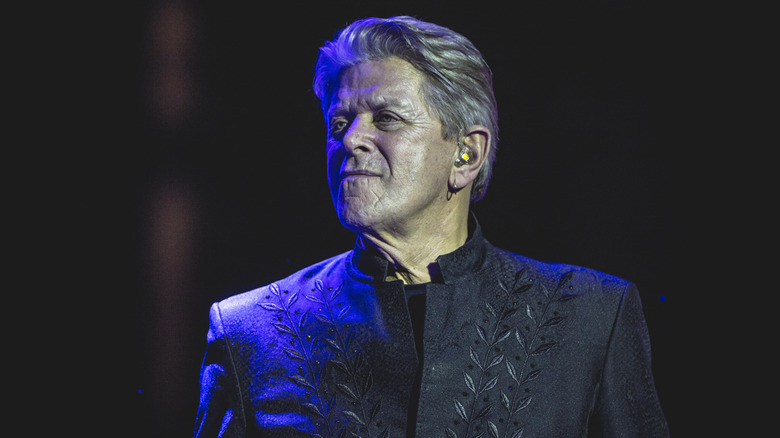
In 1978, Terry Kath, the band's principal songwriter, died from an accidental self-inflicted gunshot wound after a three-day bender. Without their central musical leader, everyone was tasked with picking up the slack. A series of scattered and unfocused albums ensued, all with diminishing chart results. Columbia Records ultimately dropped Chicago in 1981; they signed with Full Moon Records, who brought in producer David Foster.
"[Foster] bought into the whole ballad thing," Lamm told Classic Rock. The shift to a more mainstream sound matched Cetera's preferences. "Musically, the jazz and blues that the rest of the guys loved was never my cup of tea," Cetera told Classic Rock, adding that " ... the drugs and the drinking had taken over so much ..." of the rest of his bandmates that he and Danny Seraphine were the only ones capable of writing anything. The results were 1982's "Chicago 16," which gave the band their second No. 1 hit, "Hard to Say I'm Sorry."
The next album, "Chicago 17," also produced by Foster, had four Top 20 singles; it remains the band's best-selling album to this day. It's also the last album to feature Cetera. Relentless touring commitments, a sound he wasn't fond of, and a blossoming solo career all led to Cetera quitting. And he has refused to work with his former band ever again, even ultimately opting out of a reunion performance when Chicago entered the Rock & Roll Hall of Fame in 2016.