

Quote Of The Day By Ray Charles: 'I Know That Men Ain't Supposed To ...'
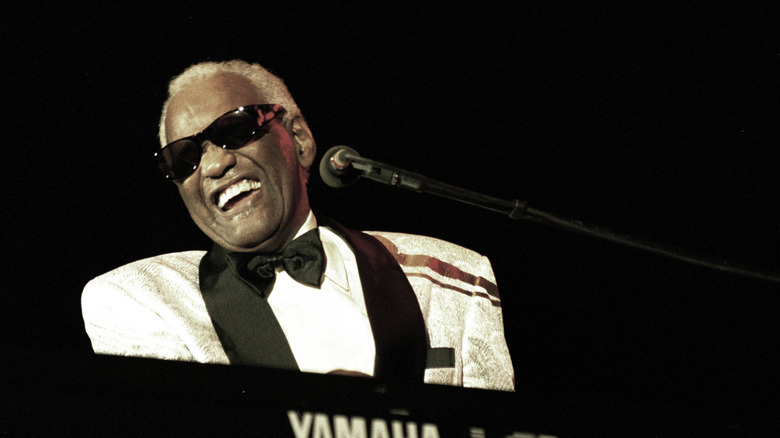
The word "genius" gets thrown around a lot in the arts — perhaps too often — but when it comes to Ray Charles, who came to be known affectionately as "the Genius" by his fans and those who worked with him, it may actually be warranted. Born September 23, 1930, in Albany, Georgia, and raised from an early age in Greenville, Florida, Charles began performing in public as a pianist at only 5 years old, and remained a fixture of the American music scene throughout his life until his death in 2004.
Having been influenced by early jazz pianists such as Nat King Cole, Charles embraced a wide variety of styles including blues, gospel, and boogie-woogie. He blended those styles to become one of the pioneers of soul music, which would become a chart force throughout the 1960s and 1970s. His hits such as "What'd I Say," "I've Got a Woman," and "Unchain My Heart" have become standards recorded by countless other artists. Charles was especially inspirational to another soul genius, Stevie Wonder, who followed in Charles' musical footsteps after also losing his sight as a child. Charles was portrayed in the acclaimed biopic "Ray: by Jamie Foxx in 2004.
The familiar image of Charles is of the musician seated at the piano, wearing dark sunglasses, and smiling broadly. But despite his success, he had a difficult early life, and his ability to engage with his emotions throughout is the subject of our quote of the day.
Quote of the Day by Ray Charles
"I know that men ain't supposed to cry, but I think that's wrong. Crying's always been a way for me to get things out which are buried deep, deep down."
Ray Charles shared this sentiment in a 1995 interview with Ability Magazine, which reports on the subjects of health and disability. Charles lost his sight at the age of 7, and experienced other tragic events during his childhood, including the death of his brother — which he witnessed – and mother, all by the age of just 15.
Such hardship and loss at an early age could very well lead to a troubled adulthood characterized by bitterness and anger toward the world. But the classic image of Charles is quite the opposite: a performer who, despite his difficulties, manages to embrace his emotions in the service of music.
Deeper Meaning of Ray Charles' Quote — Great Artists Trade in Emotion

In the Ability Magazine interview, it is made clear that Ray Charles' teenage years as a blind Black child were difficult. At the Florida School for the Deaf and Blind, he was not only separated from the sighted children of other schools, but also from the deaf students, girls, and was also segregated from white children.
These were tearful years for the young Charles, but as he readily admitted, his connection to his emotions fuelled his performances. "When I sing, I often cry," he added. "Crying is feeling and feeling is being human. Oh yes, I cry."
Charles was also brought up in an era when being in touch with one's emotions was often considered unmanly, and in being open about weeping, shows an unusual willingness to confront his past traumas for a man of his generation. Charles doesn't dwell on this aspect of his personality, or explicitly link it to his creativity. But as the "Godfather of Soul", it is undoubtedly an aspect of his artistry, which allowed soul performers who came after him to be utterly unabashed when it came to sharing their inner world onstage.
More Quotes From Ray Charles
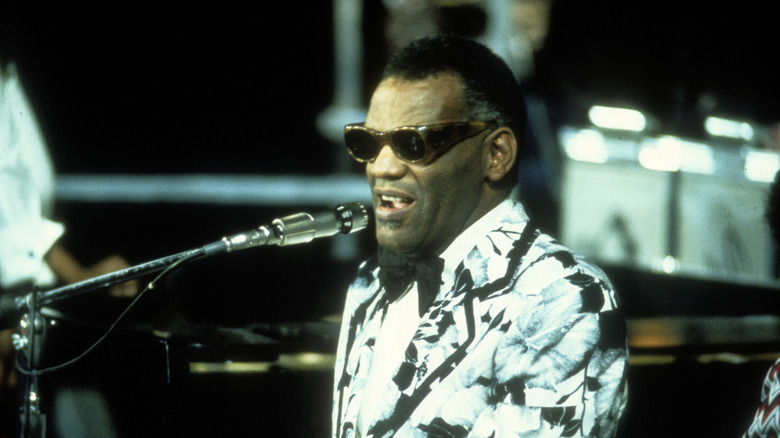
- "Mama was a country woman with a whole lot of common sense. She understood what most of our neighbors didn't — that I shouldn't grow dependent on anyone except myself."
- "It was music which drove me; it was my greatest pleasure and my greatest release. It was how I expressed myself."
- "Music is nothing separate from me. It is me. I can't retire from music any more than I can retire from my liver ... I believe the Lord will retire me when He's ready. And then I'll have plenty of time for a long vacation."
- "Like any song that I'm going to do, I first sing it to myself. And see if I can genuinely feel it. You know, maybe sometimes I may sit at the keyboard and fool around with the chords and see if I can find a way to sing it where it makes me feel good inside."
- "My heart was with the keyboard because ... there's so much you can do when you play piano. You know, by the time I was 12 years old or 13 years old, I could write a whole arrangement for a 17-piece band. See, that's the great thing. If you study piano, it gives you a whole outlook on a lot of different things that has to do with music."