

Music Icons Who Overcame Difficult Childhoods
We may receive a commission on purchases made from links.
If you were to read a book on creativity, there's a good chance it would say the best ways to get in touch with your muse are emotional stability and a lifestyle built on healthy, grounded routines. But as the list of musicians below makes clear, the history of popular music shows us that in many cases, some of the world's biggest stars have had to deal with difficult early lives. These artists had childhoods marred by instability and emotional strife long before they rose to prominence.
We're going to delve into the childhoods of some of the most iconic musicians of the last century, from rock stars like Ozzy Osbourne and The Who's Roger Daltrey to soul legend Ray Charles and the King of Pop himself Michael Jackson. The common thread between all of them is that they were forced to overcome difficulties before they made it big. While often tragic, such stories can be both uplifting and inspiring, reminding us that even when circumstances aren't perfect, it is still possible to surmount the obstacles we encounter and become the people we want to be. More than anything, it is a reminder that we aren't necessarily defined by our childhoods, however difficult they may have been.
John Lennon
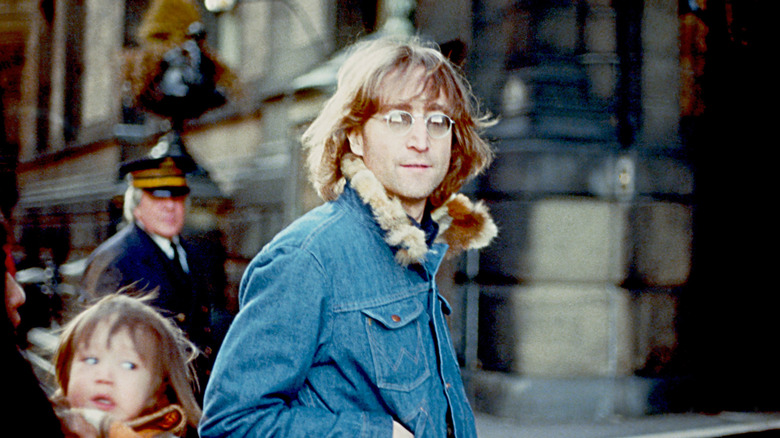
The most caustic of the Beatles, John Lennon dealt with a difficult upbringing and personal tragedy before achieving his dream of becoming a rock 'n' roll star in the early 1960s. The legendary songwriter was born in Liverpool on October 9, 1940. His mother, Julia, was something of a party animal and was fond of singing and dancing. She fostered a keen love of music in young Lennon, but at the same time she found parenthood difficult to reconcile with her impulsive personality and flightiness. From the age of 5, Lennon was raised by his Aunt Mimi, a loving but stern figure who gave his life structure and boundaries.
Lennon and his mother would stay in touch and meet regularly at Mimi's house. But tragically, when the future star was 17, Julia was struck and killed by a car after leaving her sister's house. The loss had a profound impact on Lennon, who returned to his mother and his loss in his work, most notably the 1968 song "Julia." His father, a naval seaman, was actually married to Julia but was not in the songwriter's life to any meaningful degree.
Eventually, Lennon found kinship later on with his future songwriting partner Paul McCartney, who also lost his mother at a young age. Biographers and commentators have often touched on Lennon's grief in relation to his psychological profile as an adult, highlighting it may have framed his devotion to his second wife, Yoko Ono, who has been described as being a maternal figure in his later life. Whatever the truth may be, the loss of his mother was undoubtedly the defining event of John Lennon's childhood.
Jimi Hendrix
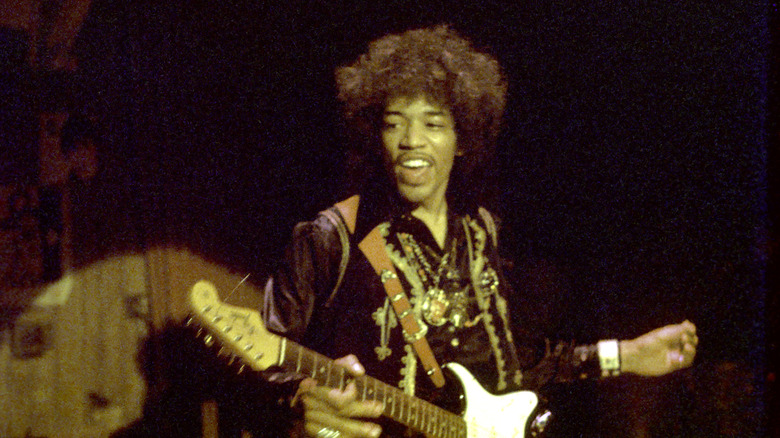
Legendary guitarist Jimi Hendrix had something of an otherworldly air to him when he first rose to prominence as a star musician in mid-1960s London. But the truth is his background was as prosaic as it could be, with the future guitar god being brought up in near poverty in Seattle, Washington, where he was born on November 27, 1942. His mother, Lucille, worked a series of temporary jobs while her husband and the father of her child, Al, was on duty in the U.S. Army.
Hendrix was passed around family and friends while his mother worked and was said to have been neglected as an infant. At one point, he was left with a friend of Lucille's in California while she was in Missouri visiting family. When Al left the army, he took custody of his son, who he had not yet met, and planned to divorce Lucille. However, the pair soon reunited, and both of them experienced alcohol use issues.
Their drinking made it difficult to maintain stable housing, and the pair often separated. It was a turbulent upbringing for Hendrix, and when the couple had more children, the family's poverty worsened, and his siblings were put into foster care. Nevertheless, Al sought to nurture his eldest son's interest in music, buying him his first electric guitar — he had learned on a broken acoustic with a single string — and helping him take his first steps toward greatness. Hendrix's mother died of a ruptured spleen while he was still a teenager, and his father outlived him, dying in April 2002 of congestive heart failure.
Janis Joplin
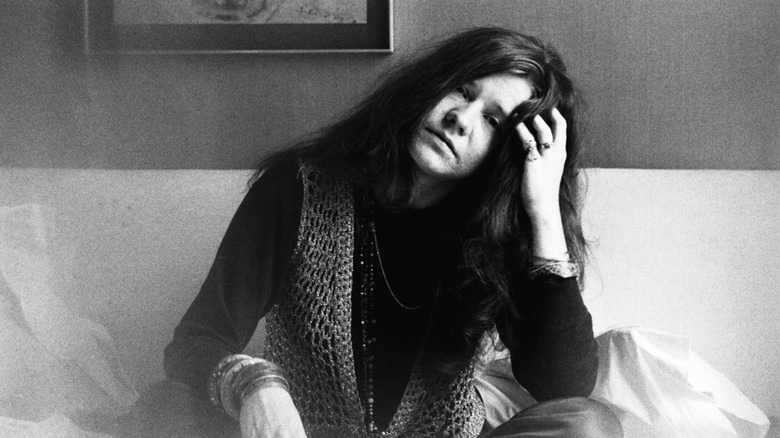
Janis Joplin was one of the 1960s counterculture's most hedonistic figures before her tragic death in 1970 at the age of 27. She seemed to embody the decade's fixation with partying and pleasure, but the truth is her childhood was far from enjoyable. Born January 19, 1943, and raised in Port Arthur, Texas, Joplin was alienated throughout her adolescence by constant bullying from other students at Thomas Jefferson High School. The bullies focused on her acne and weight, which is said to have given her body dysmorphia throughout her life. Joplin was bisexual, and she also attracted criticism for the choice of dress that would later see her fit effortlessly into the hippie movement.
Even when Joplin returned to Port Arthur for a school reunion after becoming a star, she failed to win the respect of those who had tormented her in her youth. Sadly, she died just a couple months later and had little opportunity to address the issues that had affected her short life ever since she was a girl.
Stevie Wonder

Stevie Wonder is one of the most popular artists in music history, with hundreds of millions in sales and a profound influence over generations of performers working in a variety of genres. His achievement is even more remarkable given the fact that he has been sightless since shortly after his birth. Born Stevland Hardaway Judkins in Saginaw, Michigan, on May 13, 1950, the future star was six weeks premature, a danger for any baby that requires life support with the use of an incubator. His premature birth led to a complication: Retinopathy of prematurity, which affects the retinas and was possibly exacerbated by an excess of oxygen in the newborn's incubator.
Nevertheless, Wonder didn't let his disability bring him down, reportedly telling his upset mother when he was just 5 years old (via Oprah.com): "Don't worry about me being blind, because I'm happy." In his early teens, he emerged as a talented multi-instrumentalist and a uniquely charismatic and capable performer who was performing with Motown artists by the age of 12. Wonder's first hit, "Fingertips (Part 2)," was released before he was a teenager under the name "Little Stevie Wonder," and his career only went from strength to strength.
Eric Clapton

Eric Clapton was famously described as "God" in a piece of London graffiti in the mid-1960s, but he had a troubled rather than divine lineage. His mother, Pat, became pregnant as a teenager via a Canadian soldier stationed in the U.K., and by the time Clapton was born the affair was long over. The year was 1945, and illegitimate birth was frowned upon in British society.
Clapton's mother left for Canada shortly after his birth, and he was raised by his maternal grandparents, believing in his early years that they were his mother and father. However, the truth of the matter became clear to Clapton while he was still a child after he overheard conversations among family members. His uncle, who he had been told was his brother, even took to calling Eric a "bastard." He first met his mother at the age of 9, and the deception that had defined his youth left him feeling alienated from his own family.
Music, which he began to develop an interest in as a teenager, became a sanctuary away from his difficult home life. As he wrote in his autobiography: "Music became a healer for me, and I learned to listen with all my being. I found that it could wipe away all the emotions of fear and confusion relating to my family."
Ray Charles

Ray Charles was one of the most important musical figures of the mid-20th century. His swinging, raw piano style bridged the gap between gospel, R&B, blues, and rock 'n' roll and laid the groundwork for soul. Charles was born Ray Charles Robinson on September 23, 1930, in Albany, Georgia, though his family relocated to Greenville, Florida, not long after.
Charles experienced extreme poverty throughout his childhood. Yet he developed his musical ability quickly, and he was already playing piano in a local cafe at just 5 years old. However, tragedy struck the next year, when the budding musician's sight began to fail him. By the age of 7, Charles was completely blind, though miraculously his musical career continued to reach even greater heights.
The musician's childhood was also marred by personal loss. His father died when he was just 10, and his mother died when he was 15. But most traumatic of all was the death of his brother, George, who died in front of Charles after drowning in a washtub when the future star was only 5 years old.
Michael Jackson

Dubbed the King of Pop thanks to his mega-selling records and iconic status for much of his career, Michael Jackson was also one of the most controversial figures in pop music before his tragic death in 2009 at the age of 50. Opinions vary wildly as to whether Jackson was an innocent, childlike figure or a more calculating personality. But whatever stance one takes on him, all agree that he had a deeply traumatic childhood.
Jackson was raised by a controlling father who terrorized his children and pushed Jackson and his brothers into show business. He was fronting the family band the Jackson 5 at the age of just 5, meaning he was robbed of having a typical, carefree childhood. It has been speculated that this aspect of Jackson's life was the foundation of his later "Peter Pan syndrome," which left him with a fixation on childhood and a suspicion of the adult world. However, as he explained in 1993 (per Biography): "My childhood was taken away from me. There was no Christmas, there were no birthdays, it was not a normal childhood, nor the normal pleasures of childhood. Those were exchanged for hard work, struggle and pain and eventually material and professional success. But as an awful price I cannot recreate that part of my life. Nor would I change any part of my life."
Ozzy Osbourne

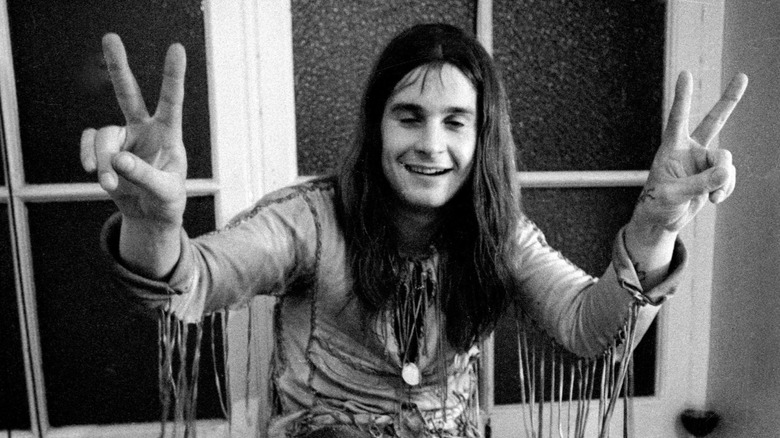
Born in the working-class Aston region of Birmingham, U.K., on December 3, 1948, Black Sabbath frontman Ozzy Osbourne was raised in the milieu of post-war poverty. Though the community around him was reportedly loving and supportive, Ozzy being one of six siblings meant his parents had to work poorly paid factory jobs to keep the family afloat. Even then, living conditions were primitive. The family home was cramped, with no indoor plumbing, and the six children were forced to all sleep together in one bed, covered in coats in the winter due to a lack of heating. Ozzy's mother was permanently exhausted from offering full-time care for the children, while his father would spend much of his spare time drinking in local pubs, leading to raging arguments between the two throughout his childhood.
Ozzy struggled at school, during an era in which his behavioral issues meant he often received corporal punishment. As he found out only in adulthood, he was forced to persevere with undiagnosed dyslexia and ADHD, and he left school at 15 without qualifications. In his later teens, he worked numerous low-skilled jobs, including in an abattoir, slaughtering hundreds of animals a day.
Roger Daltrey

The Who's frontman Roger Daltrey came from a similar background to Ozzy Osbourne, with the fallout from World War II dominating his childhood. Like many children of the era, Daltrey, who was born in Shepherd's Bush, London, on March 1, 1944, had his diet restricted by ongoing food shortages and rationing in the aftermath of the war. Malnutrition was rife, and Daltrey suffered from rickets as a result of his poor diet.
One of the most dramatic events of Daltrey's childhood occurred when he was just 4 years old: He required emergency surgery after swallowing a 2-inch nail. The procedure left him with a permanent scar on his stomach and a huge amount of scar tissue in his system, which he blames on the surgeons' use of talcum powder. Daltrey was also bullied as a child, and he had a difficult time at school as a result. According to the singer, the isolation he felt has informed his performances as an adult. Most notably, the character of Tommy, a deaf, sightless, and mute boy from the rock opera of the same name, was a reflection of Daltrey's teenage loneliness.
Patti Smith
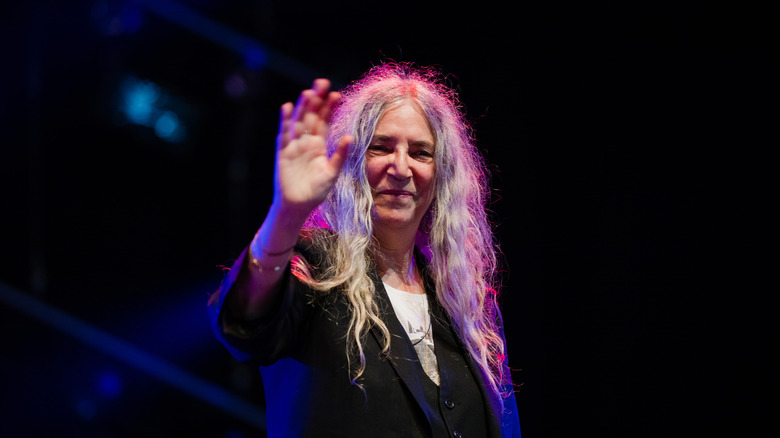
Patti Smith, the proto-punk artist who broke the mold of rock music in the mid-1970s with her breakthrough debut LP "Horses," had as atypical a childhood as you would expect. Born December 30, 1946, in Chicago, Illinois, her working-class family moved homes 11 times by the time she was 4 years old. Eventually, they settled in New Jersey.
But Smith was still unable to simply enjoy a normal childhood. Throughout her early years she had to overcome repeated bouts of illness, including tuberculosis, measles, scarlet fever, and pneumonia. In one instance when Smith was particularly sick, she was sent to Tennessee to quarantine away from her family.
Though Smith got on well with her siblings and played together with them, her imagination was fired up during long periods of bed rest thanks to the books she read, which included anthologies of poetry and the works of writers such as the French symbolist Arthur Rimbaud and the Irish Nobel laureate William Butler Yeats. She also found escape through the music of Bob Dylan — who later became her close friend — and Puccini. Though undoubtedly an unfortunate day-to-day life for any child, it laid the groundwork for her incredible creative life as she came of age.
Tina Turner

The legendary vocalist who broke into the music industry in the 1960s alongside her husband Ike before becoming an icon in her own right, Tina Turner suffered from a tumultuous childhood. The daughter of sharecroppers Floyd and Zelma Bullock, Turner was born in Nutbush, Tennessee, on November 26, 1939. The poverty she experienced as a child resulted in tensions within her parents' marriage, and there was often conflict in the Bullock household, though Turner enjoyed the typical pleasures of childhood, such as playing outside.
However, by the time she was 10 years old, Floyd's and Zelma's marriage was on the rocks, and her mother abandoned the family, followed by her father. She was raised instead by her aunt and uncle along with her sister Alline, but when Alline followed their mother to St. Louis, Missouri, she was raised alone by her grandmother. Though they had a close relationship, Turner sadly lost her grandmother at the age of 16. She then relocated to St. Louis, Missouri, and reunited with her mother. Turner was adamant, however, that her mother never truly loved her. The following year, she met Ike, and her career in music began.
Her relationship with Ike was fraught despite their creative achievements. But Turner has credited her difficult childhood for giving her resilience and self-sufficiency, writing in her autobiography "My Love Story": "I didn't have anybody. Really, no foundation in life, so I had to make my own way. Always, from the start. I had to go out in the world and become strong, to discover my mission in life."
If you or anyone you know needs help with addiction issues, help is available. Visit the Substance Abuse and Mental Health Services Administration website or contact SAMHSA's National Helpline at 1-800-662-HELP (4357).
If you or someone you know may be the victim of child abuse, please contact the Childhelp National Child Abuse Hotline at 1-800-4-A-Child (1-800-422-4453) or contact their live chat services.