

The Top 10 Hits That Took Over Fall 1964
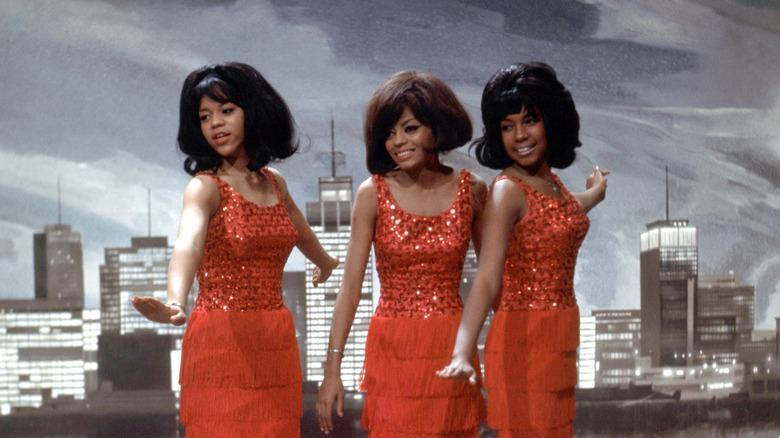
After the Top 10 hits that took over summer 1964 began to fade as the weather cooled down across the United States, a new batch of singles climbed the charts. These would be the songs to soundtrack all sorts of autumnal activities, the same ones that young music fans would rush to their local record stores to purchase on 45 RPM records or bombard their pop radio stations with requests to hear again and again.
Not only was 1964 the decade's best year for love songs, with the No. 1 songs to prove it, it was a watershed and transitional time for popular music. It's the year that the Beatles broke big in the U.S., triggering a whole "British Invasion," while on the R&B side, the Motown Records sound became the sound of general pop. Along with some other superstars and beneficiaries of styles of the time, the musical landscape of the end of 1964 was as varied as the physical landscape was littered with leaves. Here are the Top 10 hits that were everywhere in the fall of 1964.
Oh, Pretty Woman – Roy Orbison and the Candy Men
With an insistent drumbeat, elegant piano, and chugging guitar riff, "Oh, Pretty Woman" bears all the elements of a pure and simple rock 'n' roll song. And it was co-written and sung by Roy Orbison, who possessed one of the most expressive and emotive voices in rock history. After joining the Hot 100 in the late summer, "Oh, Pretty Woman," which details a man eying an idealized female stranger on the street and hoping to get her attention, made it to No. 1 in late September 1964 and remained there for three weeks.
Do Wah Diddy Diddy – Manfred Mann
In the final weeks of 1964, Americans couldn't get enough of songs about guys pursuing random women. In addition to Roy Orbison's "Oh, Pretty Woman," the charts welcomed "Do Wah Diddy Diddy" by Manfred Mann. Named after its nonsensical refrain, repeated frequently, the call-and-response tune finds the narrator and his dream woman living happily ever after. Manfred Mann, who'd later rebrand as the spacey prog act Manfred Mann's Earth Band in the '70s, took the song to No. 1 for two weeks in October 1964.
Baby Love – The Supremes
The Supremes claimed the No. 1 position 12 times. In 1964, the vocal trio, fronted by Diana Ross, became Motown Records' premiere act, and they went to the highest point on the Hot 100 three times that year. The second of those songs was "Baby Love," which had a hooky, 1-2 drumbeat and angelic background vocals to match Ross's delivery of lyrics speaking to devotion and want of better treatment by a lover. "Baby Love" reached the Hot 100 the first week of October, and at the end of the month it began a three-week residency at No. 1.
Dancing in the Street — Martha and the Vandellas
With that instantly recognizable horn fanfare, Martha and the Vandellas' Motown classic "Dancing in the Street" explodes. It's about a freewheeling and inviting block party that sounds like one is already underway. They're dancing in the street in "Dancing in the Street" because the summer has just begun, but it took a while for the song to take over. The rare summer song that hits big in the fall, "Dancing in the Street" by Martha Reeves and her backup singers spent two weeks at the No. 2 spot in October 1964.
Last Kiss – J. Frank Wilson and the Cavaliers
The 1950s and 1960s were rife with melodramatic songs about teenagers dying in car accidents. Along with Mark Dinning's "Teen Angel" and the Shangri-Las' "Leader of the Pack" came "Last Kiss," from J. Frank Wilson and the Cavaliers. In this one, the male narrator laments the death of his girlfriend in a crash that was kind of his fault, and now he longs to be dead so they can reunite in the afterlife. Record buyers were so transfixed by "Last Kiss" that they sent it to the No. 2 spot on the Hot 100 in early November 1964.
She's Not There – The Zombies
With the haunting, otherworldly, and distant vocals of Colin Blunstone and pervasive organ, the Zombies were always a little spooky, and the most appropriately named of all the British Invasion groups. And when the ghostly Halloween season of 1964 came around, the Zombies entered the American pop chart for the first time. An anguished tale of a romance gone wrong and a lover who's disappeared, "She's Not There" debuted in mid-October and steadily climbed the Hot 100, peaking at No. 2 in early December.
Ringo – Lorne Greene
What it was really like to be a Beatles fan in the 1960s, particularly in 1964, was to embrace anything that had even a tenuous or accidental connection to the Fab Four. One can partially credit the Beatles with the success of "Ringo," a song that shares the name with that of the band's drummer, Ringo Starr. It's a spoken-word story song about an Old West gunslinger, with country-adjacent backing music, performed by Lorne Greene, star of TV's then No. 1 show, the western "Bonanza." In early December 1964, it was the No. 1 single for a week.