

Not The Eagles, Not The James Gang: Joe Walsh's Other Band That Time Forgot
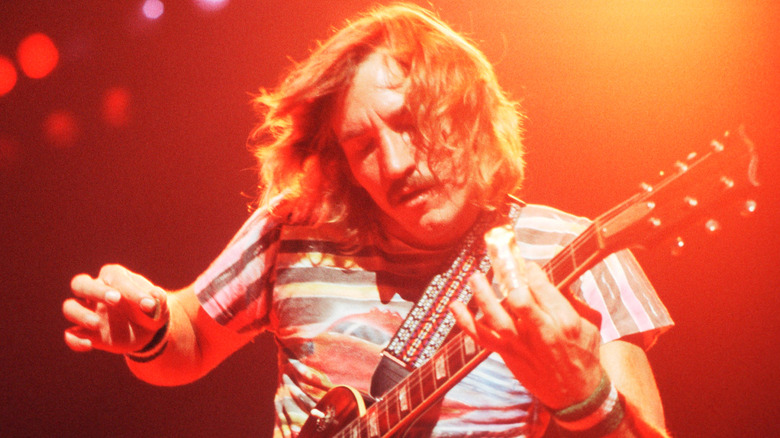
Joe Walsh boasts one of the most recognizable and appealing sounds of all the great guitarists of classic rock, and it's that bluesy but also crystal-clear shredding that fueled the success of a solo career as well as bands like the Eagles and the James Gang. Walsh played for so many bands in that 1970s golden era of classic rock that some of them have been completely overlooked by the passage of time. Fans might be able to name the Best, Walsh's supergroup that only played five shows, and still come up blank on the name of the musician's ill-fated early '70s trio: It's Barnstorm.
After Walsh exited the James Gang and decamped from Ohio to Colorado in 1971, he formed Barnstorm the next year. Walsh was the de facto frontman for the group, whose initial lineup also included multi-instrumentalists Kenny Passarelli and Joe Vitale, the latter with whom Walsh had played in the '60s local band the Measles. Barnstorm recorded two LPs, and they were met with moderate success on the singles and albums charts but would fall apart quickly due to mismanagement by their record label and Walsh's resentment thereof.
Joe Walsh's first solo hits should've been credited to Barnstorm
The James Gang is best known for a few radio staples, mostly "Funk No. 49," a rock song you've definitely heard but probably can't name. But Walsh wanted to do something else, so he created Barnstorm. Based on his popularity with the James Gang, Walsh managed to get the upstart Barnstorm signed with Dunhill Records, which released the group's first album within a year of its formation. But Dunhill issued the LP as if it were a Joe Walsh solo affair and the name of the album was "Barnstorm." The album charted nationally, peaking at No. 79, and Walsh and his bandmates quickly recorded a follow-up, 1973's "The Smoker You Drink, the Player You Get." Once again, Dunhill labeled and marketed it as a Walsh solo record, even using a picture just of him on the cover. Overseen by Bill Szymczyk, a rock producer with the most Billboard hits of the '70s, the gold-certified LP generated a true classic rock single, the Top 30 hit "Rocky Mountain Way."
All that misattributed success frustrated Walsh. "I wanted to be a band, not a solo artist. Vitale, especially, should've gotten more credit 'cause it wasn't all me," Walsh said in "Rock 'n' Roll and the Cleveland Connection." "No one understood what we were trying to accomplish, so why do it?" he explained, referring to how Barnstorm disbanded in 1973, freeing him up to do some authentic solo work before joining the Eagles.