

1968 No. 1, Originally Composed For Bandmate's Son, Topped The Charts 58 Years Ago
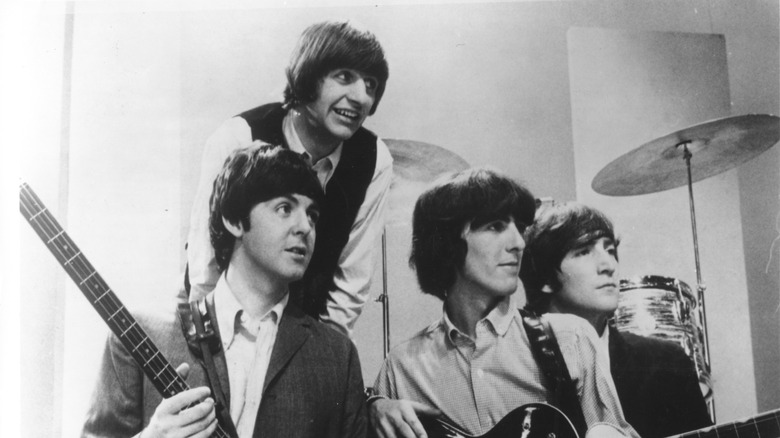
Prepare to have a repetitive string of meaningless syllables stuck in your head: The Beatles' "Hey Jude," with its famous "Na, na, na, na, na na, na, na. na" coda, spent nine weeks at the top of the Billboard chart starting in September 1968. Furthermore, John Lennon's son inspired "Hey Jude," a story Paul McCartney has told in multiple interviews.
The "Jude" in question was really a "Julian," a 5-year-old caught in the middle of his parents' divorce. As McCartney recalled to GQ, the idea hit him mid-drive to visit Julian and his mom: "I was thinking about the boy ... and I started this idea, 'Hey Jules, don't make it bad, it's going to be okay.' It was like a reassurance song." McCartney kept working on the song after the visit, and "Jules" eventually became "Jude" for a simple reason — he thought it sounded better.
Released as a single in August 1968, "Hey Jude" became one of the Beatles' biggest hits. At more than seven minutes long, it's almost too long for radio, and over half of that running time comes from the song's extended coda, which grows from McCartney's solo vocal into a full choir-and-orchestra singalong. And so, what started as one guy's quiet reassurance to a kid ended up as one of the most recognizable anthems in music history.
The many meanings of Hey Jude
Lennon wasn't convinced "Hey Jude" was about his son. In a 1980 interview for "Playboy" (via the book "All We Are Saying"), Lennon admitted, "I always heard it as a song to me," saying he thought the song was connected to his new relationship with Yoko Ono. In his interpretation, McCartney was really saying "Hey, Jude — hey, John." The phrase "... go out and get her," in Lennon's reading, was McCartney giving Lennon permission to leave.
McCartney doesn't wave the theory off. In his book "The Lyrics," he writes, "Ironically, for a time John thought it was about him and my giving permission for him to be with Yoko." McCartney goes on to discuss how a song can start off as one thing and then "morph into its own creature." With the line "You were made to go out and get her," McCartney recognizes the song changed. "So it might now be a song about a breakup or some romantic mishap," he explains. "By this stage the song has moved on from being about Julian."
Did the song move on to ... McCartney himself? According to Lennon, yes. In a 1968 Rolling Stone interview, Lennon recalled that when he first heard the song he told McCartney, "Ah, it's me!" McCartney's response, according to Lennon: "No it's me." And that might be the real magic of "Hey Jude" — everybody hears themselves in it. We can all "Take a sad song and make it better."