

The 5 Best Girl Groups Of The '60s
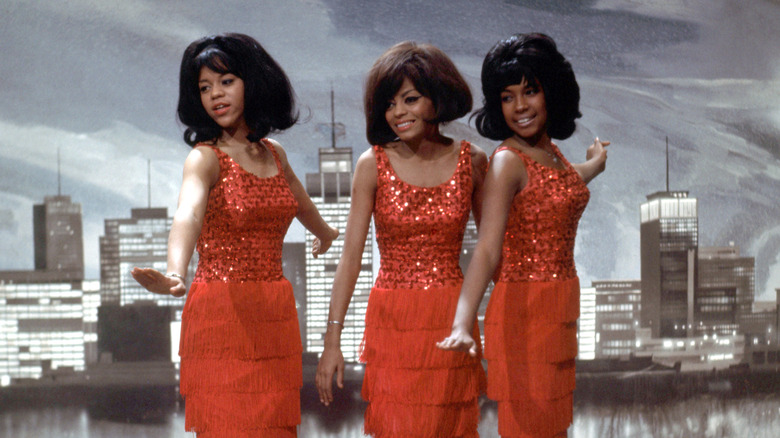
The girl group is one of the all-time hallmarks of American invention. Building on older traditions of close harmony as well as the newer genres of rock n' roll and doo-wop, girl groups provided the sound of the early 1960s. Mostly, but not universally, formed by Black girls and young women, these groups elevated more women of color onto the national airwaves and gave future oldies stations a near-endless catalog of hummable hits nearly everyone knows. When the British Invasion hit American shores, it was the girl groups they had to outdo for listeners' attention.
A lot of these bands were one- or two-hit wonders, notching a single line of music history and a long afterlife as a crossword clue. The best, though, built real bodies of work and became legends in their own right, with a handful performing decades after the genre ceded its top spots on American radio — and even a few of the one-hit wonders had such an influential hit that it meant they'd be remembered as defining musicians of their era. Here are the five girl groups we think of as the true leaders of the pack.
The Supremes
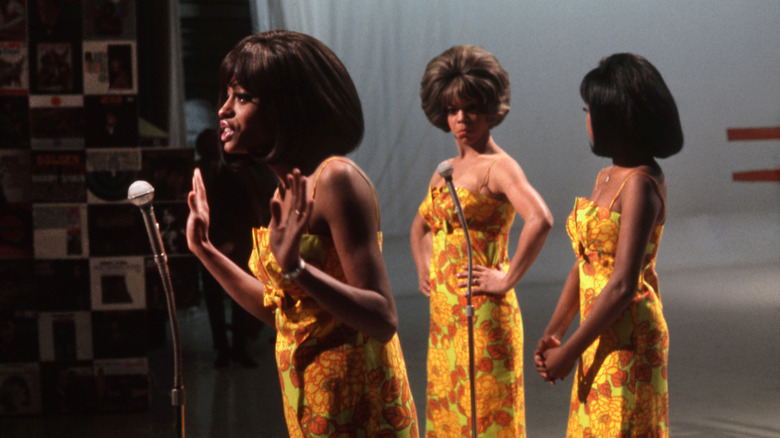
Diana Ross may have had a long solo career, but when she started, she was "just" one of the Supremes. If you have to choose just one group to represent the girl group era, it's the Supremes. They signed with Motown Records in 1961 and grew into that fabled label's flagship act; even with personnel changes, including Miss Ross's 1970 departure to pursue her own projects, they lasted into the late 1970s. Their hits were stratospheric: "Stop! In the Name of Love," "Baby Love," and "Where Did Our Love Go" were particular standouts among the 12 Billboard No. 1 hits they achieved, the most of any group except the Beatles.
The Supremes also played a certain role in racial integration. Poised, polished, and glamorous in the extreme, they were cool, young, aspirational Black women who captured audiences across racial lines by both their musicianship and their broader celebrity. Their sound landed between conventionally "white" and "Black" music in a way that made their appeal especially broad, and their success showed that as divided as the United States might be, most of its population loved the Supremes.
The Ronettes
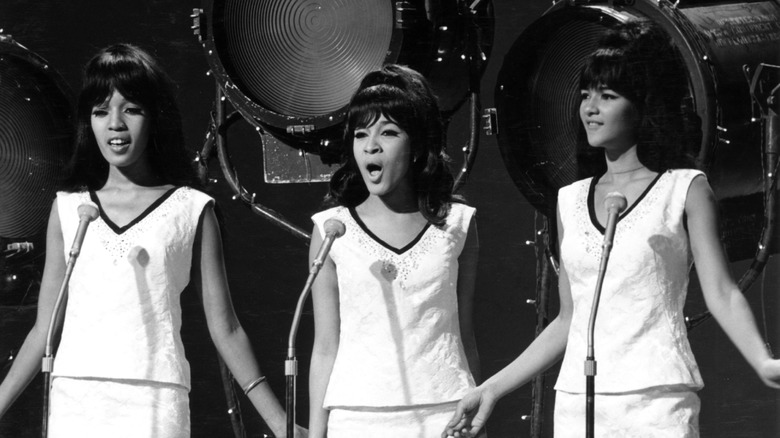
It made Brian Wilson have to pull the car over, and John Lennon almost faint. That's the power of the Ronettes' 1963 world-changing hit, "Be My Baby." Ronnie Spector (then still Bennett), the frontwoman and namesake of the band, wrote later that she'd rehearsed her final practice before the fateful recording alone in front of the mirror in the studio ladies' room. You'd kill to have been a germ on that faucet.
The Ronettes were sexy and just a bit daring, with towering beehives and eyeliner so intense it made drag queens and raccoons both weep, and this glamorous image contributed to their appeal. They weren't one of the longest-lasting acts, forming in 1959 but only really hitting it big in 1963, then disbanding in 1966; nor were they unusually prolific, with four other singles charting and cementing their influential legacy, though none of them became nearly as iconic as "Be My Baby." But does it matter? They gave us 2½ of the most transcendent minutes of 20th-century music — if you get it that right, you can let the mic drop.
Martha and the Vandellas
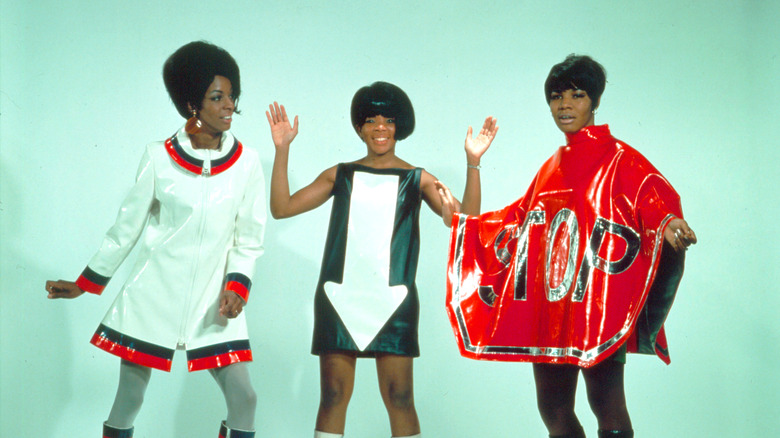
Sometimes your foot in the door is more of a butt at a desk. Martha Reeves' first job at Motown wasn't in front of a microphone but behind a desk, working a secretarial role. When they needed someone to fill in and do some backing vocals for Marvin Gaye, Reeves, apparently resisting the urge to yell "Jackpot!" and throw her pen in the air, stepped in and so impressed the boss that he signed not only Reeves, but her whole band. That's how we got Martha and the Vandellas.
Martha and the Vandellas never quite dethroned the Supremes as the biggest stars at Motown, but they kept Miss Ross & Co. on their toes with hits like "(Love Is Like a) Heat Wave," "Nowhere to Run," and "Dancing in the Street." After several personnel changes, the group disbanded in 1972, and Reeves released her first solo album in 1974. Still, the Vandellas had made their mark. They were inducted into the Rock & Roll Hall of Fame in 1995.
The Dixie Cups
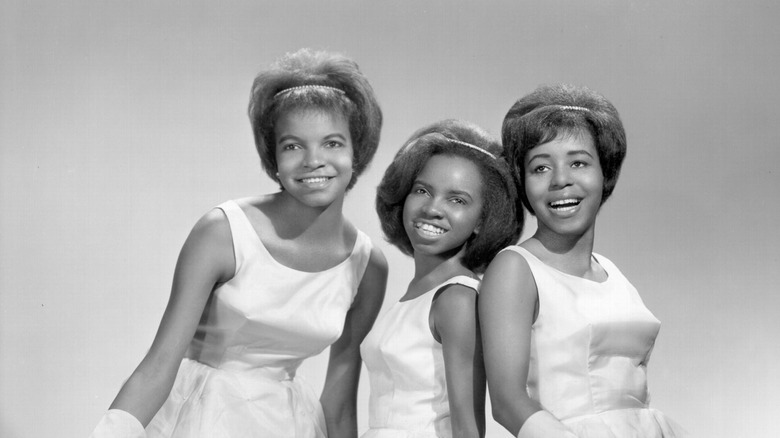
It's a bold move to name a band after something as disposable as a Dixie cup, especially since the Dixie Cups would prove to be anything but a throwaway act. Originally from New Orleans, the two-sisters-and-a-cousin trio blazed briefly but intensely in the mid-'60s, reigning for three weeks at No. 1 in 1964 (and even holding off the Beatles for a bit) with "Chapel of Love." It was their only No. 1, but it had legs: band member Rosa Hawkins sang it many years later at her own son's wedding.
The Dixie Cups' "Iko Iko" would have an even bigger legacy in their native New Orleans. Between takes, the girls were fiddling around and drumming on chairs and ashtrays to the beat of a Mardi Gras Indian chant they knew from back home. It was a modestly charting hit nationwide, floating briefly into the top 20, but New Orleans has never forgotten it. "Iko Iko," both the Dixie Cups' version and endless covers by other local luminaries, including, most prominently, Dr. John, have been part of the city's Carnival soundtrack ever since.
The Shangri-Las
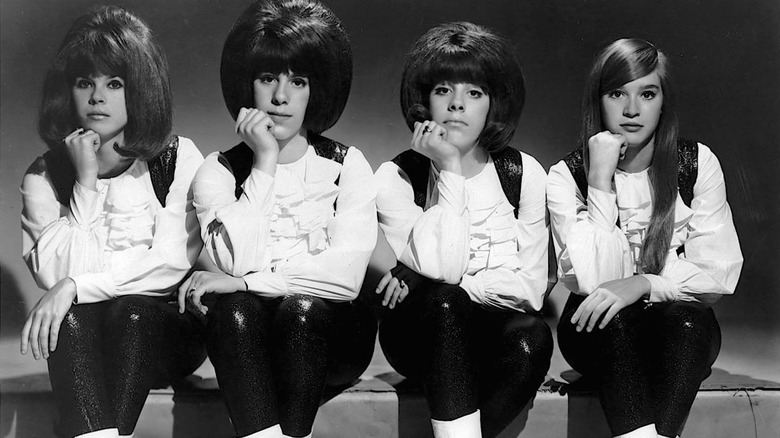
The Shangri-Las had big hair and big attitudes ... and they liked bad boys. The quartet cut its teeth in New York nightclubs before landing a recording contract, and after some success with "Remember (Walking in the Sand)," they blew up with "Leader of the Pack" in 1964. "Leader of the Pack" is nothing short of operatic: The background singers act as a Greek chorus, peppering the lead singer with questions, and the story itself begins with a meeting at a candy store and ends with a motorcycle-riding boyfriend driving off in a snit during the rain and ending in a fatal wipeout. All this is punctuated with plentiful motorcycle sound effects.
"Leader of the Pack" wasn't the only teen-tragedy song and may not even be the best in purely musical terms, but it had the proverbial "something" that made it a crowd-pleaser. In a small way, the Shangri-Las foretold the wilder music scene of the '70s. Rebellious and intense in a way that their peers weren't, they weren't quite bad girls ... but they maybe knew some.