

5 Classic Rock Album Covers Every Boomer Can Instantly Picture

While much album art is just a performer posturing in some manner that implies the music contained therein, the more legendary album sleeve designs have long been an extension of the music itself. Those lavish paintings — be it the cold-steel inhumanity of artist H.R. Giger or those visually ironic wide-angle shots from Storm Thorgerson — are the 12.375 square inch canvases that listeners stared into as they contemplated the sonic landscapes filling their ear canals, and boomers have some of those images burned into their brains in the best possible way.
That generation definitely got in on the halcyon days for great album art. The midcentury modern designs that had been popular with jazz recordings were transitioning into the burgeoning psychedelic rock movement in the mid-1960s. As that kaleidoscopic flower power aesthetic gave way to the progressive rock era of the 1970s, the era of the album cover as a unique artistic medium unto itself had fully arrived. With that in mind, let's look back fondly on those album graphics that are so unique they'll be emblazoned in our minds' eye for all eternity.
The Beatles — Sgt. Pepper's Lonely Heart's Club Band
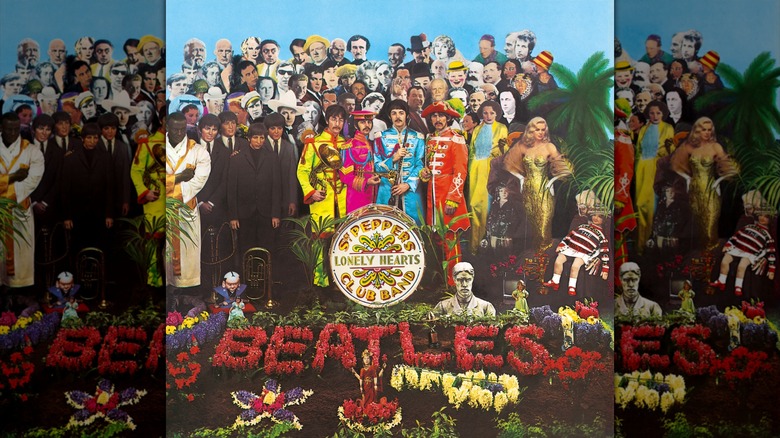
The album that legitimized the long-playing record as an art form (though some will argue the Beach Boys' "Pet Sounds" beat it to the punch) also contains one of rock music's most captivating covers. Released in 1967, "Sgt. Pepper's Lonely Hearts Club Band" is a psychedelic collage of the various cultural contributors that had brought the Beatles — and the counter-culture movement they were spearheading — to that moment in time.
Arguably a stylistic forerunner of the beloved "Where's Waldo?" puzzles, the image is a deep dive into the mid-century cultural pantheon. Boomers who pored over the image while listening to dreamy tales of tangerine trees and marmalade skies can no doubt recall unearthing British mystic Aleister Crowley, Swiss psychologist Carl Jung, and German actress Marlene Dietrich, among dozens of others. It's a gathering of seemingly disparate characters in an image that reminds us that, at the end of the day, we're all lonely hearts chilling at the same social club.
Emerson Lake and Palmer — Brain Salad Surgery
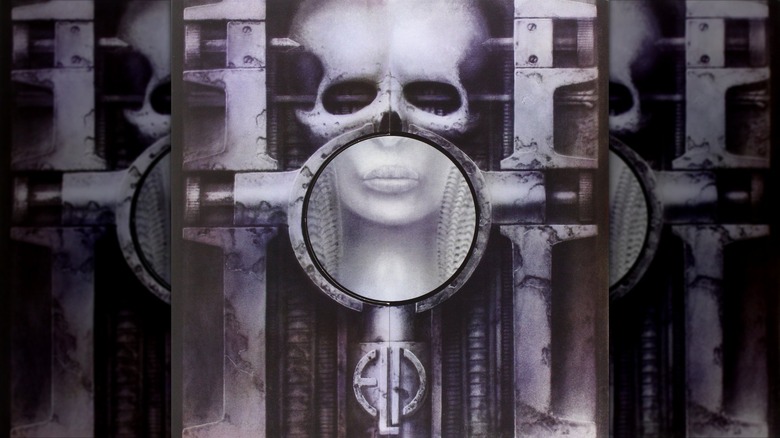
Emerson Lake and Palmer's "Brain Salad Surgery" was not H.R. Giger's first album art design — that honor goes to "Walpurgis," a 1969 LP by experimental rockers, the Shivers. But where the Shivers vanished without a trace, "Brain Salad Surgery" became one of the albums that define progressive rock. In a world still infused with cheerful flower power promotional designs, the extraterrestrial nightmares of Giger's work cut a sharp contrast.
Before Giger's Oscar-winning creature designs for Ridley Scott's "Alien" found him firmly enshrined in popular culture as a fixture of sci-fi horror, H.R. Giger had been building a reputation for himself throughout the 1960s as a painter and sculptor with his own dark vision. To ELP mastermind Keith Emerson, the dark imagery was perfectly suited to the band's sonic atmosphere. He met with Giger at the painter's house, recalling that the interior resembled a dark, gothic cathedral. For both parties, the union of sound and image felt utterly natural.
For Giger, the collaboration would be one in a long line of iconic rock album covers. Future projects would include album art for Celtic Frost, Danzig, Debbie Harry, and Steve Stevens' "Atomic Playboys," among many others. The link between hard rock theatricality and the biomechanical horrors of the dark horror innovator was firmly established. Giger's popularity in the rock world would go so far as to lead small independent musicians to make wholly unauthorized use of his work for small-scale releases. While policing such piracy created a headache for Giger, it nonetheless reflected his enduring popularity in the dark substrates of the rock world.
Pink Floyd — Wish You Were Here
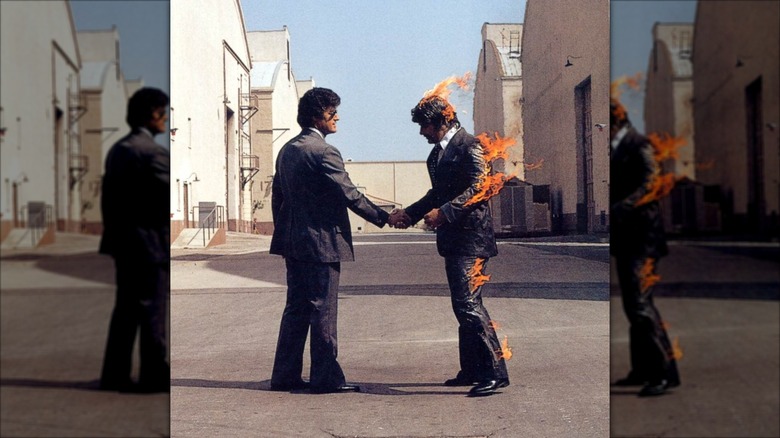
Pink Floyd's "Dark Side of the Moon" is easily one of the best classic rock album covers of the 1970s, but it's a fairly simple design. "Wish You Were Here," the group's 1975 follow-up LP, is more evocative and mysterious with a pronounced undercurrent of danger. The scene depicts two men, clad in suits, shaking hands while holding one another at bay in what appears to be a studio backlot. It would be a wholly mundane scene except that one of the two men is on fire.
The scene, which designer Storm Thorgerson confirmed did in fact use a real stuntman set ablaze, came about as a means of depicting concealed sentiments and duplicity. The album's lyrical themes explore the dehumanization and moral compromise of life in the entertainment industry as well as the band's ambivalent feelings around enjoying the success that eluded their troubled founder, Syd Barrett. With that in mind, the stark image on the cover captures the cynical sentiments contained therein. Somehow, an image of a man on fire perfectly accentuates those ice-cold synthesizer washes that fade in the album.
Yes — Fragile
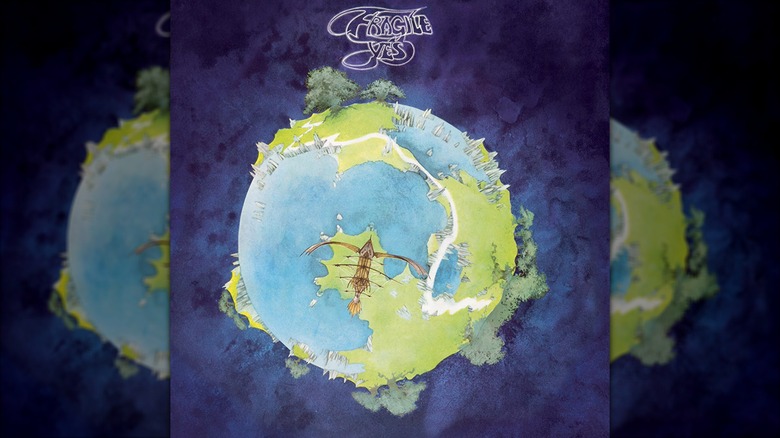
Few artists' styles are so inextricably linked with a specific band as that of Roger Dean and progressive rock gods Yes. That collaboration began with 1972's "Fragile," the album that rocketed Yes into international stardom. The cover, depicting some sort of fantastical, Da Vinci-style flying machine sailing over an otherworldly planet, provides the perfect mood for a day of prog rock flights of fancy. Intended to underscore the album's themes of earth stewardship and ecological collapse, it began a signature style for the band's album covers, which would frequently feature scenic vistas of alien worlds.
It would be easy to stop at "Fragile," but Dean's contributions to Yes continue across the group's catalog with "Yessongs," "Relayer," "Tales From Topographic Oceans," and many others featuring their own eco-utopian dreamscapes. For boomer listeners, it's an eternally engrossing body of work and a welcome evolution away from flowers and tie-dyed abstractions that typified the psychedelic album art from the previous decade.
The Doors — The Doors
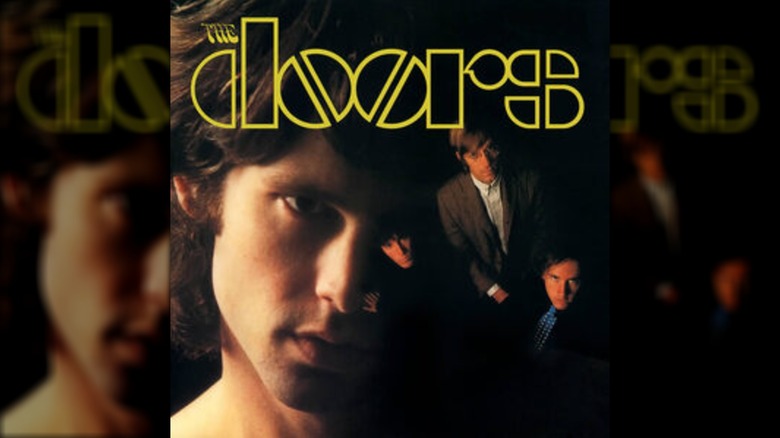
There's an easy case to be made that when it comes to the Doors, 1967 was the best year of their career. After all, it was the release of the band's massive breakout self-titled debut album and its equally impressive follow-up, "Strange Days." But that first album was a landmark declaration from a band that had their own dark, haunted take on the Summer of Love. Central to that mystique is the enigmatic cover art and the promises of foreboding sonic avenues contained therein.
The work of photographer Guy Webster, the striking cover art sees lead singer and resident poet laureate Jim Morrison consuming the lion's share of the image while his more solemn colleagues look out from the shadows. In an era where wholesome teenybopper boy bands dominated album sleeves with winning smiles and sunny dispositions, the Doors spoke to a more ominously seductive undercurrent in the burgeoning rock world.
Boomers had the pleasure of watching the rollicking good-time party music of '50s rock 'n roll segue into the dangerous underworld of "rock" music proper. In that light, they will likely recall the Doors' seminal debut album as a haunted signpost on the shrouded path towards that darker realm. The music contained therein makes all too clear that the new, harsher, more mature world of rock is a feral and fearful place where the only guides are a trio of wayward beatniks and their lizard king.