

5 Classic Albums That Define Soul
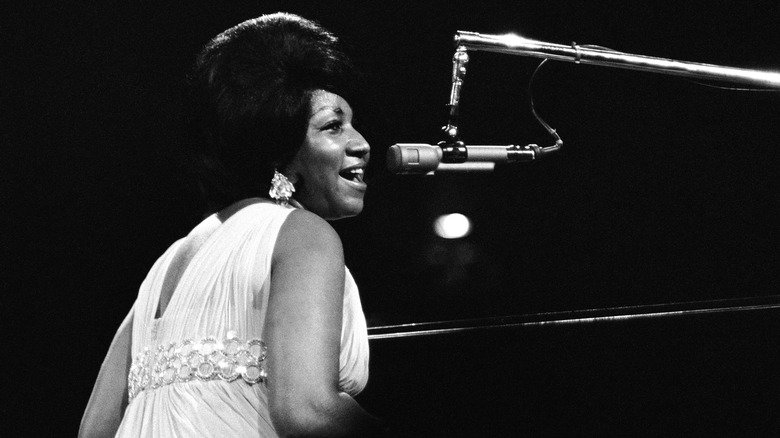
With deep roots stemming back to folk blues, soul music is a rich and deeply important culmination of culture. Coming off of rhythm and blues in the 1940s to the 1960s, and seamlessly transitioning into disco and funk in the late '70s, there was a sweet spot in the middle where these five classic soul albums forged their own musical lane.
To qualify as classic, we chose albums released within the heyday of soul, commonly recognized as the late '60s to the mid-'70s. As for defining the genre, we focused on those that adhered to the themes, vocal trends, and specific instruments associated with soul. And to narrow the admittedly large pool of options, we selected albums with at least one standout hit.
Whether they were covered and revitalized in later decades, or maintained a firm place in pop culture since their original release, these five classic soul albums from legends such as Stevie Wonder and Aretha Franklin best define the sultry and defiant sounds of soul at its peak.
What's Going On — Marvin Gaye
Marvin Gaye was a Motown legend before breaking away from his roots to release his 1971 solo album "What's Going On." The LP's titular opening track has an incredibly immersive call-and-response chorus, vocal runs, snaps, and conversational ad-libs, all of which highlight the communal and gospel roots of soul. The groovy bassline, mellow drums, saxophone, keys, vibraphone, and strings give the piece a jazz-based, orchestral feeling, bringing together multiple musical traditions. The meaning behind the hit single "What's Going On" also taps into contemporary socioeconomic themes, as the Vietnam War and its subsequent domestic protests spoke to the revolutionary culture of the time.
However, Gaye didn't limit the scope of this album to unrest over foreign affairs. The closing track "Inner City Blues (Make Me Wanna Holler)" directly addressed the impoverished conditions of Black Americans in urban environments, taking on a darker, more soulful sound than the album's No. 1 single, "What's Going On." Lyrics such as "Inflation, no chance / To increase finance" and "Crime is increasing / Trigger-happy policing" tie the community's plights together, refusing to shy away from harsh realities for the sake of profitability.
The entire album was just a taste of what Gaye's contribution to soul would be, and stands as a pivotal and timeless example of what the movement was truly about.
I Never Loved a Man the Way I Love You — Aretha Franklin
Aretha Franklin's 1967 album "I Never Loved a Man the Way I Love You" was a turning point for the gifted singer and pianist, as well as the soul genre as a whole. Starting her career singing gospel and recording show tunes, her transition to Atlantic Records and recording this LP facilitated the perfect moment for her rise to the top. The No. 1 hit off of this album, "Respect," was actually a cover by another soul icon, Otis Redding. Where the original lyrics and tempo were a lot slower and established more traditional gender roles, Franklin's upbeat recomposition (including the catchy spelling section) and perspective shift reinvigorated the track with a true sense of intersectional resistance.
The album's titular track also exemplifies the musical cues of soul, down to Franklin's immaculate vocals, brass swells, and her one-of-a-kind piano skills. "Do Right Woman, Do Right Man" also foregrounds soul's tradition of call-and-response, as well as continuing to explore gender dynamics and fidelity. She was dubbed the "Queen of Soul" precisely for this reason, giving an eloquent and magical voice that was evocative of both heart-wrenching and jovial emotions.
"I Never Loved a Man the Way I Love You" was not only a major soul music milestone (it maintained its No. 1 position for 14 consecutive weeks), but also laid down the musical foundation for what soul was sonically composed of.
Songs in the Key of Life — Stevie Wonder
Stevie Wonder's 1976 album "Songs in the Key of Life" was the perfect showcase of what soul had truly come to exemplify. Upbeat hits such as "Isn't She Lovely," written after the birth of his daughter, Aisha, celebrate the highs of life with lively drums, impassioned belts, and a bouncy bassline. Other tracks such as "Village Ghetto Land" speak directly to the socioeconomic conditions of urban Black communities, a regular theme of soul music, whereas "Black Man" celebrates triumphs.
Music as a way to transcend one's plights stemmed from soul's oldest roots in protest songs, and Wonder's interpretation managed not only to overcome physical challenges, but also social guardrails. "Songs In the Key of Life" proved that life's nuances were not just visible, but audible. His brand of soul music was one that celebrated the light as well as the dark, and exemplified resistance as joy as well as struggle. The platinum album managed to withstand the ever-evolving world and wrap all of soul's traditions into one immaculate package, ensuring that the genre's true purpose will never be forgotten.
Nightbirds — LaBelle
While so much of soul's legacy has been touched by countless talented men, it is imperative that the history of women's contribution to the genre is equally celebrated. Patti LaBelle's entire life set her up to become the Godmother of Soul, and her group LaBelle's 1974 album "Nightbirds" shaped the way we retrospectively view the genre.
Joining forces with Sarah Dash and Nona Hendryx, LaBelle's retro-futuristic aesthetic not only spoke to the spirit of exploration at the time, but also the cyber futurism that would come to follow it. Tracks such as "Space Children" feature funky and expansive vocals, singing to a generation whose limits couldn't be set by the stars. "All Girl Band" also highlighted the inner worlds of women, while still staying true to soul's sonic sounds of vibrant piano, snappy drums, and LaBelle's full voice.
The group's most famous track, "Lady Marmalade," immaculately sets the tone for the whole album, opening with a strong cowbell and the repeated lyrics, "Hey sister, go sister / Soul sister, go sister." Soul is clearly front and center throughout the instrumentation, as well as the direct reference throughout the piece. The song also gained a second life through a cover by Christina Aguilera, P!nk, Lil' Kim, and Mýa for the 2001 film "Moulin Rouge!", emphasizing LaBelle's legacy among new generations of vocalists. Soul as we know it could never have existed if not for LaBelle's long and decorated career, and "Nightbirds" best exemplifies that.
Let's Stay Together — Al Green
Al Green had already made his mark prior to his 1972 album "Let's Stay Together," but it became the record that would best encapsulate his personal contributions to soul, as well as showcase how diverse the genre's sound could be. At this point, soul had become geographically distinct, with Green bringing in key instrumentalists from Tennessee to create a Memphis soul sound. His vocal range across each track, gospel influences, steady basslines, and variances in tempo all demonstrate the many different manifestations of soul music on one record. It even included a slowed-down, sultry cover of the Bee Gees' 1971 folk rock ballad "How Can You Mend a Broken Heart."
The titular track is undoubtedly one of Green's most famous, charting on the Billboard Hot 100 for 16 weeks and peaking at No. 1. A sultry and romantic declaration of love and devotion, it embodies the thematic tradition of other soul artists of resilience, love, and unity. Indeed, the idea of joy as resistance was a foundational pillar of the Civil Rights Movement, and a unifying force that Green embodied throughout his classic and soul-defining album.