

1970 Soul No. 1, Originally Recorded By Marvin Gaye, Sailed To The Top 56 Years Ago Today
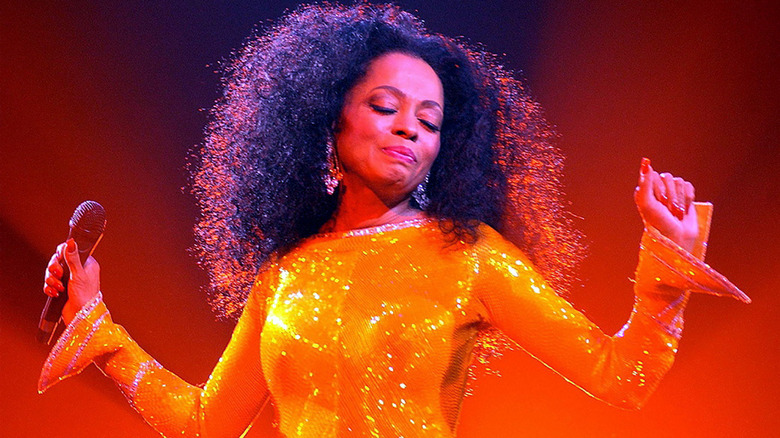
There are plenty of No. 1 singles that were actually covers, but few managed to override the legacy of their originals quite like Diana Ross did with her first solo chart-topper, "Ain't No Mountain High Enough," 56 years ago today.
That's not to say that Marvin Gaye and Tammi Terrell's version didn't make waves of its own — the song only reached No. 19 in 1967, but it was practically boiling over with potential. It had originally been written by songwriting couple Nick Ashford and Valerie Simpson, and that romantic chemistry was perfectly suited for a duet between Motown sweethearts. It had even earned Gaye and Terrell a Grammy nomination for best rhythm & blues group performance in 1968, earning industry prestige before commercial success.
Although she had originally covered the track before Ross left the Supremes alongside the Temptations, it paled in comparison to the 12 No. 1 hits she had performed as the lead singer of the group. Ashford and Simpson, who were working as Motown staffers in 1969, took over Ross' first solo album from producer Bones Howe, bringing "Ain't No Mountain High Enough" along with them. Reworked to be sung by a single artist, it was firmly at No. 1 by September 30, 1970, maintaining its top position for three consecutive weeks.
Diana Ross' Ain't No Mountain High Enough was drastically reworked
"Ain't No Mountain High Enough" was inspired by the soaring, intimidating Manhattan skyscrapers of New York City. Already a masterpiece, it was Diana Ross herself who inspired Ashford and Valerie Simpson to completely transform the structure of the track.
In the liner notes for "The Complete Motown Singles Volume 10: 1970" (via Classic Motown), Ashford explained how "I thought [Diana] had a very sexy tone when she talked and when she sang, so we wrote extra lyrics, trying to stretch it out. And Val came up with these new chords." Simpson also added in an interview with Billboard how "We felt the slow build worked well, and by not singing the actual chorus until the very end, we thought it added drama and suspense." The end result was a lofty six minutes long, far beyond what was typical for radio play.
As a result, radio stations ended up cutting the record themselves before Motown rereleased a shorter version just over three minutes long. As Ross was entering a new chapter of her career, a song of triumph and personal power seemed like a fitting track to define her first No. 1 as a solo artist. It also earned her the first of many solo Grammy nominations in 1971 for best contemporary female vocal performance.
Marvin Gaye's biggest hits may never have happened without Ain't No Mountain High Enough
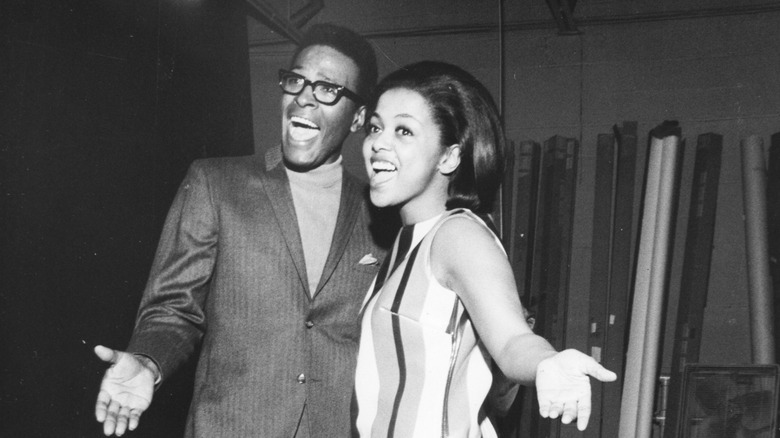
Although Diana Ross' version of "Ain't No Mountain High Enough" has become, for many, the definitive version of the song, Marvin Gaye's bittersweet relationship with the song may have been the spark to ignite his own trailblazing career.
Gaye had many duet partners and commercial successes during his time at Motown, but there was something special about his chemistry with Tammi Terrell. In The Motown Story Volume I: The 1960s, Gaye shared, "That was a good beginning because I had no idea that Tammi was as good a singer as she, of course, turned out to be. I hadn't had a chance to hear her sing before I met her. Some people [at Motown] who were on their toes dug her sound and realized we may possibly make a good duet." Although he preferred being a solo act, his natural chemistry with Terrell made "Ain't No Mountain High Enough" among some of the most romantic duets of the '60s.
However, Terrell's untimely death in 1970 was a massive blow to Gaye, who ceased to perform for three years. Indeed, the event almost ended Gaye's musical career for good, yet that tragic period ultimately facilitated his sensational breakout album, "What's Going On," and the rest is soul history. In many ways, the legacy of "Ain't No Mountain High Enough" was transformative for Gaye and a massive triumph for Ross. Both artists had their careers anointed to some degree by the track, and its timeless spirit is still felt 56 years later.