

The Mega Star Who Left Motown After 2 Decades Of Hits
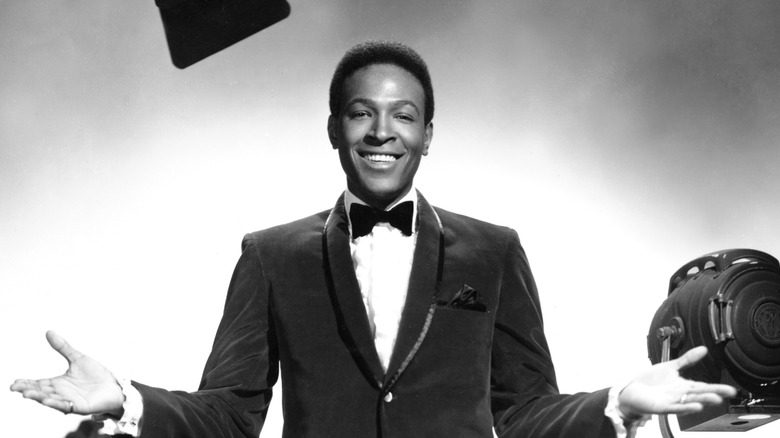
Possessing one of the greatest and most evocative voices of all time, Marvin Gaye was among the most elite of Motown Records' roster of artists in the 1960s and '70s. It was almost unthinkable that he ever would or could break away from the iconic R&B label. The soul legend scored his first hit for Motown (or its Tamla subsidiary) in 1962 — "Stubborn Kind of Fellow" — before regularly churning out one classic smash after another in the years to come, such as "Ain't That Peculiar," "I Heard it Through the Grapevine," and the original version of the 1970 No. 1 "Ain't No Mountain High Enough."
In the 1970s, Gaye expanded his musical scope, injecting threads of social consciousness and meditativeness into his work in songs like "What's Going On." The public loved this period even more, sending that song, "Mercy Mercy Me (The Ecology)," and "Inner City Blues (Make Me Wanna Holler)" to the top of the R&B list and the pop Top 10. The hits grew more scarce as the '70s wore on, and suffering from a series of personal and professional setbacks, a flailing Gaye ultimately decided to part ways with the label that made both parties very rich and very famous. Here's why Marvin Gaye departed Motown, and how the decision brought on the singer's remarkable comeback.
Marvin Gaye reinvented himself at Columbia Records
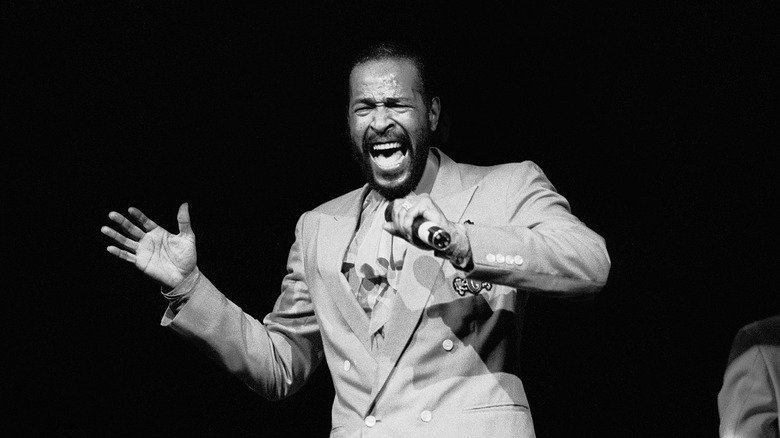
In 1975, Marvin Gaye and his wife Anna Gordy, sister of Motown Records boss Berry Gordy, initiated a divorce. Upon finalization, a court ordered Gaye's next album's royalties be paid directly to his ex-wife as a form of alimony. That record, "Here, My Dear," was a relatively low-charting flop, and Gaye, facing a multi-million-dollar outstanding tax bill, settled in Europe at the end of the '70s.
At this time, Gaye abandoned the album "Love Man," choosing instead to create a more spiritually grounded and commercial project. Motown, upset over an extended production period, arranged to steal the masters of the incomplete work (Gaye believed) and released it as "In Our Lifetime" in 1981. Gaye was so livid over having the album taken away from him, as well as Motown's creative liberties, that he swore to never again record for the company.
Columbia Records broke Gaye from his contract and issued the 1982 LP "Midnight Love" and its lead single, "Sexual Healing." A romantic and sensual song about the transcendent power of physical touch, it was among Gaye's biggest smashes, a No. 3 pop hit that spent three weeks at the top of Billboard's Hot 100 and 10 weeks at No. 1 on the R&B chart in 1983. Gaye's return to the limelight wouldn't last. Just about a year after reconciling with Motown enough to perform on its televised 25th anniversary special, Marvin Gaye tragically died at age 44.