

Quote Of The Day By Linda Ronstadt: 'You Don't Want People Who ...'
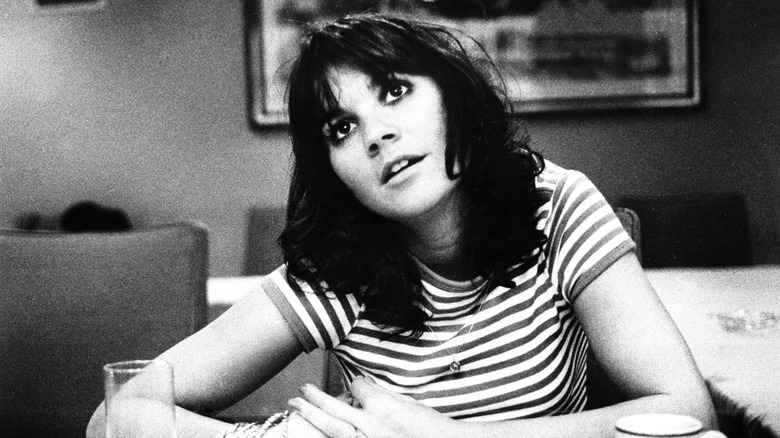
Linda Ronstadt is revered by her millions of fans as an exceptionally expressive vocalist who brought palpable emotion to every song she chose to sing. Born in Tucson, Arizona, on July 15, 1946, Ronstadt found her footing in the mid-'60s California folk scene with the Stone Poneys before forging a path for herself as a solo artist backed by musicians who would later form the Eagles.
Ronstadt became famous for putting a country spin on a wide array of source material, including classic folk and rock tracks as well as edgier material by younger artists such as the acclaimed songwriter Elvis Costello. Ronstadt reached her commercial heights in the 1970s, when she released several platinum-selling albums including the 1974 No. 1 "Heart Like a Wheel" and several hit singles, such as her version of "You're No Good," which hit No. 1 on the Billboard Hot 100 in early 1975. The next decade saw her expanding into stage roles in musicals as well as releasing acclaimed albums in Spanish that reflected her Mexican heritage.
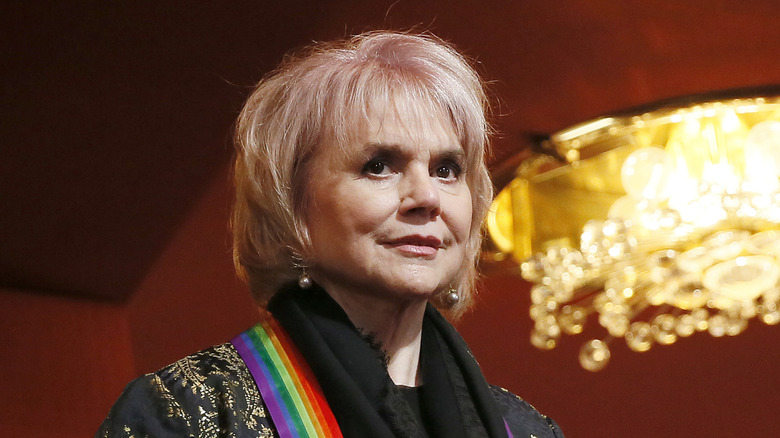
Ronstadt was forced to retire from the music industry in 2011 as her health declined. In 2014, she was inducted into the Rock and Roll Hall of Fame. Throughout her career she has proven herself a resilient figure and an exploratory artist with strong views on modern society — as reflected in our Quote of the Day.
Quote of the Day by Linda Ronstadt
"You don't want people who have never had to deal with adversity, you want people who have been able to deal successfully with adversity. That's what adds to society. Those are going to be the hardest-working, best people."
This quote comes from an April 2014 interview Linda Ronstadt gave to The Sydney Morning Herald, shortly after her induction into the Rock and Roll Hall of Fame and her announcement that she had been diagnosed with Parkinson's disease. But according to interviewer Peter Vincent, Ronstadt was not particularly interested in these aspects of her later life, instead wanting to discuss a wide range of other subjects, including her newly released "Duets" album.
Indeed, Ronstadt confessed that she gives awards little thought — though she is the recipient of 11 Grammy Awards — and doesn't care to rank her fellow artists in terms of greatness. Similarly, though she answered Vincent's initial questions about her health, she later told him, "There are things you just have to accept, and I've accepted it," and grew quickly tired of the subject. (She was later diagnosed with progressive supranuclear palsy.) However, she was keen to discuss immigration, a topic related to her Mexican-American heritage.
Deeper Meaning of Linda Ronstadt's Quote — Adversity Makes Us Stronger
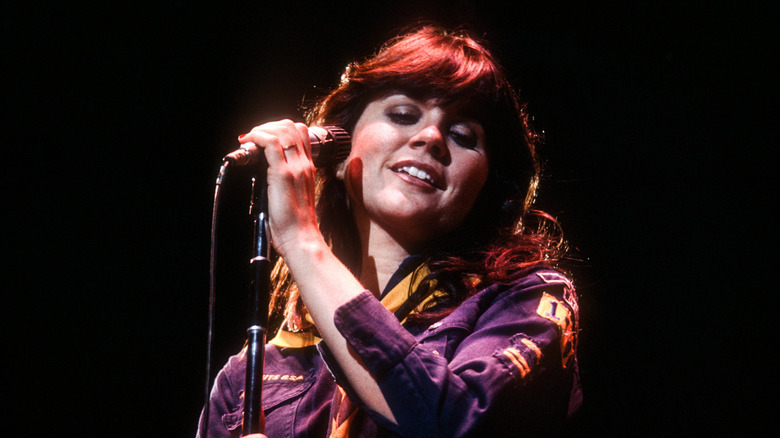
"[Immigrants] are the best people because they've come the farthest and they've come through the worst adversity," Linda Ronstadt argued in her Sydney Morning Herald interview. The interview was conducted at a moment when the media landscape was debating the U.S. government's immigration policies, especially its treatment of those seeking asylum in the country.
Ronstadt, who has Mexican and German heritage, has always been appreciative of migration as a force for spreading culture, and it is arguable that her wide-ranging discography, which assimilates many styles of music alongside those associated with her own Mexican background, is a testament to the artistic power of cultural diversity.
And as Ronstadt makes clear in our Quote of the Day, adversity isn't simply an obstacle to be overcome. Those who have had to overcome it — such as many immigrants, whose paths to safety can be fraught — may find that it becomes a source of power and empathy that helps us to be better workers, artists, and members of society.
More Quotes From Linda Ronstadt
- "I never looked at music as a horse race. How do you compare a Smokey Robinson with an Aaron Neville or a Frank Sinatra? I've been lucky in my life to work with people who I consider master singers."
- "Great art is a way of entering into your life in a way that gives you a magnified view of whatever your sorrows and your joys are, in a way that you sometimes didn't suspect you knew."
- "My older brother was the one I always tried to copy because he was in the Tucson Boys Choir and he had a glorious soprano. I wanted to sing like that. I can remember sitting at the piano. My sister was playing and my brother was trying out something and I went, 'I want to try that.' My sister turned to my brother and said, 'Think we got a soprano here.' I was about 4 and so I remember that real well."
- "I don't think of myself as a star. I didn't set out to become a star, I set out to become a singer. I would have sung no matter what. The star part is just something that they made up in Hollywood in 1930."
- "I think that most of the time I don't do enough onstage. It depends on how you look at it: You can say basically I do enough because I get up there and sing and I don't hold back; but in terms of getting to be pals with the audience every night, I've gone through periods of being able to do it and then I've gone through periods where I just looked at them and I didn't know what to say to them."