

The Ultimate Beginner's Guide To Collecting Vintage Band T-Shirts

For many a band's fans, it's a given that they'll want a token of their devotion. A good vintage band T-shirt is just the thing to show their love for a group, whether it's treasured by someone who was at a legendary final performance or who just now snagged a cool tee off a resale site. Perhaps you're nurturing a growing interest in this collector's item, whether it's because you spotted '80s tees that netted their sellers some serious cash, or you just love the look, feel, and overall vibes of a vintage music T-shirt. So, how are you supposed to go about building your collection? Doing so the right way means developing your knowledge, curating your attention to detail, and learning how to sniff out recreations and outright fakes.
For the beginners, it's more than just looking for the Rolling Stones' famous tongue and lip logo or Iron Maiden's electrified rock skeleton (nicknamed Eddie, by the way). To score a really good shirt, you're best off looking into seemingly minor details with big implications, including printing techniques, stitching details, and even the intricacies of the shirt's tag. And, of course, once you've identified a shirt and taken it home, you'll have to think carefully about where it goes next. Don't feel overwhelmed, though; with the help of this guide and your growing passion for the world of vintage band T-shirts, you're bound to have a great collection in no time.
Learn what goes into a shirt's value
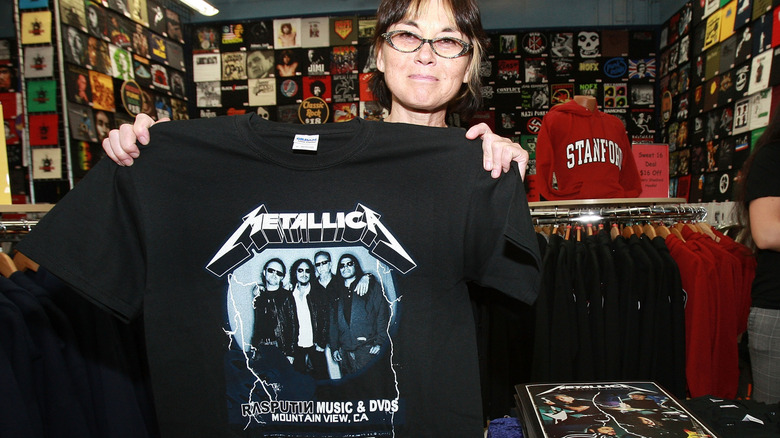
So, what really makes a vintage band shirt valuable? Ultimately, it's not one single factor, but the combination of several that can make a tee worth the hunt. Among the major points to consider are scarcity, condition, and unique artwork. If a rare and well-preserved shirt is connected to a major band, all the better. Anything linked to a notable point in a band's history — like pre-breakthrough shows or farewell tours — also ups a shirt's value. Of course, you'll want to actually like the shirt yourself, too.
Understand the difference between tour and retail shirts
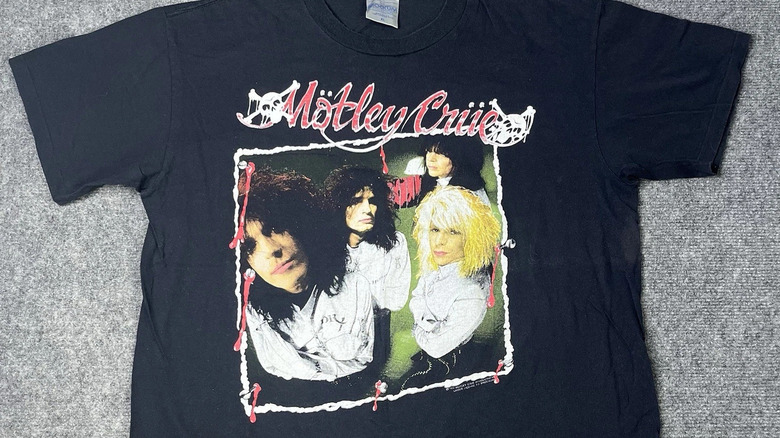
True to the name, a tour shirt is sold at a concert venue. These are linked to a certain time and place, often with tour dates and cities listed right on the shirt. When the tour is over, these shirts are no longer printed, increasing their scarcity and value. Retail shirts, meanwhile, are officially licensed but can be purchased anytime, though anything with discontinued artwork may still be worth collecting. Both are distinct from unofficial bootleg shirts, which are usually passed by (though some older bootleg wear is of interest to fans).
Take a close look at the fabric
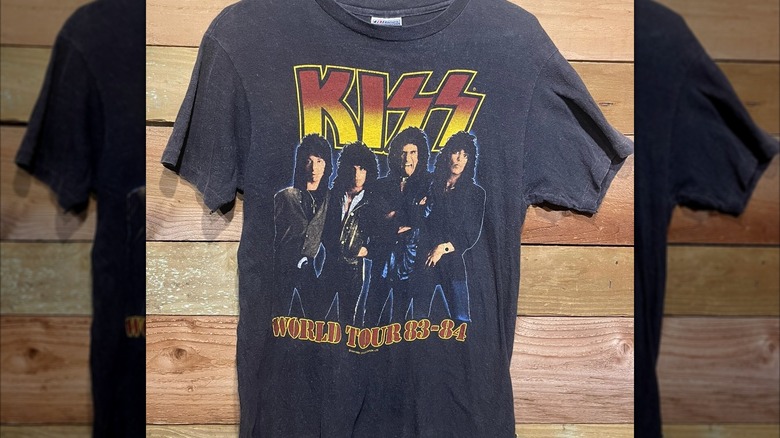
The actual material of a vintage band shirt is worth noting as much as its artwork or source. Thick cotton is characteristic of older shirts, though rayon may indicate a really vintage tee from the early days of '70s band tees. Blends containing synthetics or lighter-weight cotton are more recent, though this isn't always a make-or-break factor for collectors, especially those focusing on '90s and beyond (which we must admit is considered vintage to whippersnappers nowadays).
Stitching matters
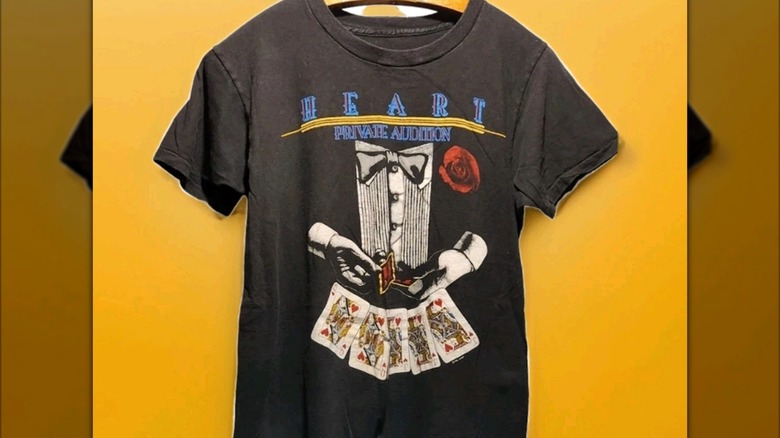
When examining a vintage shirt, consider the seams. Do you see a single row of stitches or two parallel ones? The second, rather obviously called double-stitching, is quicker for factory machines to stitch. Because of this, double-stitched band shirts became more common in the '90s and were widely adopted by the 2000s. Shirts featuring a single row of stitching on the seams could be older and rarer, therefore commanding more interest and a higher price. There's a practical side to some collectors' single-stitch preference, too, as these seams are less likely to unravel if a stitch breaks.
Consider the tag
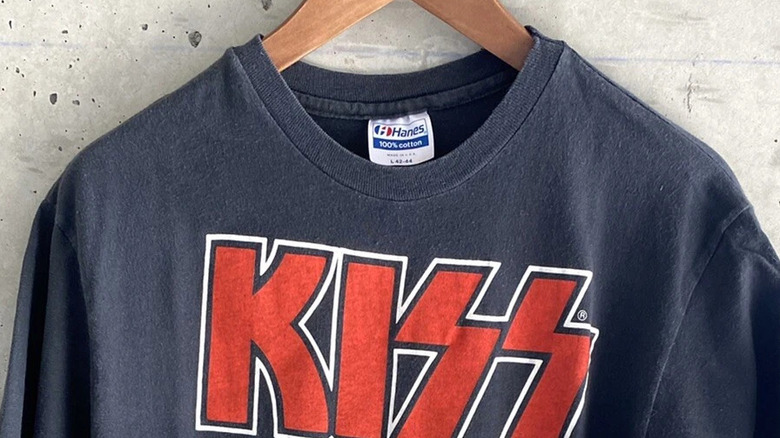
If you really want to dig into a shirt's provenance, check out the tag. This little bit of fabric contains key information about the kind of shirt you're holding. Researching the timeline of common T-shirt blanks – before the art was added — can be useful, as they're often linked to certain eras. Getting truly nerdy about the progression of a brand's logo can help you further nail down a date for a band shirt's manufacture. Fake tags are reportedly out there, however, so don't rely on this data point alone.
Examine the ink for key clues
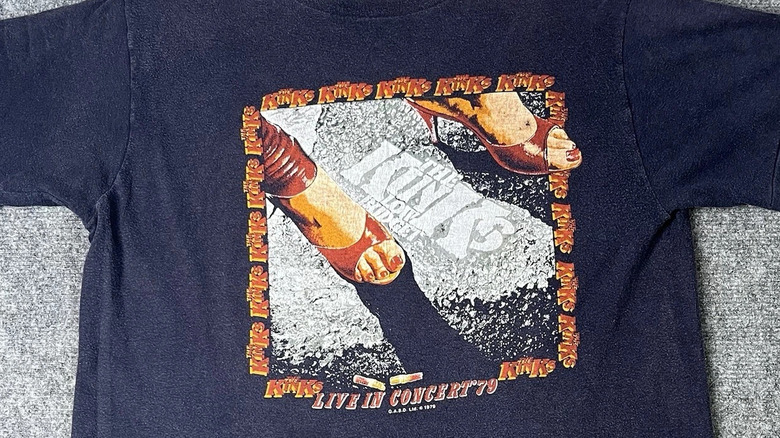
Many vintage shirts were made using the screen printing process, which produces an image that's slightly raised and may feel soft or look cracked, especially if it's been around for a while. Look very closely, and you may even notice that the ink has soaked a bit into the fabric of the shirt. Contrast that with digital printing, a modern technique that often slaps down an image in a kind of plastic film. It will be smooth and have bright colors, sure, but that quality hints at a far more recent printing.
Sizing may surprise you
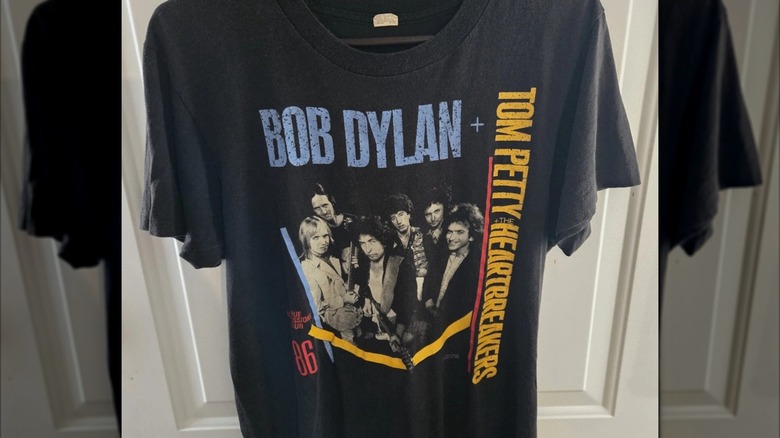
Yes, it really does seem that vanity sizing is a thing. Over time, manufacturers have reportedly made clothing larger and larger to keep pace with the changing average body size, while maintaining the same number on the tag. Some may be skeptical, but anecdotal reports indicate that band shirts of yore are smaller than you might expect. That large may fit more like a medium or even a small, so pay close attention to actual measurements where you can.
Watch out for fakes
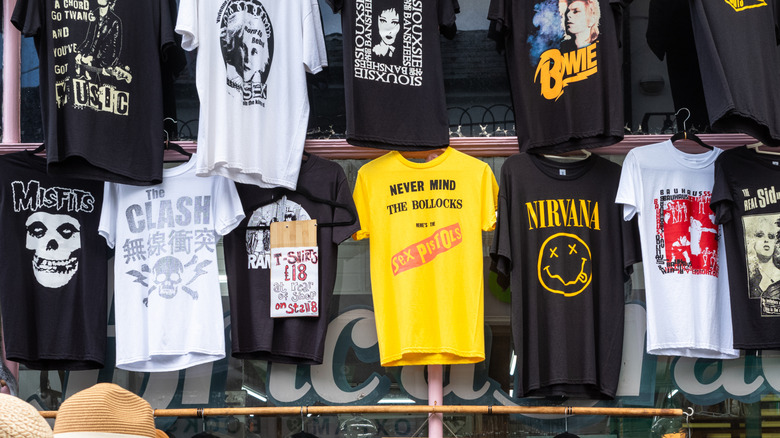
We hate to say it, but fakes are everywhere, from dupes on "Antiques Roadshow" to the suspiciously cheap band T-shirt in front of you. Is the ink suspiciously crisp? The fabric oddly well-maintained? The price too good to be believed? Tread carefully. This is where understanding the progression of T-shirt blanks again comes in clutch, as that knowledge can help you spot fakes. Find a Gildan-tagged tee allegedly from the early '80s? Sure, Jan. Look at manufacturing locations, too. Before the '90s, many American band shirts were U.S.-made, with production only shifting overseas later.
Store shirts properly

So, you've finally secured the vintage band T-shirt of your dreams. Sure, you could toss your precious find into a drawer like any old tee, but if you want it to actually last, you'll take more care. Hopefully it's already clean, but if not, take the time to gently hand-wash it. Then, store it away from direct sunlight, which can break down both the fabric and ink. Instead, fold it (hanging can stress the fabric) and avoid leaving it crammed beneath other clothes or in an environment that sees large changes in humidity and temperature.