

1995 No. 1, Famously Later Remixed With ODB, Hit The Top 31 Years Ago Today
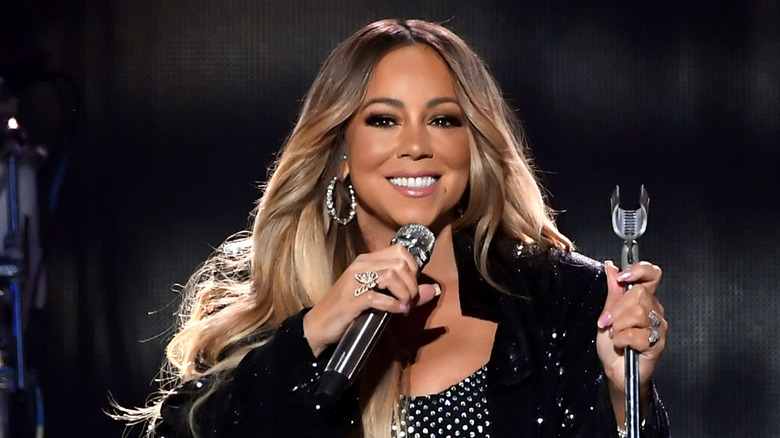
With what was at the time a surprising assist from an esteemed and edgy rapper, pop star Mariah Carey began her transition into her R&B and hip-hop era when "Fantasy," the first single from her LP "Daydream," became entrenched at the No. 1 position on the Hot 100. On October 19, 1995, "Fantasy" was the biggest hit in the United States.
A backup singer before her mega-successful solo career, Carey had already sold millions of records — and scored eight No. 1 hits — with acrobatically sung torch songs and love ballads geared toward the mainstream pop market. "Fantasy" marked a change in Carey's approach and career, as its use of a sample and a thumping bass line showed her incorporating elements commonly found in rap music. That message became abundantly clear when fans got to hear the remix included on the physical single, which featured an energetic ODB of Wu-Tang Clan spitting a verse for the ages. "Fantasy" was Carey's most emphatic smash to that point, debuting at No. 1 and ultimately spending eight weeks atop the chart.
With Fantasy, Mariah Carey got to fulfill her fantasy to make hip-hop
Just after determining the primary melody and themes for "Fantasy," Mariah Carey caught "Genius of Love" on the radio. A one-hit wonder love song from the '80s, the Tom Tom Club alterna-dance track was a childhood favorite of Carey's. The sweetness and effervescence of that song matched up with "Fantasy," so she contacted the Tom Tom Club and received enthusiastic permission to interpolate a sample of the song's bouncy, high-pitched synthesizer line. Producer Dave "Jam" Hall then layered the track with strings and a bass groove influenced by '90s hip-hop.
At the time, Carey's label boss and husband was Tommy Mottola, and when "Fantasy" was in production, he was beginning to allow the singer-songwriter to break out of the soft rock lane he'd insisted she follow. Carey had been angling to introduce hip-hop elements into her work, and she commissioned hotshot producer Sean "Puffy" Combs, aka Puff Daddy, to orchestrate a rap remix of "Fantasy." The singer also convinced rapper ODB, a prominent figure in the history of Wu-Tang Clan, to provide a feature verse. Mottola was worried that the unpredictable rap icon would alienate Carey's fans, and he hated the remix; Carey was thrilled, and the remix was considered an innovative moment in '90s music, merging pop with rap and helping the "Fantasy" single reach the octuple-platinum level.