

These Rare '60s Albums Are A Collector's White Whale
We may receive a commission on purchases made from links.
You might not immediately make the connection between collecting old records and Herman Melville's "Moby Dick," but consider the figure of Captain Ahab. Much as he stood on the deck of the Pequod, looking for the telltale spout that revealed the presence of his long-obsessed-over cetacean, some 1960s-focused record collectors have their own white whales they hope to find one day. They probably won't be wielding harpoons, and hopefully no one will plummet into the briny depths over these finds, but some '60s albums are so rare that even a determined collector might have to go to serious effort — not to mention expense – to finally bring one home.
What goes into that valuation? Of course, rarity is a big factor, and though some of these records come from very big names, certain quirks and accidents of history have made them exceedingly tough to find. Some, like the now almost universally adored 1967 album, "The Velvet Underground & Nico," even came with unique attributes that made finding unaltered copies almost as tough as setting out from Nantucket in a rickety old whaling ship. Value can also be connected to big names, unique music, and personal taste. If a collector is lucky and perhaps as single-minded as old Ahab, they might just find the prize gem of their '60s album collection.
Would You Believe — Billy Nicholls
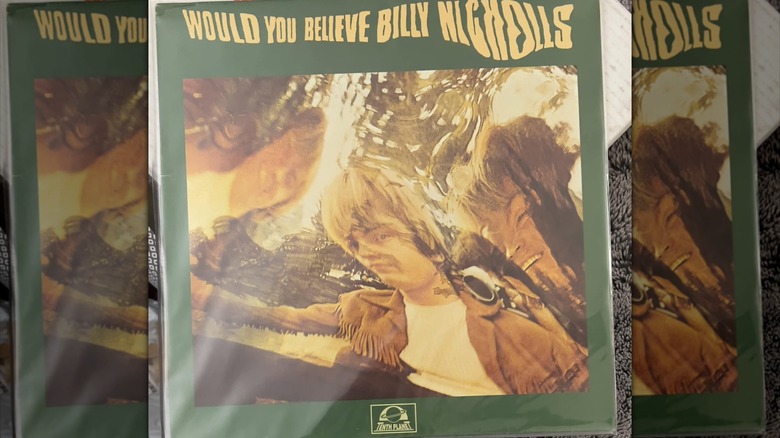
You might be forgiven for thinking: "Billy Nicholls, who?" Well, he was the music director for The Who, as well as a songwriter, producer, and performer for many years. But before all that, he was a British teenager who had just signed to Andrew Loog Oldham's Immediate Records in the late '60s. First hired as a writer, Nicholls eventually recorded his first album, "Would You Believe," with Immediate. Meant as a response to the wild success of the Beach Boys' "Pet Sounds," it featured a slate of British musicians any halfway dedicated fan would recognize, including John Paul Jones, Big Jim Sullivan, and Jerry Shirley, among many others.
However, just ahead of its 1968 release, Immediate Records began to buckle under the pressure of financial mismanagement. Attempting to hold up the floundering company, Oldham turned his attention to other acts. This meant "Would You Believe" never got an official release, though it did manage to sneak out into the world in the form of 100 promo copies sent out to radio stations.
Rather than fade away, "Would You Believe" became something of a cult favorite. Collectors became awfully interested in snagging one of those 100 copies of the album, both for the rarity and the good reviews that presaged its failed release. It got so popular that Nicholls re-released "Would You Believe" under his own label in 1998, though those early promo copies remain prized gems of '60s record collections, with one of those original vinyls selling for £8,060 (over $10,600 USD) at a 2026 auction.
Electric Ladyland (first pressing) — Jimi Hendrix
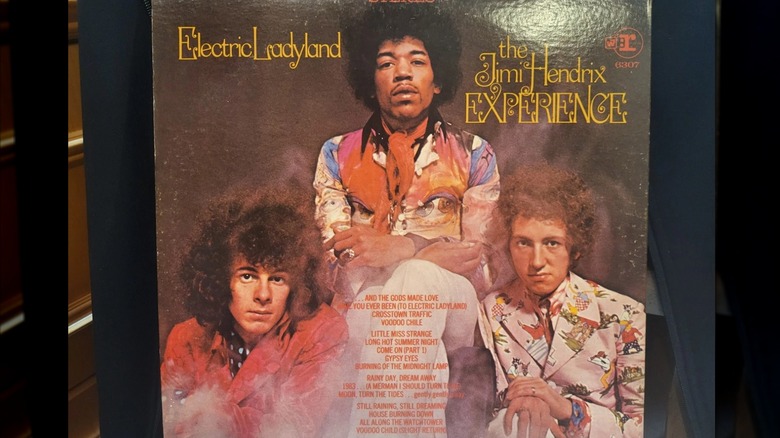
Of course, you've heard Jimi Hendrix's "Electric Ladyland." Not only is it his third and final studio album, but this 1968 record, coming off what may have been Hendrix's best year of his career, stretched over 16 songs and was perhaps his most original statement yet, given how he exercised near-complete control of the process. It also included major tracks like "All Along the Watchtower" and the luscious, bluesy sprawl of "Voodoo Chile," so naturally even casual Hendrix fans have encountered the album. Yet, the first pressing of "Electric Ladyland" is another beast almost entirely, to the point where it's a prized possession in select record collections.
How prized? Back in 2011, one first pressing of "Electric Ladyland" sold for nearly $2,000 USD on eBay. It was reportedly in excellent condition, and included original sleeves, blue text, and a fold-out that sported an image of very scantily clad women (this had led to an earlier auction of the item getting shut down by eBay). Today, other copies of the first pressing in excellent condition can command around $1,000. Some use white text for the track listing on the back of the cover, while others sport the blue text. Which came first is unclear and has generated plenty of argument, even if collectors are willing to pay top dollar for good examples of either album.
Yesterday and Today (original cover) — The Beatles
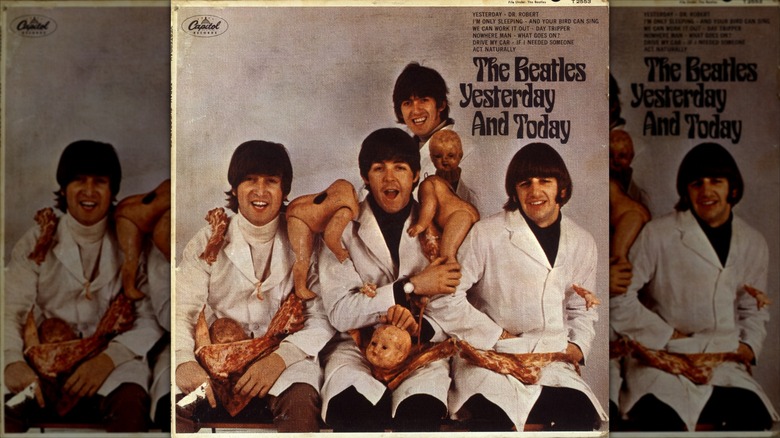
Today, you might get the impression that, for at least part of their musical career, the Beatles were a bit clean-cut. Dive deeper into their history, and you'll see that's not quite true — such as the time John Lennon had to apologize for claiming the Beatles were "more popular than Jesus." For even more evidence that the bowl-cut foursome had some edge, take the original cover for their 1966 album, "Yesterday and Today."
As it was first issued, the record sported an image of the Fab Four wearing white butcher coats and draped with cuts of meat and, uh, grungy doll parts. Photographer Robert Whitaker claimed it was meant as a surreal, caustic commentary on the band's increasing fame, while Lennon himself later said it was "inspired by our boredom and resentment at having to do another photo session and another Beatles thing" (via PBS). Perhaps unsurprisingly, this Beatles cover proved controversial and was pulled almost immediately, making the so-called "Butcher" variant an especially prized find for record collectors.
An unaltered stereo version — Capitol Records simply glued new covers atop the original albums before sending them back out — netted one owner an appraisal of $10,000 to $12,000 on "Antiques Roadshow." A more common mono version would be less valued, though it could still net someone a serious payday. Online, copies have sold for over $1,000, with some sealed records in especially good condition soaring to over $38,000 at auction.
The Freewheelin' Bob Dylan (promo copy) — Bob Dylan
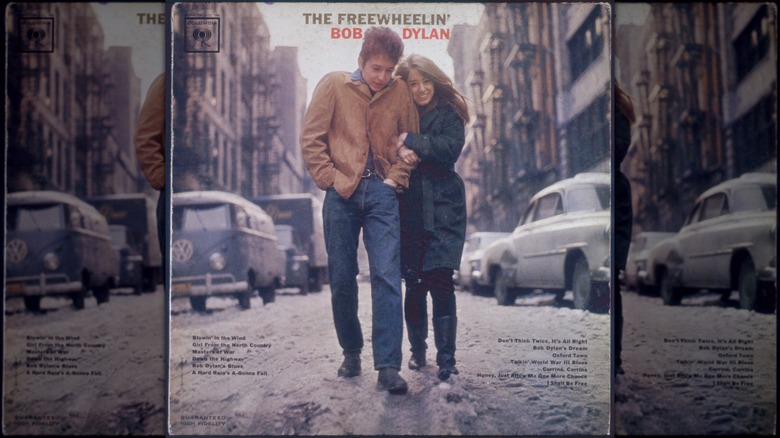
Today, "The Freewheelin' Bob Dylan," released in 1963, is widely regarded as Dylan's breakthrough album. But while many have since come to love the record, with foundational tracks like "Blowin' in the Wind," this second studio album of his has a bit of a secret history. You see, there's another version of the album out there that kind of, sort of shouldn't exist. Ask record aficionados, though, and this apparent oopsie is one of those rare birds they really want in their collection.
The vinyl in question is an early promo version of the album. One white-label version had four tracks listed on the timing strip, but nowhere else (the record itself doesn't play these, either). One sold for $3,500 at auction in 2022, commanding an astoundingly high price for what amounted to a printing error.
It doesn't stop there, however. Also in 2022, a copy that really did play those four tracks sold for a dizzying $150,000 at auction. Said songs were "Rocks and Gravel," "Let Me Die in My Footsteps," "Gamblin' Willie's Dead Man's Hand," and "Talkin' John Birch Blues." These tracks were listed on the record's label in this case but were ultimately replaced on later pressings. In fact, the cover of this auctioned album lists those correctly ("Masters of War," "A Hard Rain's A-Gonna Fall," "Bob Dylan's Dream," and "Talkin' World War III Blues"). The discrepancy made this particular album so rare that it easily exceeded its initial estimate of $60,000 once bids began rolling in.
The Velvet Underground & Nico Promo (Unpeeled Banana) — Velvet Underground & Nico
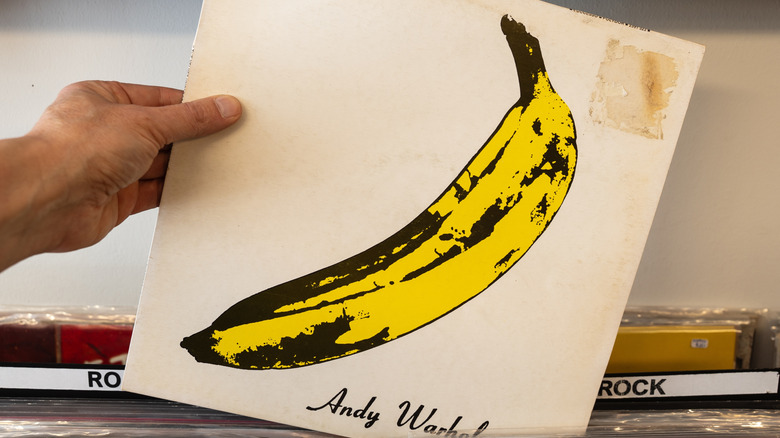
Today, the Velvet Underground is widely regarded as one of the coolest, most daring bands to come out of the '60s NYC music scene. But at the time their first album was released in 1967, they hardly made a splash. And that was with none other than pop artist Andy Warhol producing the effort, not to mention bringing in some key contacts with the rest of the city's ultra-cool art scene. Through 1969, "The Velvet Underground & Nico" generated a disappointing $22,000 in royalties, with some sources claiming a mere 30,000 copies were sold by 1972. But it came to prominence slowly but powerfully over the years, making its Warhol-designed cover featuring a screen print of a banana nothing short of iconic.
That print was all the more special because it was actually a sticker, with a label cheekily telling the owner to "Peel slowly and see." Doing so revealed a pink banana beneath (how very Warhol). This all means that finding an unpeeled version of the original album is a tricky task indeed. One promo copy sent out to DJs at the time sold at a 2023 auction for $5,250, while some are available for well above $6,000 if you don't care for the heightened tension of an auction. Reports indicate that absolute top-tier promo versions with no damage and the sticker intact can even net more than $9,500.