

5 Classic Singles That Define The Sound Of '70s Motown
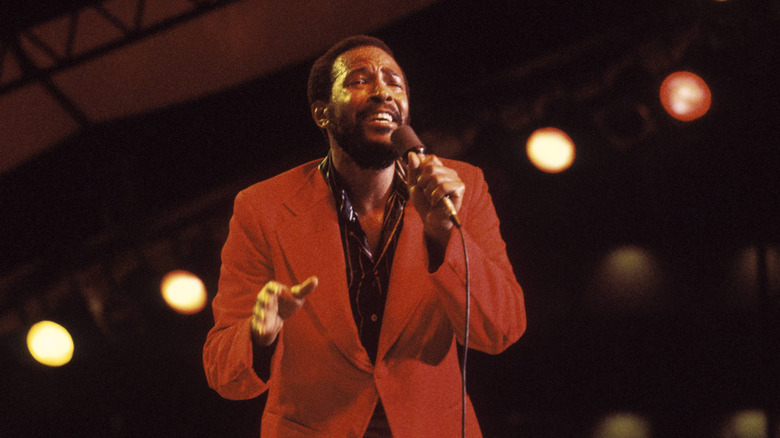
In the 1970s, Berry Gordy Jr.'s Motown Records saw many changes, both as a company and artistically. The studio moved operations from Detroit to Los Angeles, and the sound that Gordy had developed in the 1960s that had made this scrappy recording company a major musical force began to spin off in various directions. What in the previous decade had been a sleek combination of R&B and soul with pop, jazz, and gospel elements had branched out into psychedelic soul, protest music, disco, and adult contemporary, among other styles.
Marvin Gaye moved from smooth soul singer to socially conscious chronicler, while Stevie Wonder came of age with a string of classic albums. In both cases, their work helped change the popular music landscape for good. Later in the decade, Diana Ross, who left the Supremes in 1970, became a disco diva and the Commodores moved into adult contemporary territory with songs like "Easy." The singles we've included in this story illustrate Motown's diverse sound of the 1970s and were much more than just hit tunes; they became musical milestones for the Black artists who created them and for popular music in general.
Marvin Gaye — What's Going On
In 1970, Marvin Gaye fought hard to see his artistic vision come to life with both the album "What's Going On" and its titular opening track. Berry Gordy wasn't keen on such a political song, telling Time in 2020, "I never wanted Motown to be a mouthpiece for civil rights." Instead, he wanted to keep the focus on an integrated "sound of young America" as he'd billed Motown's music, a far cry from the pointedly anti-Vietnam War lyrics of "What's Going On"
The song was originally written by Renaldo Benson of the Four Tops after witnessing police attack peaceful protesters in Berkeley, California. Benson gave it to Gaye, who reworked both the music and lyrics with an eye toward the country's social strife and his brother's Army service in Vietnam. Gaye went on to produce the song and album, both of which shot to the top of the charts following their release in May 1971. The single went to No.1 on Billboard's R&B chart, No.2 on the Hot 100, and the album reached No. 6 on the Billboard 200, his first album to crack the Top 10. Back at Motown, the single's success helped open the doors for more artistic control and social commentary from the company's artists.
Stevie Wonder — Superstition
In 1971, Stevie Wonder turned 21. He'd been at Motown since he was 11 and was ready to break free from the classic Motown sound and go his own way. When his final contractual album, "Where I'm Coming From," saw mediocre sales, Berry Gordy wavered over renewing Wonder's contract. This gave Wonder the opportunity to gain more freedom, as his mentor, Marvin Gaye, had recently achieved. In 1972, he crafted two albums, "Music of My Mind" and "Talking Book." It was the latter, with its first single, "Superstition," which proved Wonder was truly breaking new ground, and it clicked with fans in a big way.
The tune, with its super funky Clavinet riff, punchy horns, and driving Moog bassline, instantly took off. The song's genesis began when guitar god Jeff Beck began playing a drum beat in the studio that Wonder riffed along with on the Clavinet. Wonder ended up playing most of the instruments on the single and album. "Superstition" went to No. 1 on both the Billboard Hot 100, and came to define another aspect of the evolving Motown sound.
The Temptations — Papa Was a Rollin' Stone
The early 1970s saw the Temptations fully move away from their classic soul sound of songs like "My Girl" into their pioneering psychedelic soul, delving into themes centered on the Black experience. That was due to the influence of Motown songwriters Norman Whitfield and Barrett Strong, who were helping to transform the Motown sound. "Papa Was a Rollin' Stone," from 1972, exemplified this shift.
With a deservedly famous deep, grooving bassline, "Papa Was a Rollin' Stone" features the chilling opening lines, "It was the third of September / That day I'll always remember, yes I will / 'Cause that was the day that my daddy died." The song's lyrics stay bleak, with an echoing solo trumpet underscoring the feeling. Still, the wah-wah guitar and driving hi-hat keep it eminently dance-worthy.
The single was also groundbreaking for its length, at around seven minutes (the album cut from their "All Directions" was even longer at around 12 minutes), which helped push the boundaries of what radio stations were willing to play. The song went to No. 1 on the Billboard Hot 100 in December 1972, stayed on the chart for 16 weeks, and won three Grammy Awards. The success of "Papa Was a Rollin' Stone" solidified psychedelic soul and social themes in the Motown sound of the '70s.
Diana Ross — Love Hangover
In the mid-'70s, Diana Ross wasn't really interested in recording "Love Hangover," a song written by Marilyn McLeod and Pam Sawyer for her 1976 self-titled album. Motown producer Hal Davis pushed her to record the track and tried to set the proper mood. With the help of a little vodka and a recording studio set-up that included a disco ball, Ross loosened up and nailed this tune that would become her first disco hit, which starts as a slow funk ballad before shifting gears into a throbbing dancefloor banger.
It was quickly released as a single after the Fifth Dimension cut their own version, and eight weeks later, Ross' rendition hit the No. 1 spot on the Billboard Hot 100 and R&B charts, became a dancefloor favorite, and earned Ross a Grammy nomination. The song pushed Ross towards disco on several 1970s albums, including "Baby, It's Me" and her 1980 smash hit "Diana," and added yet another layer to Motown's already kaleidoscopic '70s sound.
The Commodores — Easy
In the early '70s, the Commodores were known for their fierce funk, but towards the latter half of the decade, frontman Lionel Richie's thoughtful ballads began to break through to a wider audience. The band's self-titled 1977 album included the album-closer "Easy," which was released as a single that year and went to No. 1 on Billboard's R&B chart and No. 4 on the Hot 100. This laid-back, piano-driven ballad — and classic break-up tune— anchored by Richie's soulful delivery, was the forerunner for the sound the band would ride to the top of the music business with, including later hits such as "Three Times A Lady," which was one of Motown's biggest-selling singles of all time.
"Easy" also paved the way for Ritchie's rise as a solo artist and quintessential balladeer in the following decade, when he was one of the top artists on par with Michael Jackson and Whitney Houston. The song also illustrated Motown's move in the late 1970s towards a slicker, adult-contemporary vibe.