

Not The Beatles, Not The Who: The Band That Time Forgot Helped Define Power Pop
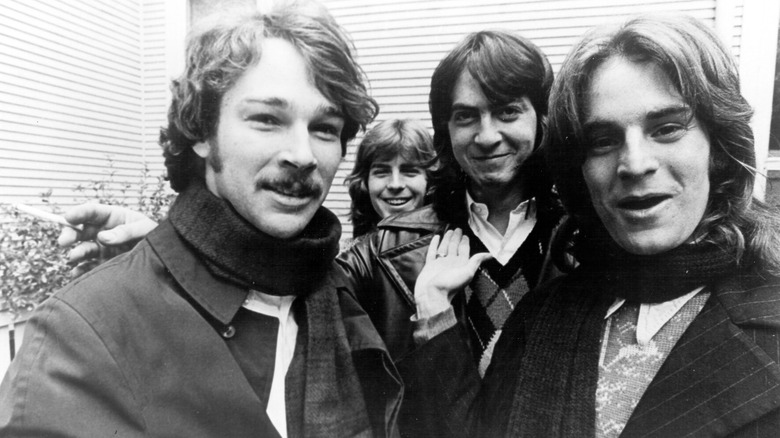
Sometimes the most influential bands fly right under the public's radar — influential to other musicians, that is. Such is the case with Big Star, a proto-power pop quartet from Memphis, Tennessee, who bridged the gap between jangly British Invasion leanings (including bands that once rivaled the Beatles in popularity) and the post-punk-laced bands of the '80s, especially R.E.M. Contrary to their name, Big Star never had a single or album chart on the Billboard Hot 100 or Billboard 200.
Big Star's small tale starts with two friends who were both guitarists and vocalists in Memphis, Alex Chilton and Chris Bell. Chilton and Bell played in various bands in the '60s, one of which was Bell's Ice Water with drummer Jody Stephens and bassist Andy Hummel, the latter of whom were also friends. So it was that this homey group of pals got together in 1971 to form Big Star, quaintly named after Big Star Food Markets across the street from Ardent Studios, the legendary Memphis location that's produced everybody from Led Zeppelin to B.B. King, ZZ Top, R.E.M., and many more. It's Ardent that released Big Star's first two albums, "#1 Record" and "Radio City," in 1972 and 1974, respectively.
But despite being founded on friendships, Big Star started falling apart almost immediately from the get-go. As the story goes, Chilton got more media attention than Bell, no matter Bell's role in the band. Bell quickly got fed up, left the band after they released their debut, and Big Star drifted into obscurity. But their impact lingered. Now, almost 55 years after their debut, their legacy is secured as a formative power pop pillar.
Big Star's enduring impact
Nowadays, listening to Big Star can be a bit confusing. A song like "I'm in Love With a Girl" sounds like a '90s post-grunge B-side. "You Get What You Deserve" sounds like a Cream tribute. "Oh My Soul" sounds like a Kinks cut. But this is precisely what defines Big Star's behind-the-scenes role over the decades. Their music bundled up their own influences and contemporaries into light, brief, power poppy packages that echo on in those musicians who listening to them. Indeed, a Big Star song like "September Gurls" nails '70s power pop (spelling and all).
Bands like the Posies, R.E.M., Primal Scream, and the Replacements took great inspiration from Big Star; the Replacements even have a song called "Alex Chilton" on their 1987 album, "Pleased to Meet Me." In a 2016 interview with Vice, R.E.M.'s Mike Mills talks about Big Star's influence on his band, citing nuts-and-bolts songwriting. And R.E.M. is regularly cited as practically spawning alternative rock's entire musical branch: Screaming Trees, Liz Phair, White Stripes, Wilco, etc. Of course, it's not as simple as "No Big Star, no Wilco," but it's also incorrect to omit Big Star's impact. The same goes for garage/noise/hardcore outfit Hüsker Dü and songs like the rock history-making "The Girl Who Lives on Heaven Hill", which influenced Smashing Pumpkins, Foo Fighters, Pixies, Green Day, and more.
Despite vanishing from the public eye rather quickly back in the day, Big Star has emerged into modern musical consciousness. Bit by bit, they're getting the attention they deserve, though Bell (who died in 1978) and Chilton (who died in 2010) aren't here to know it. But we're still here to hear them.