

Iconic Debut Albums Every Boomer Remembers Hearing For The First Time
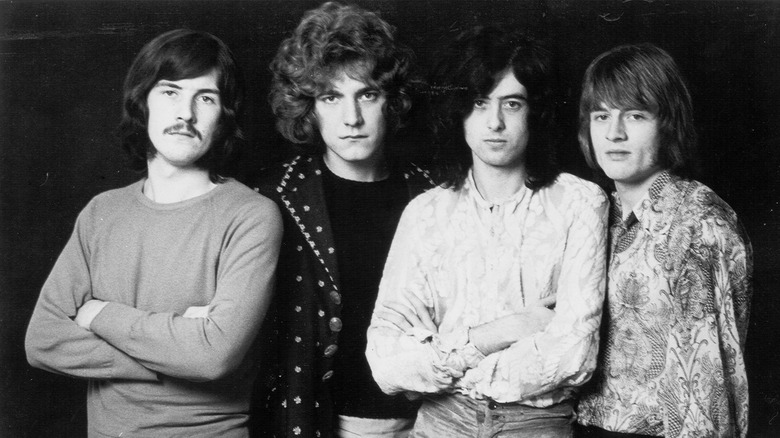
People coming of age in the 1960s and '70s remember when classic rock wasn't classic at all. Rock 'n' roll was fresh, evolving, and rebellious. Bands were pioneering new sounds and approaches to songwriting, and a young audience of fans sought out new music, spending hours listening to records. Such was the climate for young boomers, so when they heard certain albums, it left an indelible imprint in their memories, especially debuts from future legends. The first time a person hears a new band, there is little preconceived notion of what to expect, and if we're lucky, we find something that stays with us for life.
The debut albums we chose for this list were not only mind-blowing to young boomers, but they went down in history as being groundbreaking, or among the first records to move the needle toward genres that would follow. Boomers are a huge cohort, born from 1946 to 1966, so there are a lot of records to choose from. We stuck with the '60s since that decade included a good number of boomers at an age when music was a big part of the social scene.
Please Please Me/Introducing the Beatles
The Beatles changed everything for rock 'n' roll, and while their 1963 debut album, "Please Please Me," is not their most revered work, it is the one that set their takeover of teen hearts and minds in motion. Prior to the album's release, the Fab Four had been playing live and had garnered a fan base. Much of what's on "Please Please Me" was recorded at their live shows, but seven of the songs were covers, including "Twist and Shout."
"Love Me Do" and "Please Please Me" had both been released as singles in the U.K. ahead of their inclusion on the album's March 1963 debut, and the 14-track LP made a splash for bringing a new energy and fresh sound that caught people's attention. One Redditor said, "It was literally the first album-length shot fired in a cultural revolution that changed the face of Western Civilization, and everybody knows that!"
However, Beatles fans in the U.S. had to wait until the beginning of 1964 for the album, which was called "Introducing the Beatles" in the States. It included 12 of the same 14 tracks from "Please Please Me" and went to No. 2 on the Billboard 200, staying on the chart for 49 weeks. As another Redditor shared, "It's great, obviously. But, I think it's held more dear to those lucky enough to be alive when it was released and the impact it had ... They played with skill and ability beyond their years on this album. Production stands shoulders above anything else in its time ..."
The Velvet Underground & Nico
The Velvet Underground's debut album, "The Velvet Underground & Nico," makes this list not for its popularity upon its release, but for how memorable it was and how influential it became. The album was unlike other records of its time in 1967. Rather than the common themes of peace, love, twirling hippies, and enthusiasm for psychedelics, Lou Reed, John Cale, Maureen Tucker, Sterling Morrison, and German actress, singer, and Andy Warhol muse, Nico, created a different kind of album. Theirs veered into darker themes of New York's drug-abusing underbelly, blending soft, sparse melodies in tracks like "Sunday Morning" and "Femme Fatale" with songs that feel urgent like "Run Run Run" and "I'm Waiting For the Man." The album is heavy and dark in some ways, but it's also compelling, and its combination of dreamy, experimental, avant-garde arrangements creates a memorable fusion.
"Velvet Underground and Nico" was not a mainstream runaway success; it sold less than 60,000 copies in the first two years after its U.S. release, per Record Mecca. It was a slow burn, but those who heard it would surely remember it. Over time, the album (with its cover art by Andy Warhol) has become iconic, and in 2013, the year Lou Reed died, it made its way to No. 129 on the Billboard 200, 46 years after its initial release. People listening to the album in the late '60s may have understood that it was ahead of its time, but they couldn't imagine the influence it would have on future genres from punk to shoegaze, garage, glam, grunge, and more.
Music From Big Pink
The Band's 1968 debut album, "Music From Big Pink," delivered a sound all its own and it was unlike anything else at the time, or since, really. And like "The Velvet Underground & Nico," it initially did not do well commercially, yet it went on to be iconic due to its originality and timelessness. The Band, made up of Levon Helm, Robbie Robertson, Rick Danko, Richard Manuel, and Garth Hudson, was a seasoned group of musicians who'd spent years touring as the backing band for Ronnie Hawkins before becoming the supporting band for Bob Dylan. After their stint with Dylan, they finally became a band in their own right.
By the time they recorded "Music From Big Pink," they had honed their craft and understood the kind of music they wanted to create. Baby boomers at the time were used to hearing a variety of rock, ranging from the heavier guitar-led acts that were becoming popular to the folk-rock set, but The Band pulled from American genres like blues, rockabilly, folk, gospel, and country, creating an album that defies easy categorization. It transports listeners to something that feels out of time yet sturdy in its footing in some kind of romanticized American past, which is why it's a debut record boomers would surely recall hearing for the first time. It topped out at No. 30 on the Billboard Hot 200, and songs like "The Weight" and "I Shall Be Released" remain timeless.
Led Zeppelin I
Led Zeppelin's 1969 self-titled debut is a far cry from the first three entries on this list due to its sheer power. This album is a sonic journey, a great one for headphones and 45 minutes of your attention. Kicking off with "Good Times Bad Times," this record goes on to introduce the band's hard rock chops with "Communication Breakdown." But the heavy-rocking tracks are contrasted with toned-down, melodic songs like "Your Time is Gonna Come" and "Black Mountain Side," and we can't miss their sultry blues efforts in songs like "You Shook Me." When "Led Zeppelin I" was released in 1969, boomers were introduced to the band that would go on to be legendary, including Robert Plant's primal screams, Jimmy Page's guitar prowess, John Paul Jones' driving bass lines, and John Bonham's phenomenal drumming. There is no way boomers heard this album and forgot about it.
Interestingly, several of the songs on the album were not original Zeppelin songs, but rather, arrangements of old blues songs, yet no one had ever heard them played the way Led Zeppelin did it (if they'd heard them at all). While the album was panned by critics, in part, for it's lack of original material, Led Zeppelin's debut album helped ignite a legion of fans, some of whom still think it was the best album of the band's career.
The Stooges
The Stooges' 1969 self-titled debut was messy, riotous, and full of grit. It transports us to dimly lit venues with sticky cement floors where the energy is palpable, and anything could happen. It's abrasive and simplistic, but like the punk rock that would come in the next decade, the Stooges, fronted by Iggy Pop, put out music that relied on the rawness of the performances rather than the virtuosic instrumentation. That rawness, on songs like "I Wanna Be Your Dog," spilled over to the record, and as Rolling Stone critic Edmund O. Ward said in 1969 of the album, "Their music is loud, boring, tasteless, unimaginative, and childish. I kind of like it."
Produced by John Cale of the Velvet Underground, that band's influence definitely comes through. The Stooges aren't for everyone, but whether you liked it or not, if you heard their first album in 1969, you likely didn't forget it. Doors fans back then may have noticed that the 10-minute-long track on the record called "We Will Fall," which includes a bunch of chanting and sounds like a wanna-be "The End," only less interesting. Still, it's memorable. Their more energetic stuff is where the sweet spot is. The song that follows it, "No Fun," is actually fun to listen to, by contrast, and overall this album is rebellious in all the best ways. In 1969, with many young boomers railing against the established norms of the previous decades, the Stooges were the musical equivalent of the middle finger, and restless kids definitely tapped into that feeling when listening to their first major release.