

1966 Garage Band No. 1, Later Covered By Aretha Franklin, Hit The Top 60 Years Ago Today
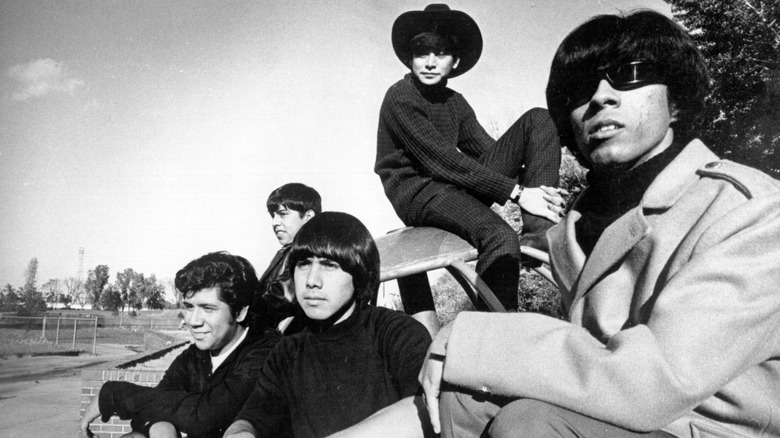
One of the first and few authentic garage rock songs to ever attain true chart success, "96 Tears," by ? Mark and the Mysterians, was the No. 1 song in the United States the week of October 28, 1966. Considered a groundwork-laying classic of an establishment-challenging genre, "96 Tears" is essentially a punk-ish hit that rocked the pop chart and later found a second life when reinterpreted and transformed by the Queen of Soul. Aretha Franklin recorded "96 Tears" as the B-side of her 1972 Top 5 hit single "Day Dreaming."
As recorded by a band sometimes referred to as Question Mark and the Mysterians, "96 Tears" benefitted from tantalizing marketing and chatter regarding the openly enigmatic identity of its breakout star. While the lead singer actually changed his name to a punctuation symbol and sounded like Mick Jagger, Eric Burdon, and so many other blues-influenced contemporary British Invasion frontmen, ? was actually Rudy Martinez from Saginaw, Michigan. With the gritty, woozy organ-propelled "96 Tears," he and the rest of his band of young musicians became a national sensation, topping the Hot 100 for a single week.
96 Tears was a long-simmering triumph of DIY music
Back in 1962, before ? and the Mysterians had arrived on that name, singer and songwriter Rudy Martinez of the band XYZ penned a histrionic, free-wheeling poem about heartbreak he titled "Too Many Teardrops," which is also its opening line. The band worked together to devise a musical backing, and after rejecting the idea to retitle it "69 Tears," they flipped the digits to get the more wholesome and random "96 Tears" and played it during their first ever show at a ski lodge in Adrian, Michigan. It got such a positive response from the crowd that ? and the Mysterians' manager Lilly Gonzalez recorded it for her own Pa-Go-Go Records. And then ? and the Mysterians pretty much became a legendary band that really did start in somebody's garage — the tune was recorded in Gonzalez's living room.
While the Mysterians advocated for "Midnight Hour" to be pitched to radio, Martinez thought "96 Tears" was the gem, and he delivered it to radio stations around Michigan, where it became a local retail hit. After a Detroit station added it to their playlist, Cameo-Parkway Records head Neil Bogart — who would later help release many classic albums that define '60s bubblegum pop — got a listen, bought the rights, and took "96 Tears" coast to coast. That rough, first recording made in a non-professional setting is the version of the song that went to No. 1 on the Hot 100 in the fall of 1966.