

The '70s Rock Band That Time Forgot Helped Define The Sound Of Power Pop
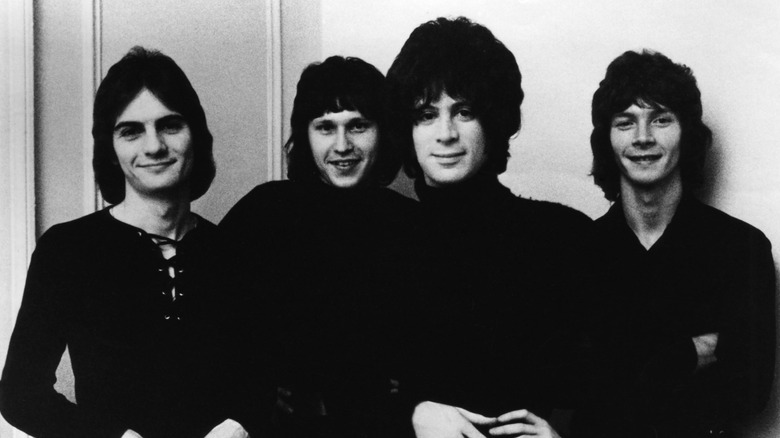
The Raspberries may have been minor players in the grand scheme of music history, but the impact they had on classic '70s power pop set a standard for the plethora of artists who came after. Their songs were bright and catchy, peppered with rock 'n' roll edges that gave the band a blended audience who loved both. They may not be one of the more revered acts on the nostalgia circuit, but when you revisit and listen deeper into the hallmark Raspberries template, you hear an influence that's been taken for granted for decades.
The Raspberries grew out of a desire to eschew the usual rock music trappings and create a more wholesome, straightforward take on a modern '70s band. The original lineup of Eric Carmen, Jim Bonfanti, Wally Bryson, John Aleksic (who left in 1971), and Dave Smalley brought players from various Cleveland-area bands together into a local supergroup of sorts. As lead vocalist and main songwriter, Carmen used his plaintive tone and expansive range to give the band's songs an expressive soul that helped their sound stand out among the acts of the era.
The band's aim was to distill the essence of a proper pop song into its strongest components, leaving out the typical solos in favor of musical dopamine hits that delivered pure melodic sweetness. The result was a formula that helped define power pop as a treasured sound in the modern music world.
Go All the Way was a No. 5 smash that took modern music in a vibrant direction
The Raspberries broke through in 1972 with a crunchy-sweet No. 5 single called "Go All the Way," a mix of modern rock elements and Phil Spector-style wall-of-sound delivery. It came from the band's self-titled debut album, which peaked at No. 51 on the Billboard Hot 200. A follow-up album, "Fresh," rose to the No. 36 spot and delivered more hits: a No. 35 mid-tempo love song called "Let's Pretend" and a No. 16 banger called "I Wanna Be with You" that gave upbeat '60s nostalgia vibes from the jangling guitars to the aching harmonies. These tunes showed off the band's love for taking the feedback guitars and drum-heavy elements of rock and applying them to sugary pop melodies.
The band released six albums throughout the '70s, though no others reached the heights of their earliest works. But the power pop influence became common ground for artists for decades to come. "Go All the Way" brought them back into the public consciousness when it appeared on the soundtrack for the Marvel blockbuster "Guardians of the Galaxy" in 2014. The resurfaced memory of the Raspberries even inspired a tribute album in 2025, called "Play On: A Raspberries Tribute." It featured nearly 40 acts recreating their favorite songs from the band, including tracks interpreted by '80s pop-rock heartthrob Rick Springfield and ex-Babys singer John Waite, whose own careers rode the Raspberries' power pop blueprint to staggering successes.
The Raspberries also launched the power pop solo career of lead singer Eric Carmen
Carmen's contributions to power pop were far from exhausted once he departed the band. He went on to sing "All By Myself," one of the most heartbreaking power ballads ever recorded and a No. 2 hit in March 1976; the Raspberries-like shuffle of "Never Gonna Fall in Love Again," followed later that year, reaching the No. 11 spot on Bicentennial Day, July 4, 1976.
A scattering of less-successful singles followed, but when the mid-'80s rolled around, Carmen popped back up out of near-obscurity as a co-writer on the power ballad "Almost Paradise" from the "Footloose" soundtrack. The chemistry-filled '80s duet was a 1984 hit for singers Ann Wilson and Mike Reno. Carmen's own single "I Wanna Hear it From Your Lips" became a modest success too.
A few years later, he contributed "Hungry Eyes" to the wildly popular 1987 "Dirty Dancing" soundtrack. The song became a No. 3 single and put the singer-songwriter back in the spotlight. It was followed by a nostalgic tune with a familiar '60s vibe, "Make Me Lose Control," which also hit No. 3 in 1988 and added to Carmen's personal Wall of Destiny. It all carried the power pop DNA leading back to the Raspberries, a band that's more than deserving of being remembered for its contributions.