

The '70s Rock Band That Time Forgot Gave Us One Of The Era's Catchiest Hits
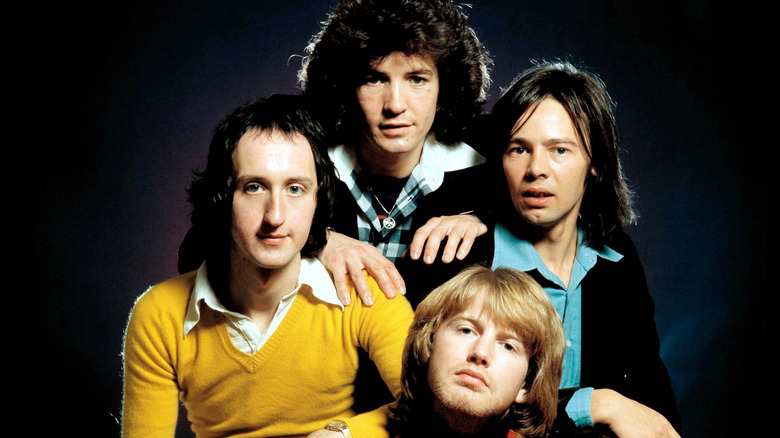
The history of rock 'n' roll is full of bands that were one-hit wonders, and some might believe that Pilot was one of those bands. The group became famous for their single, "Magic," produced by Alan Parsons and released in 1974. The catchy, soft-rock tune became a radio hit and commercial success for its recognizable chorus, glitzy harmonies, and power-pop guitars. The band failed to recreate that magic, although their follow-up single, "January," did well in the U.K.
Pilot was formed in 1973 by David Paton and Billy Lyall, two musicians on the U.K. circuit who had worked as studio engineers and session musicians with bands such as the Bay City Rollers. After recruiting drummer Stuart Tosh, the group recorded several demos that resulted in a record deal with EMI. In 1974, Pilot released their debut album, "From the Album of the Same Name," which featured the iconic and eternally memorable "Magic," their only hit on the Billboard Hot 100.
"Magic" became Pilot's greatest legacy, and has become a prototypical pop rock song, synonymous with the tone of the mid-'70s like Boston, Kansas, and Electric Light Orchestra. "The song's coming up for 50 years old now," Paton said on Booked on Rock. "I never expected that it would have [the] legs that it's got — the longevity. Even my grandkids, they're proud to introduce me to their friends and say, 'This is my granddad, he wrote 'Magic' ... that is a big thrill."
Magic was a smash hit
Pilot's first album spawned their biggest success, the hit single "Magic." The single peaked at No. 5 in 1975 and was certified gold by the RIAA that year. The band quickly got to work on their second album, "Second Flight," which was released in 1975 and spawned another hit single, "January"; the song didn't do as well in the U.S. as "Magic", but went No. 1 in the U.K.
In a 2023 interview with Booked On Rock, David Paton recounted how he wrote the four-bar refrain of "Magic" while sitting at his piano, but was stuck on the verse. "I had to get up early one morning as the sun was rising, and I accidentally woke my wife up," he said. "She said to me, 'Wow look, I've never been awake to see the day break,' and suddenly I heard it as a melody ... I knew there and then I had a full song."
Pilot released their third album, "Morin Heights," in 1976, followed by "Two's a Crowd" in 1977, then dissolved to pursue other projects. Paton and guitarist Ian Bairnson went to work on Kate Bush's debut album, "The Kick Inside," as studio musicians, and Billy Lyall released a solo album, "Solo Casting." But the band found their second wind working with Alan Parsons, the famed engineer who worked on albums like the Beatles' "Abbey Road" and Pink Floyd's "The Dark Side of the Moon" (and the Chicago Bulls' intro song, "Sirius"), as part of his band, the Alan Parsons Project. The members of Pilot were frequent performers with the Alan Parsons Project, collaborating on several of the group's albums.