

5 Classic Singles That Define Earth, Wind & Fire
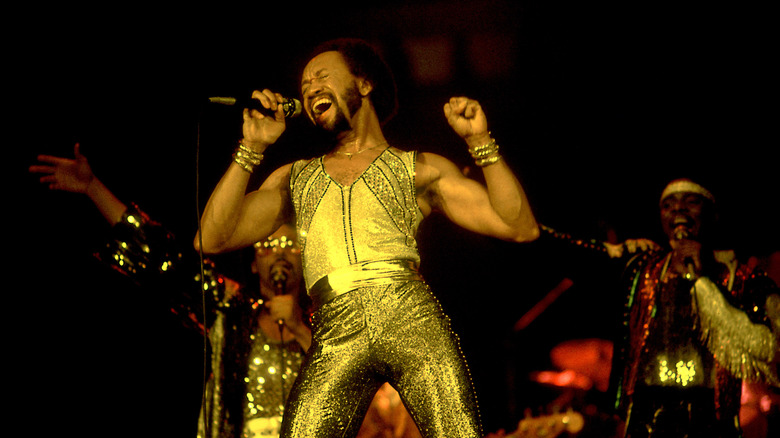
Some bands are defined by their deep cuts, and some by their albums — and some are lucky enough to have all aspects considered, at least in arguments of greatness or longevity. The essential and breakout '70s group Earth, Wind & Fire, though standing strong in all of the above, can best have its story told through five of its most memorable singles. Each of these songs marks a crucial note in the sound played by the band over the years, from their breakout in 1975 with a No. 1 hit to arguably their disco pinnacle in 1981. The band, whose name draws from an astrological interest from founding member Maurice White, took over the late '70s and early '80s to some degree, blending disco, funk, and R&B into an infectious style of pop music that remains catchy and invigorating today.
Though the band went through many eras and personnel over the years, its longest-standing lineup consisted of Maurice White, Verdine White, Ralph Johnson, and Philip Bailey — all who contributed to the pinnacle of Earth, Wind & Fire from the mid '70s to the early '80s, the time period in which these defining tracks were released. From their most iconic and memorable hit "September" to the song that spent the longest on the Billboard Hot 100, these five singles are absolutely necessary in telling the band's story, and leave some stunning vocals, melodies, and grooves along the way.
Shining Star
The band had encountered relative success with "Evil" and "Devotion" in 1973 and '74 respectively, but this 1975 hit completely changed the trajectory of Earth, Wind & Fire forever. Released in the beginning of that year, "Shining Star" was a breakout moment for the band, bringing the then-reasonably successful group into a major spotlight, and likely influencing the style of their hits to come. The song debuted on the Billboard Hot 100 on Feb. 15, and rose throughout the year until its peak at No. 1 on May 24, and enjoyed a run of 20 total weeks on the chart.
Beginning with an infectious funk groove and an enthusiastic brass exclamation, "Shining Star" makes its impression immediately. The song feels classic from these first moments, which are bolstered by a groovy and heartfelt vocal performance in its chorus and pure fun verses: "Shining star come into view / To shine its watchful light on you / Give you strength to carry on, yeah / Yeah, make your body big and strong, yeah / Born a man-child of the sun, yeah / Yeah, saw my work had just begun / Yeah, found I had to stand alone, yeah." "Shining Star" feels fittingly like an entrance, with Earth, Wind & Fire showing the world "what (they) could truly be." And as excellent and successful as this 1975 song was — the band's only No. 1 hit — their star would shine arguably much brighter in the run of songs to come.
September
"September" is known by just about every music fan for its electric opening: "Do you remember / Twenty-first night of September? / Love was changin' the minds, pretenders / While chasin' the clouds away." But aside from this quotable (and annually-recurring) line, the song leaves a quality impression through its three and a half minute runtime. Simultaneously funky and bright, "September" didn't find the chart success of "Shining Star," but it still reached up to No. 8 in February 1979 during an 18-week stint on the charts — and it certainly found plenty of longevity.
"September" is instrumentally exhilarating, blending the band's stylistic influences into a can't-miss pop hit. Melodically, the vocals take it to another level — namely its chorus: "And we'll say ba-dee-ya (Ba-dee-ya, dee-ya) / Say, do you remember? / Ba-dee-ya (Ba-dee-ya, dee-ya) / Dancin' in September" — turning "September" into a song we can play over and over and over again. There's simply a magic in it, and its success was the beginning of an incredible run for the band that would peak in 1979 with a pair of career-defining successes. You can't write the story of Earth, Wind & Fire without "September," perhaps more than any other song in their discography, though there are still remarkable hits to come.
Boogie Wonderland
As the song that began the successes of 1979, the best year of Earth, Wind & Fire's career, there's almost nothing not to love with "Boogie Wonderland." The tune took the pop and soulful sound that the band excelled in and brought it to disco in a song that became one of the genre's defining hits. Recorded in collaboration with the Emotions, the vocal group responsible for the 1977 hit "Best of My Love," this song is absolutely thrilling and captivating for all of its five minutes. After debuting in May of '79, "Boogie Wonderland" rose to No. 6 by the middle of July during a 16 week chart stint.
The song is definitively disco in its vocals and lyrics alike, with the former bouncing back and forth between the high registers of the Emotions with the lower notes of Earth, Wind & Fire singer Maurice White. Lyrically, it's simple, with a chorus providing just the necessary energy to get in the headspace of the song: "Dance, boogie wonderland, hah, hah / (Dance, ooh, ooh, ooh, dance, ooh, ooh, ooh, ooh) / (Dance, ooh, ooh, ooh, dance) / Dance, boogie wonderland, hah, hah." The exclamations of "Dance!" really make the song stick, helping "Boogie Wonderland" function as one of the last high points of the disco-fueled '70s and a definite peak of Earth, Wind & Fire's career.
After The Love Has Gone
Though released in the same year as "Boogie Wonderland" and on the same album, "I Am," this hit song is quite different stylistically but still packs a punch. "After The Love Has Gone" is a lush and emotional ballad featuring some of the band's best hitmaking, built on a '70s sound that still holds up today as one of the decade's best slow hits. First charting on July 7, the week before the peak of "Boogie Wonderland," Earth, Wind & Fire certainly capitalized on their momentum, as "After The Love Has Gone" vaulted up to No. 2 by September 15, the second highest chart hit of their career.
"After The Love Has Gone" begins with a slow piano and grows into a cosmic, ascendant arrangement behind some truly blissful vocals and harmonies. Across four and a half minutes, the song grows into a unique atmosphere that feels like the evolution of the sounds Earth, Wind & Fire dabbled in over their career, culminating in an anthemic chorus that's some of the best music they ever made: "And, oh, after the love has gone / How could you lead me on / And not let me stay around? / Oh, oh, oh, after the love has gone / What used to be right is wrong / Can love that's lost be found?" It's hard to do better than "After The Love Has Gone," making this a clear standout that defines the band's sound.
Let's Groove
In this list's final song, and the only track to come out after the 1970s, Earth, Wind & Fire ended their stellar and defining run with a return to their funky sound that helped bring them into the spotlight. "Let's Groove" is an evolved take on disco, bringing some electric elements into its core sound, and (similarly to "Boogie Wonderland") is almost instantly recognizable as one of the best disco songs of all time. This track brought a boogie to very near the top of the charts, entering in early October of '81 and peaking on Dec. 19 at No. 3 during a 24 week stint.
Though each of the song's sections across its five and a half minute runtime are stellar, its bridge is perhaps where "Let's Groove" most wholly plays into its name, with a drop and guitar section that truly brings out the song's groove: "If you want my love / We can boogie on down / Down, boogie on down (The boogie sound, down upon down) / Down, boogie on down (The boogie sound, down upon down) / Down, we boogie on down (The boogie sound, down upon down) / On down." It's a bright and upbeat song to end this list on, and for a band with no shortage of funky, captivating tunes, it's a fitting final note for the string of songs that defined Earth, Wind & Fire's career.