

The 5 Best Call-And-Response Songs Of '60s Pop
The '60s were filled with top shelf pop songs that dominated the radio and were patently fun to listen to. And when we're talking about fun songs, we definitely can't leave out one of the most entertaining and immersive song styles out there: the call-and-response. These ditties pull more than the vocalist to the forefront of a tune, and they can perk up a party or live show like few other hits of the era could.
A lot of people might think of call-and-response songs as one where the performer calls and the audience answers, and while that is one type of call-and-response, it's not the only kind. It can also be between a singer and another, a singer and an instrument, or even two instruments. Call-and-response songs are actually any song with elements built like a dialogue, a question and an answer.
We picked the best call-and-response songs of '60s pop with some pretty simple criteria. Obviously, it needed to be decade and genre appropriate — though, in this case, we're considering "pop" in the same way pop radio would. If it was popular and it hit the pop charts, it's a pop song or cross-genre for all intents and purposes. And the second, the most important attribute needed to make the list is even simpler: The song has to be fun. And, we found the most fun call-and-response songs of the decade.
Hit the Road Jack — Ray Charles with The Raelettes
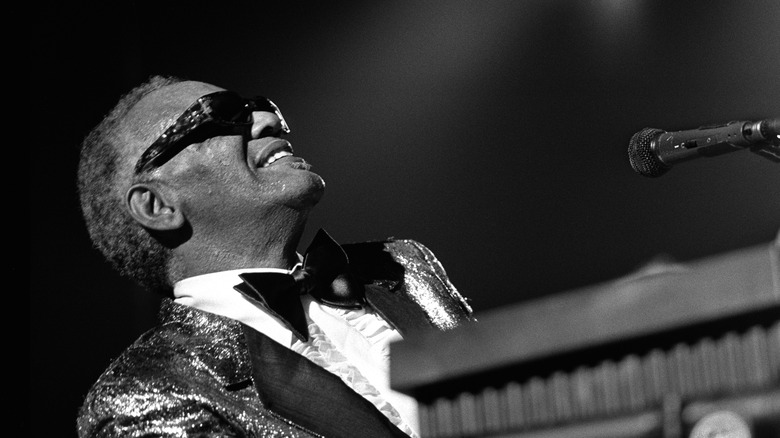
Ray Charles didn't write "Hit the Road Jack," but his 1961 cover of this Percy Mayfield song has become the most popular version of the song. Charles recorded the song with the Raelettes, which allows the call-and-response dynamic to hit in ways it couldn't have if he'd recorded it as a solo vocalist. The R&B-pop crossover was so popular after it was released that it landed No. 1 on the Billboard Hot 100 chart and No. 6 on the U.K. singles chart, showing it was one of the iconic singles of the '60s.
The entire song is composed of interchanging lines between Ray Charles and the Raelettes, with the Raelettes singing the iconic lines "Hit the road Jack / and don't you come back / no more, no more, no more, no more." While the song's melody is fun, poppy, energetic, and upbeat, the lyrics go back and forth between a woman who's fed up with her man and the man himself. According to the woman, he's broke and failing to properly support her. We don't really get all of the details about this fictional relationship from the song's lyrics, but it doesn't matter. Because you can't help but get into the song and sing along with the chorus when you hear it. It's an earworm that'll stick with you for a while.
Leader of the Pack – The Shangri-Las
A lot of call-and-response songs are songs with occasional call-and-response elements. "Leader of the Pack" by the Shangri-Las is almost entirely dialogue, making it one of the purer call-and-response songs out there. This popular '60s girl group released "Leader of the Pack" in 1964 and took the No. 1 spot on the Billboard 100 that same year. This was the song that first defined the band, set up their street-tough image, and set them up to be cited as an influence on the future punk rock genre that would emerge in the '70s. Of course, hearing it won't give you any sort of punk rock vibes. This is purely a '60s pop classic, though a dark one that carries rebellious undertones.
The song starts out with a literal, spoken conversation between a few young women about one of them dating a bad boy of sorts. It soon goes into a song that operates as a dialogue between the frontwoman and the backup singers while she tells them about her relationship with this boy, having to break up with him due to parental pressure, and him dying in a motorcycle accident after he drove away. Now, the song isn't slow and sad sounding on the surface. In fact, it's almost boppy. Just don't listen to the lyrics too deeply if you're not trying to feel deep emotions.
Shout — The Isley Brothers
The Isley Brothers — some of the biggest names from Motown — originally released "Shout" in 1959, and it peaked on the Billboard 100 at No. 47 the same year, but it reemerged on the chart three times in 1962. So, this was still part of the popular music during the '60s, and one of the most fun call-and-response songs in history.
"Shout" includes two different types of call-and-response. The first happens between the lead, Ronald Isley, and his brothers on backup. The lead sings a phrase and the backup responds with countering phrases. But the real meat of the song comes from the crowd play where the group essentially leads the audience to answer with the word "shout" in a number of ways, including having them shout softer and louder. It only takes one time listening to this song to feel the high energy and hear where the crowd play comes in, even if it's not a live performance you're listening to.
One later example of just how fun this song is as a call-and-response with the crowd comes from a scene in the 1978 movie "Animal House" where "Shout" is performed by the fictional band Otis Day & The Knights. The crowd goes wild replying to the singer and it ramps up the party happening in the scene. You might be thinking it's just a movie, but the call-and-response performance isn't much different from the Isley Brothers' live performances of the song.
It's Gonna Work Out Fine — Ike & Tina Turner
As you may have noticed, many of the great call-and-response songs from the '60s were R&B crossovers. That's because the musical style comes out of Black American musical circles — where R&B comes from — and can trace its roots to African cultures before American slavery. This next call-and-response hit is another popular R&B crossover that made its way onto the pop charts: "It's Gonna Work Out Fine" by Ike & Tina Turner.
The song came out in 1961 and peaked at No. 14 on the Billboard singles chart. This piece is a direct call-and-response between Ike Turner and Tina. The lines interchange between the two with Tina singing and Ike talking back in this musical conversation about love and commitment. They discuss the future and marriage. And while this piece doesn't draw the audience directly into the conversation, it's still a fun romantic tune to listen to. Though, the fictional couple in the song is a direct contrast to Ike and Tina Turner's actual marriage, but most people in the '60s probably didn't know that.
Sweet Caroline — Neil Diamond
"Sweet Caroline" by Neil Diamond is the party song of the century. Few songs get as much play time among specific demographics as this call-and-response tune does, and it transcends generations. It's still played in college bars, finds its way onto baby boomers' playlists, and is even a community anthem played as a singalong at Fenway Field during Boston Red Sox games and other sporting events around the world. And it is one of the best and most fun call-and-response pop songs to come out of the '60s.
Diamond released the song in 1969, and it hit No. 4 on the charts. But here's the thing: "Sweet Caroline" wasn't written as a call-and-response song. It was a straight '60s pop tune that later became one of the most memorable call-and-response pieces in history. The chorus has a quality that invites a singalong, and over the years, social phenomenon has made it call-and-response in just about any place the song is played or performed with a crowd present. So, if you're wondering why "Sweet Caroline" made the list when some songs intended to be call-and-response songs didn't, it's because a huge portion of the living population has "ba-ba-ba-ed" when the chorus called for it.