

The 5 Best One-Hit Wonders Of New Wave
The post-punk sounds of new wave music opened the doors for a whole new generation of sonic creativity. New wave held the DNA for a glut of sub-genres that would become part and parcel of the music world; now-common modes like electro-pop, geek rock, and EDM can all trace their ancestry back to the genes originating in genre-defining new wavers from the late '70s and early '80s. And because there was so much experimentation within the new wave scene, there were plenty of one-hit wonders who seemed like the next big thing, only to become the next big nothing after their initial chart success fizzled.
Our favorite new wave one-hit wonders are a five-pack of innovators who took the notion of individuality to the far end of the spectrum and dropped highly memorable singles before becoming underground acts. The mechanical melodies of Gary Numan, the slinky dance-funk of Kajagoogoo, the pseudo-scientific nerdery of Thomas Dolby — they all add crucial pieces to the new wave puzzle, even if they couldn't repeat their one-time chart razzle-dazzle. Sometimes, one hit is all you need to prove you have what it takes to show the world something they've never seen before.
Gary Numan
With his robotic delivery and synth-driven arrangements, Gary Numan managed to make a space in the new wave pantheon with his 1979 electro-pop single "Cars." It was a glimpse into a digital future that was just around the corner, and Numan drove toward it at top speed with this wonky crowd pleaser. The zips and zaps resembled space cruisers, and laser guns felt like novelty sounds and the height of modern music simultaneously. Numan didn't pretend he could sing any better than his voice allowed; instead, he tailored his tones to match the android dream of his synthetic audio landscape. It sounded like a chrome-and-neon-dipped dream of a world being born, one where melody was secondary to techno wizardry.
But the gleaming dream of leading a sonic utopia for the real-life weirdo Numan stopped short with this No. 9 hit. His visibility on the charts and radio playlists fizzled, though he never gave up the dream of one day resurrecting his own stardom. But the adventurous noise wonderland he helped pioneer became a whole sector of the industry, giving rise to tech-forward acts like Depeche Mode, Nine Inch Nails, and the entire EDM movement, quite a legacy for a one-hit artist.
Though he never repeated his chart success, Numan has kept at it as more of an underground artist since "Cars." And the experimental electro sounds he pioneered are now standard issue in the music world — an achievement that deserves a round of drum machine-generated hand claps.
Kajagoogoo
New wave was merging with synth pop and New Romantic sounds when Kajagoogoo launched their one and only true hit single, "Too Shy." The band got as much attention for their artistic hair choices as for their bouncy tune, a jaunty, jumpy dance number that benefited from production by Duran Duran keyboardist Nick Rhodes. Lead singer Limahl (an anagram of his real last name, Hamill — first name Christopher) had the spiky blond mullet and the jerky moves of an up-and-coming superstar, while the music itself was unique and catchy enough to garner praise. It became a No. 5 hit in America in 1983 and went all the way to No. 1 in the U.K.
The band had two other top 10 hits in their native U.K., but they dropped out of sight quickly in the U.S. Limahl kept the attention rolling by recording the theme to the 1984 fantasy classic "The Neverending Story," which went to No. 17 on the Billboard Top 40 and got a nostalgia bump when it appeared in "Stranger Things" in 2019. But for Kajagoogoo, the bouncy band with the baby-talk name, there would be no more hits. The band saw fit to release an 8-disc box set in late 2026, however, with all the songs that didn't capture their initial success, for whatever value it might have.
Thomas Dolby
When Thomas Dolby hit the new wave scene with his wacky synth-saturated "She Blinded Me with Science" in 1983, both music geeks and science nerds sat up and took notice. The herky-jerky tune blended drum machines and glitchy keyboard noises with Dolby's pitchy warble. Dolby was an innovator of geek rock, picking up the vibe that fellow weirdos Devo and Talking Heads were putting down. It became a No. 5 smash on the Billboard Hot 100, Dolby's only memorable tune from that or any other era.
But the future held big things for Dolby's techno-musical leanings. His '90s ventures included a software company called Beatnik, which innovated the polyphonic (multi-note) ring tone for cellphones — the very company that conjured up the beepy Nokia melody that became iconic without hitting the charts. His 21st century enterprises brought him to Johns Hopkins University in 2014; his Peabody's Music for New Media program fired up in 2018 for students eager to learn how to compose video game and film scores. Dolby's website even shows a few tour dates lined up for 2027, which suggests the "Science" hasn't worn off entirely with his devoted public. Who needs a second hit with a resume like this?
A-ha
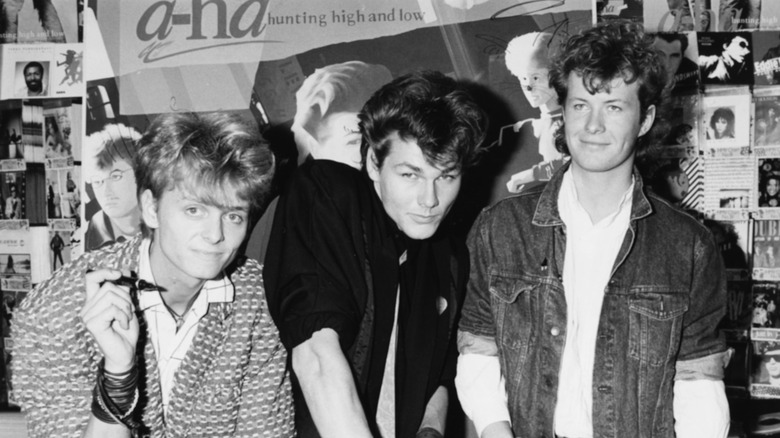
A-ha burst onto the music scene as a Norwegian new wave trio in 1985 with their hook-filled one-hit tune "Take On Me." It wasn't just the syntax of the title that made the song memorable; the fast tempo and bouncy synth chimes made hearts race with anticipation. Lead singer Morten Harket more than delivered with his angelic voice, sounding reedy and oboe-like in the verses before rising to choirboy heights in the unforgettable chorus. A groundbreaking animated video for the original and a slowed-down acoustic version from MTV Unplugged in 2017 managed to make the tune even more striking.
When the groundbreaking animated video had passed its prime, it turned out A-ha had plenty more music to make. Eleven all-original albums, including the superior debut "Hunting High and Low" from which "Take On Me" arose, appeared over the course of 35 years. The band's fervent fan base has kept A-ha percolating under the surface for decades, enough to generate a documentary tracking the band's early success.
Solo efforts from Harket, as well as side projects for fellow members Pål Waaktaar-Savoy and Magne Furuholmen and have taken the players into the 21st century, as has the occasional appearance on the nostalgia circuit. Still, the Grammy-nominated band crafted a singular single that captivated listeners like few others have, giving the new wave movement a bolt of unforgettable sonic glee.
The Buggles
The Buggles hit a huge pop culture milestone in 1979 with their No. 1 hit "Video Killed the Radio Star," which became the first-ever video aired on MTV when the channel debuted two years later. It was peak new wave back in 1979, a bop that portended the demise of the radio era and the advent of visual content becoming the norm. This was an anthem to a new generation of music lovers and a sweet farewell to the format that was presumed to be going the way of the dinosaurs. Even the video, with its wacky mad science motifs and soaring angel of the airwaves figure, was a high-five to the incoming cinematic age of music and a salute to the outgoing audio-only era.
Though radio lived on nicely until streaming came along to challenge it yet again, the Buggles never quite made it past this music television rallying cry. Band leader Trevor Horn went on to become a Grammy-nominated producer for other acts, crafting iconic hits for an eclectic slate of musical biggies. Acts like Yes, ABC, Frankie Goes to Hollywood, Seal, and even LeAnn Rimes have benefited from his talents. He's been such a hot property, in fact, that even after decades in the business, he's still touring well into the 21st century. But the Buggles never had another hit song, and digital eventually killed the video channel, and the world goes 'round and 'round.