

1962 No. 1, Later Found On The Dirty Dancing Soundtrack, Hit The Top 62 Years Ago Today
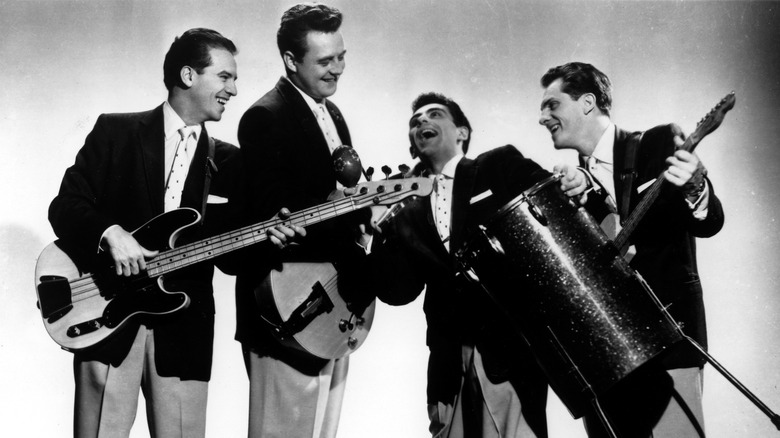
By November 26, 1962, "Big Girls Don't Cry" by the Four Seasons, a combo pop vocal group and rock band led by falsetto-singing wonder Frankie Valli, was just settling in for a five-week reign at No. 1 on the Billboard Hot 100. Marked by a surprising opening blast of a percussion solo and filled with snappy drums and rapid hand claps, "Big Girls Don't Cry" is indicative of the sound of the early '60s, alongside other rock songs from 1962 that sound even cooler today.
It's such a quintessential song of that era that when producers of the 1963-set 1987 romantic drama "Dirty Dancing," a movie that defined 1980s pop culture, needed mood music, they threw in "Big Girls Don't Cry." The Four Seasons smash appeared in the movie and on the second soundtrack compilation, "More Dirty Dancing," exposing the song to a whole new generation over two decades later.
The disputed cinematic origins of Big Girls Don't Cry
"Sherry," the Four Seasons' other 1962 pop No. 1, was penned in 15 minutes, and it didn't take much longer for band member Bob Gaudio and their producer Bob Crewe to come up with "Big Girls Don't Cry." According to lead singer Frankie Valli, the songwriters composed the song based on a quippy admonishment from a film. "It was taken from a Clark Gable movie when he tells a girl he's leaving that big girls don't cry," he explained to the Honolulu Star-Bulletin. But Gaudio claimed he heard the line while dozing off in front of a TV while it played the 1955 movie "Tennessee's Partner," starring John Payne. And a third account comes from Crewe, who countered that he was the one who picked up the line, and that it came from another Payne film, 1956's "Slightly Scarlet."
Whatever the origin may be, the Four Seasons recorded "Sherry" and "Big Girls Don't Cry" on the same day, and they agreed to release "Sherry" first. Valli remained apprehensive. "I didn't feel it was the freshest follow-up," he said in Fred Bronson's "The Billboard Book of No. 1 Hits." "... we had to follow it up with something vaguely similar. The harmonies were structured differently, a little bigger." Nevertheless, there was only a five-week gap between the No. 1 stints of both Four Seasons singles.