

The Messed Up Truth About The 1970s Music Industry
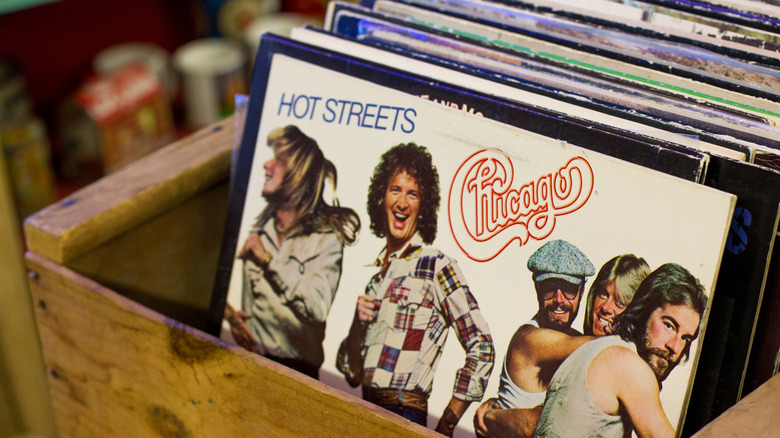
It's no secret that the 1970s were filled with sex, drugs, and rock 'n' roll — at least as far as the music industry goes. The Beatles' gently skirting the edge in the late 1960s was cute in comparison to Iggy Pop's performances with The Stooges in the 1970s. The music was louder, heavier, and less forgiving. Tragically, so was the whole music industry at the time. Managers and producers scammed their bands, musicians struggled with substance use, and several men partook in the abuse of underage girls.
As NPR reports, a teenage Lori Maddox was assaulted by Led Zeppelin guitarist Jimmy Page, who hid her at LA's Hyatt House hotel to keep the secret. Big figures in the music industry were protected while their victims were quiet and helpless. When Badfinger's Pete Ham died by suicide, he left a note that said of their manager, Stan Polley, who had ripped them off and bound them to a terrible contract, "Stan Polley is a soulless bastard. I will take him with me" (via Far Out). While the 1970s were filled with exceptional music breakthroughs and style developments, they remain ridden with stories of abuse.
The following article contains descriptions of addiction, sexual assault, and suicide.
Jackie Fuchs was assaulted by her manager
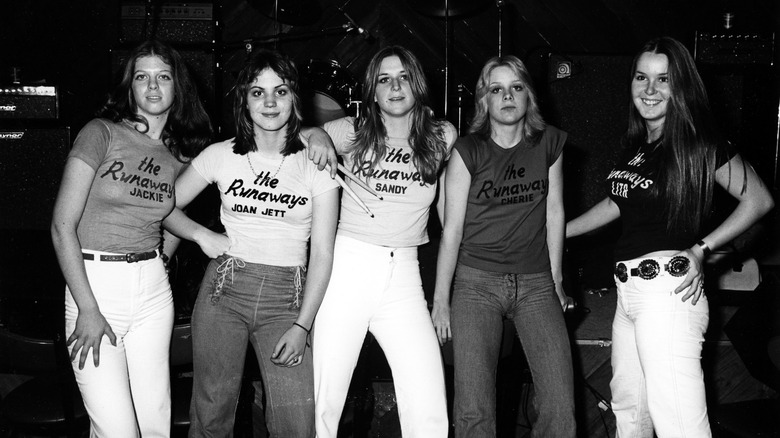
In 1975, Jackie Fuchs was 15 years old when she was spotted in LA and invited to music entrepreneur Kim Fowley's apartment. As Huffington Post reports, Fowley was just in the process of creating an all-female band, and he had sent Rodney Bingenheimer to collect young, pretty women. This is how the Runaways were formed, and their manager was the man that posted this ad in Back Door Man magazine in June 1975.
Fowley had a pattern of assault — that same year he assaulted and abused an 18-year-old and a 14-year-old girl. Sadly he would focus his attention on Fuchs at a 1975 New Year's Eve party, held in a motel following a quasi-successful Runaways show. Fuchs was force-fed multiple Quaaludes and raped by Fowley, too weak to fight him off. She just remembers the moment she realized what was happening: "I remember opening my eyes, Kim Fowley was raping me, and there were people watching me."
Because none of the bandmates even addressed the situation afterward, Fuchs felt she couldn't speak up as no one would back her: "I was going to be the one that ended up on trial more than Kim. I carried this sense of shame and of thinking it was somehow my fault for decades."
If you or anyone you know has been a victim of sexual assault, help is available. Visit the Rape, Abuse & Incest National Network website or contact RAINN's National Helpline at 1-800-656-HOPE (4673).
Underage groupies were the norm

Sadly, the Runaways' story isn't a stand-alone atrocity in the 1970s music industry. This was the decade when R. Dean Taylor released his song "Shadow:" "Body of a woman, mind of a child / Shadow, you sure do drive me wild / You're only 14 years old." Men having relationships with underage girls (and sexual intercourse with underage groupies) was so normalized at the time, that no one batted an eyelid over lyrics such as Taylor's.
As per Rolling Stone, Jimmy Page famously dated groupie Lori Maddox for a few years. Maddox was 14 years old when she met Page — he knew this, and he tried to hide it. According to NPR, Page kept Maddox locked in his room at the Los Angeles Hyatt House hotel, all too aware that he was committing statutory rape. Still, although the couple eventually became a common sight at Led Zeppelin's parties, Page was never held accountable for the relationship.
Overdoses were almost expected of rockstars
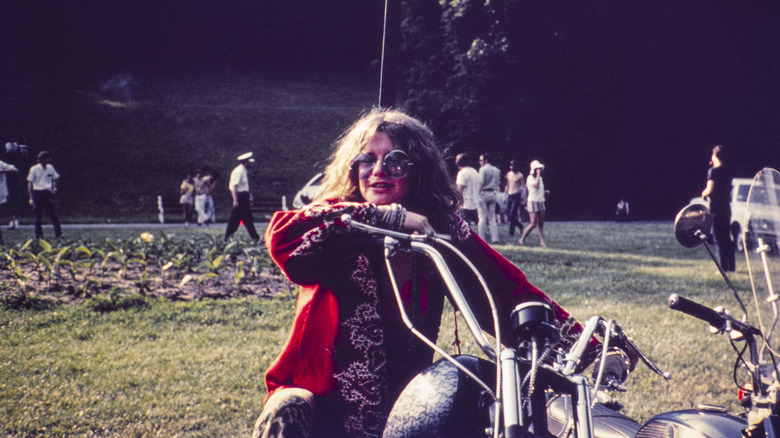
In the fall of 1970, Janis Joplin was working on what was going to become her best-selling LP: "Pearl." Four years before, she had come to San Francisco and quickly found her place in the music scene as a prolific singer, too loud or brave to stay with her first band, Big Brother and the Holding Company. On October 4, road manager John Cooke went to check on Joplin after she had failed to turn up to a meeting. Cooke found her dead as a result of a heroin overdose. Less than a month before, Jimi Hendrix had also died of drug related causes. He asphyxiated on his own vomit in his sleep after taking too many sleeping pills mixed with alcohol.
The 1970s continued to be ridden with overdose deaths in the world of musicians. On July 3, 1971, The Doors frontman Jim Morrison died in the bathtub of his Paris apartment from heart failure, with many believing he accidentally overdosed on heroin. In 1977, Elvis Presley was found dead in his bathroom as well. An autopsy revealed he had 14 drugs in his system at the time of his death.
If you or anyone you know is struggling with addiction issues, help is available. Visit the Substance Abuse and Mental Health Services Administration website or contact SAMHSA's National Helpline at 1-800-662-HELP (4357).
Sid and Nancy

The Sex Pistols were known for their crude and destructive tendencies, but their bassist Sid Vicious did much darker things, too. Tragically, Vicious' mother was a heroin addict, and, according to the Independent, she supplied him with the drug as well. Just as he was climbing the ranks of the music world in 1977, Vicious began a relationship with a groupie, Nancy Spungen. Their relationship was tumultuous, to say the least — they would burn each other's arms with cigarettes, abuse substances together, and physically fight.
It all culminated on October 12, 1978, when Spungen was found dead following a stab to the stomach. When the police arrested Vicious on suspicion of murder, he said, "I did it ... Because I'm a dirty dog" (via the Independent). He then retracted his statement and went with another story instead — he had taken 30 Tuinal tablets, so he was fast asleep when Spungen died.
Although he was bailed out, Vicious never recovered from Spungen's death. Spungen's mother remembers Vicious saying he had lost the will to live, and on one occasion, he tried taking his own life by slitting his wrists, as per the LA Times. As The Independent reports, on February 2, 1979, Vicious died of a heroin overdose. He was 21. Although the full reality of Spungen's death will never be known, the famous couple's story is a dark lesson.
Sonny and Cher endured a horrible marriage for the cameras
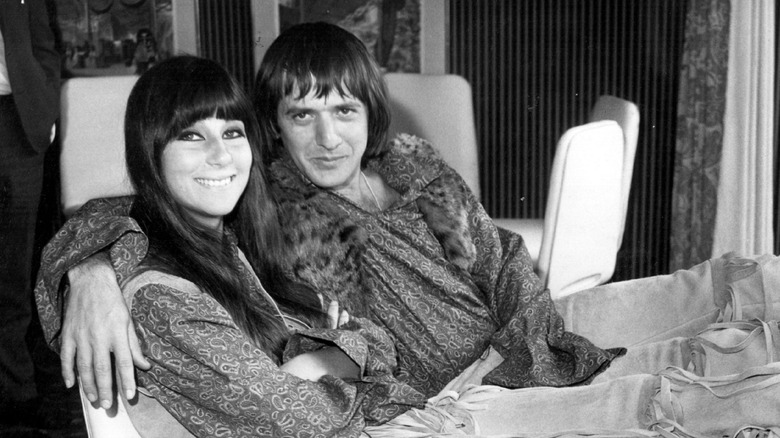
When Cher met fellow musician Sonny Bono in 1963, she was 16 years old and he was 12 years her senior. Cher's own mother told Ladies' Home Journal in 1975 that Bono was a father figure before he was a lover to Cher. But the two became a star couple following their 1965 hit single, "I Got You Babe." By 1971, two years after getting married, they had their own variety show, "The Sonny & Cher Comedy Hour." The TV program showed the couple's family life, and it would end with them singing "I Got You Babe" to each other. It was a hit, and the couple needed it badly — by now, they had a child and financial issues as a result of a failed movie project.
But the show was selling a lie. Cher told Vanity Fair in 2010 that Bono was a not a very good partner. "I wouldn't have left him if he hadn't had such a tight grip — such a tight grip." But Bono had double standards: He often cheated on his wife, and, by 1973, he was living with another partner (via Biography). But he and Cher endured a few more years of the toxic marriage for the sake of their show. Eventually, they got divorced in 1975 — as expected, the interest in their show plummeted quickly.
Queen were scammed by their manager
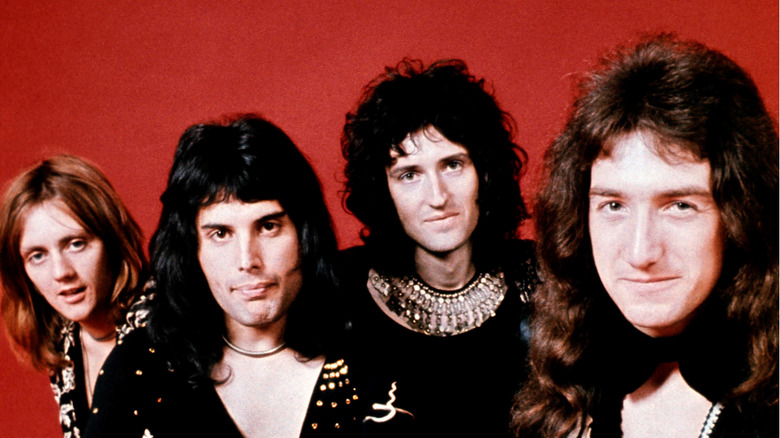
Nowadays, Queen are known as one of the most prolific rock bands in history. But although they produced hit tunes from the very beginning, in 1975, they were broke. Why? As per Far Out Magazine, drummer Roger Taylor commented that they could barely afford buying new drumsticks: "You see them [the management] running around in stretch limos and think 'hang on there's something not right here!'"
Indeed, something wasn't right. Trident Studio owner Norman Sheffield, who was Queen's manager at the time, was making a lot of money off Queen's tracks and finding ever fresher ways to get out of paying the band. When the reality of Sheffield's fraud dawned on Freddie Mercury, Queen left Trident Studios. Frustrated and bitter, Mercury wrote an exceptional song for the "A Night at the Opera" album — "Death on Two Legs." Its lyrics are pretty obvious: "You've taken all my money, and you want more / Misguided old mule with your pigheaded rules."
However, listeners didn't know who the song was dedicated to until Sheffield himself came out of the shadows and sued the band for defamation. A settlement was reached outside the court, but as a result of the lawsuit, Sheffield became the master of his own demise –- people knew him for what he was. Unfortunately, Queen weren't alone in being seriously scammed by their managers in the 1970s.
Badfinger's manager took advantage of the band, with tragedy following

If there is a contest for the worst band manager ever, Stan Polley probably tops Norman Sheffield. In the mid-to-late 1960s, Badfinger (at the time known as the Iveys) became the first-ever band to be signed by Apple Studios after the Beatles. Paul McCartney particularly appreciated their style and took the band under his wing, to the extent that Badfinger became known as "the new Fab Four." McCartney wrote Badfinger's "Come And Get It" — the song would reach No. 4 in the United Kingdom after its release in 1970. But the United States was overall more enthusiastic about the band.
Excited about their popularity in the U.S., Badfinger entrusted their finances to manager Stan Polley. Polley was not just greedy — as Salon reports, he took away all the band's money and left behind a contract that made it impossible for them to make any more money without him. Tom Evans wrote the songs "Hey Mr. Manager" and "Rock 'n' Roll Contract" to channel his frustrations.
But on the morning of April 24, 1975, frontman Pete Ham died by suicide. He had a pregnant wife and a freshly bought house that he could not afford. On his suicide note, he called out Polley for his wrong doing. Indeed, Polley tried to cash in Ham's life insurance afterward, according to Salon. Eight years later, Tom Evans died by suicide as well, after repeatedly saying he wanted out as well.
There's a chance Jimi Hendrix was murdered by his manager

Jimi Hendrix sadly joined the 27 Club (the infamous list of musicians who died at the age of 27) on September 18, 1970. The story was quite clear: His girlfriend Monika Dannemann had found him unresponsive in the morning after he took 18 times the prescribed amount of her Vasparex pills and aspirated on his vomit as he slept. But according to Louder, the story behind Hendrix's death is much murkier than that.
In 1973, Hendrix's former manager, Mike Jeffery, was chatting to roadie James "Tappy" Wright when he made a very disturbing confession, as remembered by Wright: "As we are talking, Mike began to get very agitated and pale. 'I had no bloody choice, I had to do it. ... You know exactly what I'm talking about. It was either that or I'd be broke or dead.'" Jeffery then went on to say something along the lines of getting some nasty friends to pour "booze down the windpipe." In an even creepier twist, the following month, Jeffery was found dead. It turns out Jeffery had ties to the Mafia, and debts that he had been threatened about before. Although his confession was never investigated or officially connected to Hendrix's death, it definitely adds a tragic layer to the rockstar's story.
Gram Parson's body was stolen
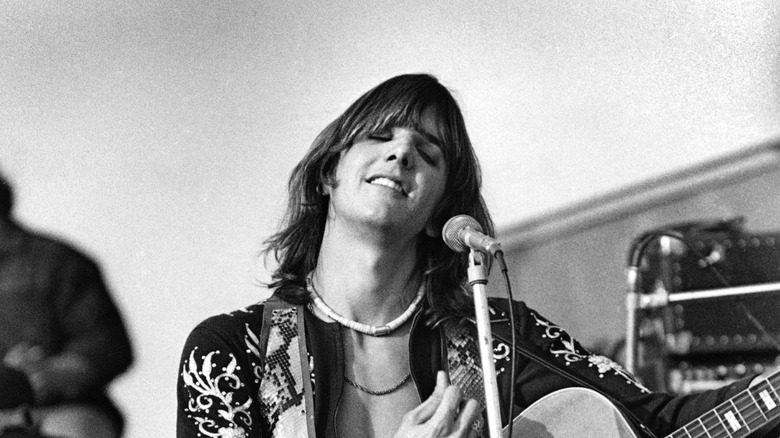
Singer-songwriter Gram Parsons died from a heroin overdose in September 1973. But the tumultuous rock 'n' roll life continued to haunt Parsons after his death, in a very strange way. On September 20, two drunk men wearing cowboy hats stole Parsons' corpse and drove it to Joshua Tree, California. These were Phil Kaufman, Parsons' manager, and a friend of his. As he confessed to Louder, "He was en route to Continental Airlines at LAX, from where he would be shipped back to his step-father in New Orleans." But Kaufman was adamant Parsons would not have wanted to be buried in Louisiana. A few months before Parsons died, he told Kaufman, "If I die I want somebody to have a few beers, take me out to the desert and burn my body." The two made a pact that night: They would make sure the other would get buried in the desert.
So Kaufman drove Parsons' corpse to Joshua Tree and set his casket on fire. This earned him a fine of $300. However, as there was still no law against stealing a corpse, Kaufman and his friend were only fined for stealing the casket.
Racist slurs could be heard among musicians

On March 15, 1979, the Stephen Stills Band and Elvis Costello happened to stay at the same Holiday Inn in Columbus, Ohio, after both of them played shows that night. According to Ultimate Classic Rock, at its bar, Costello got intoxicated and started picking on the members of the Stephen Stills Band. Eventually, the band left the bar except the backing singer, Bonnie Bramlett. As she taunted Costello, he showed an even uglier side, revealing his feelings on race in America. He yelled out racial slurs against James Brown and Ray Charles. Yep. Twice in a night. Soon enough, the two got into a brawl.
After Bramlett went to the press, Costello offered an excuse, but not an apology: "It became necessary for me to outrage these people with the most offensive and obnoxious remarks I could muster to bring the argument to a swift conclusion and rid myself of their presence" (via UCR). He also said he was drunk and tired from touring, but that is hardly an excuse for being racist.
Gary Glitter was a notorious pedophile
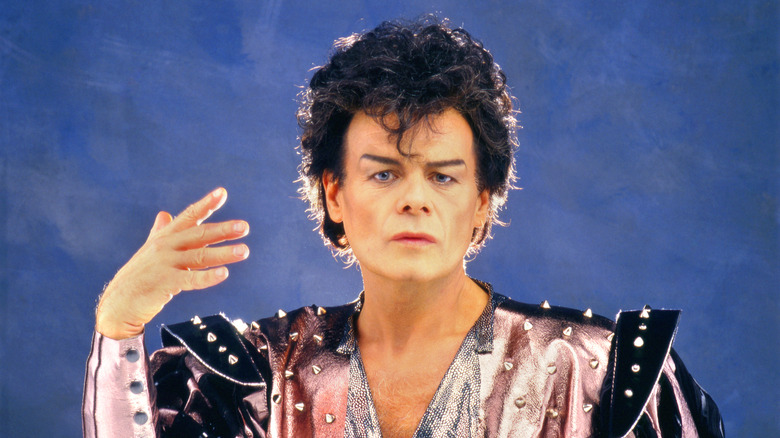
The 1970s music industry, unfortunately, was full of criminal and vicious characters. One such character was Paul Gadd, stage name: Gary Glitter. As per National World, Glitter abused three young girls between 1975 and 1980. Unfortunately, this was not discovered until 2012, following a U.K. investigation initiative after the Jimmy Saville scandal.
Detective Chief Inspector Michael Orchard commented on Glitter's callousness (via Rolling Stone): "Paul Gadd has shown himself to be a habitual sexual predator who took advantage of the star status afforded to him by targeting young girls who trusted him and were in awe of his fame. His lack of remorse and defense that the victims were lying makes his crimes all the more indefensible."
In 2015, Glitter was convicted of one count of attempted rape, four counts of indecent assault, and one count of sexual intercourse with a girl under the age of 13. He was sentenced to 16 years in prison.
The sad decline and tragic death of Elvis
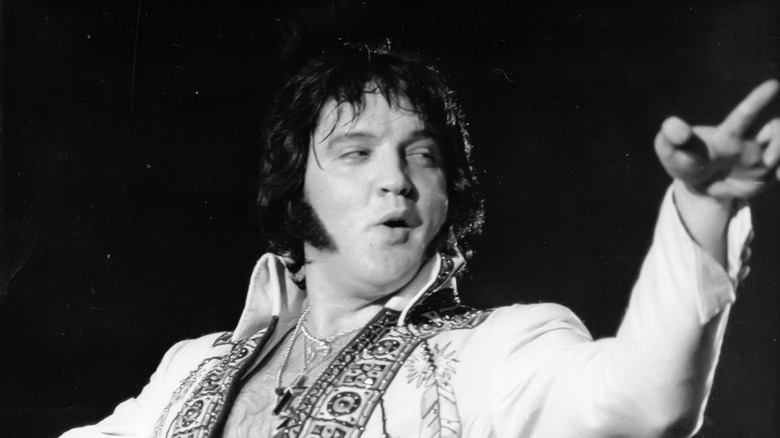
Twenty years after his debut album rocketed to No. 1, Elvis Presley had hit a particularly low point in his career. Sure, he was packing them in each night in Las Vegas, but by 1977, he'd performed more than 636 consecutive sold-out Vegas shows, an oldies act reduced to churning out his greatest hits to middle-aged fans.
Meanwhile, Presley was hardly the picture of health by then, having gained an enormous amount of weight in a short period of time, thanks to his habit of bingeing on greasy cheeseburgers. When he was found dead in his bathroom in August 1977 at age 42, he reportedly weighed 350 pounds. His heart was enlarged, twice the size it should have been, and there was evidence of cardiovascular disease far beyond what would be expected in someone his age. The official cause of death, reported The New York Times, was "hypertensive cardiovascular disease, with coronary artery heart disease as a contributing factor."
It was subsequently discovered that Presley had high levels of various pharmaceutical painkillers in his system at the time of his death. As Presley's stepbrother, David E. Stanley, wrote in his book "My Brother Elvis: The Final Years," the singer had become an addict. "We had to watch Elvis around the clock, since he was taking so many drugs that he spent more time completely obliterated than not," he wrote (via People). "I felt more like a nursing home aide."
Eric Clapton's racist tirade

On an August night in 1976, Eric Clapton was headlining a concert in the British city of Birmingham when he decided to get political. As author Daniel Rachel wrote in his book, "Walls Come Tumbling Down," Clapton (who was reportedly "drunk") voiced his support for anti-immigration politician Enoch Powell, and went on a racist rant littered with racial slurs, stating his preference that the country send "foreigners" back to the countries from which they'd immigrated.
Clapton later apologized, but because his tirade was neither filmed nor recorded, the shameful incident wasn't reported as widely as it would have otherwise. With the passage of time, the whole thing faded away. If there was a silver lining, it's that Clapton's scandal was the spark that led to the formation of Rock Against Racism.
When confronted with his remarks during a 2018 radio interview, Clapton blamed alcohol. "I did really offensive things. I was a nasty person," he said, admitting his words were "full-tilt" racist.
John Lennon's boorish behavior during his infamous 'lost weekend'
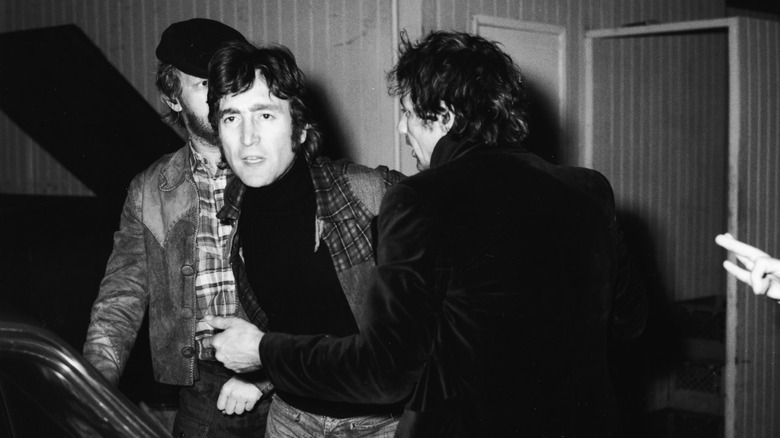
Within the troubled history of John Lennon, his 18-month separation from Yoko Ono was an infamous period that has come to be known as the former Beatle's "lost weekend." Hanging out with fellow musician Harry Nilsson, Lennon's intake of alcohol escalated excessively during these months. "The guys were all drinking — and John was being one of the guys. Everyone was as blitzed as he," Lennon and Yoko Ono's assistant-turned-mistress Mae Pang told Uncut in 2009.
Alcohol was responsible for his most infamous moments during this period, both of which occurred at the famed club Troubadour. One night, he showed up sporting a sanitary napkin affixed to his head and drank heavily on a record company's tab. When Lennon began to leave, his server asked if he planned on leaving her a tip. "Don't you know who I am?" he told her, as reported by The Guardian. "You're some jerk with a Kotex around his head," his server replied (she did not receive a tip, by the way).
Another time, he was unceremoniously tossed out of the Troubadour after he and Nilsson relentlessly heckled the Smothers Brothers while they performed. When the brothers' manager Ken Fritz came over and asked Lennon to knock it off, Lennon drunkenly took a swing at him, missing. Fritz fought back. Lennon threw a glass at Fritz, missed again, but instead, hit a server. He was tossed out by bouncers, but not before making a huge scene by knocking over several tables on his way out.
Tina Turner escaped her abusive marriage to Ike Turner
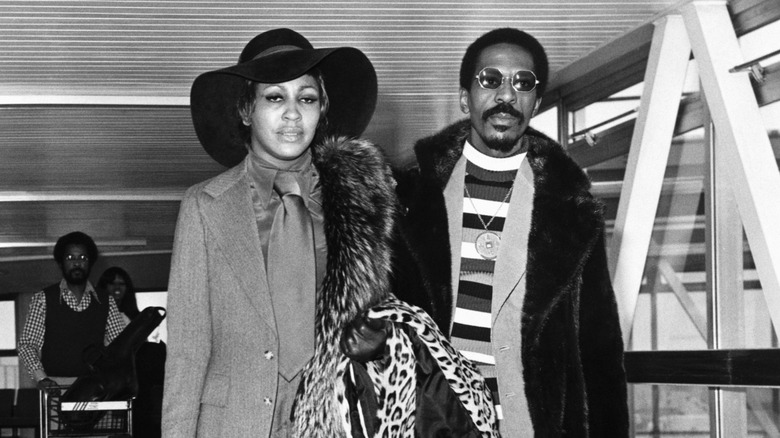
To outside observers, the partnership between spouses Ike and Tina Turner created a musical powerhouse, with the latter's extraordinary voice highlighted on such hits as "River Deep, Mountain High" and "Proud Mary." Behind the scenes, however, Tina lived in constant fear of abusive Ike until she finally left him in 1976 after a particularly vicious beating proved to be the final straw.
Their divorce was unorthodox; after a year of battling over assets, she agreed to forfeit everything except two cars. There was just one condition: that she keep her stage name and be free of any contractual obligations tying her to her ex.
Left destitute, she rebuilt her career as a solo act, show by show, performing in Vegas cabarets and small nightclubs, even picking up a few bucks by appearing on "Hollywood Squares." She eventually dragged herself out of debt and wound up experiencing massive success in the 1980s thanks to the popularity of her "Private Dancer" album. Meanwhile, without his ex-wife singing, Ike never came close to having another hit.
Keith Richards heroin arrest nearly ended The Rolling Stones
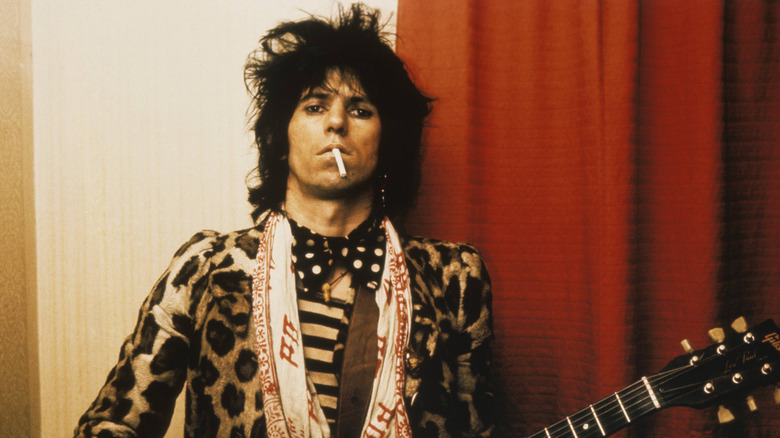
During the 1970s, Keith became just as famous for his drug-fueled lifestyle as he was for his guitar riffs for The Rolling Stones. By 1977, what had started as a dalliance with heroin had sprang into full-fledged addiction. While in Toronto for a Stones show, Richards' hotel room was raided by Canadian Mounties, who found 22 grams of heroin. He was arrested and charged with drug trafficking; if convicted, Richards faced a potential prison sentence of seven years to life.
While the Stones could have soldiered on with another guitar player, it's fair to say finding a replacement for the guy nicknamed "the human riff" would have been a tall order. Thankfully for rock fans, it never came to that; Richards entered a guilty plea to a lesser charge and threw himself at the mercy of the court. As luck would have it, a blind fan who followed the Stones — and whom Richards frequently looked out for and took care of — tracked down the judge, and told him how Richards had connected her with the Stones' truck drivers so she wouldn't have to hitchhike, and ensured she was always fed.
Judge Lloyd Graburn sentenced the guitarist to a year of probation and also ordered him to play a benefit concert for the Canadian National Institute for the Blind. "Rita, my blind angel," Richards recalled of that fan in his memoir, "Life."
17-year-old teen idol Leif Garrett's DUI accident left his friend paralyzed
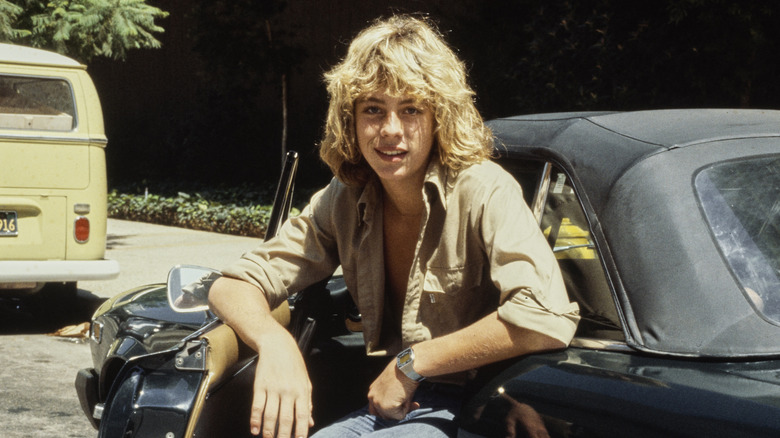
Back in the late 1970s, Leif Garrett was among the seemingly squeaky-clean teen idols whose toothsome grins regularly appeared on magazines such as Tiger Beat. In 1979, just a few days before his 18th birthday, Garrett — who'd been drinking — rear-ended another car while driving a leased Porsche. In the wreck, Garrett's passenger, Roland Winkler, was severely injured and left paralyzed from the chest down.
For Garrett, the fallout proved to be minimal — at least outwardly. He continued on with his career, transitioning from music to acting in the 1980s. Winkler sued Garrett for $5 million; in 1985, a jury found Garrett to have been negligent and awarded Winkler $3.9 million in damages (one reason why Garrett has much less money than you may have thought).
Meanwhile, Garrett's personal life deteriorated in the years that followed as he experienced issues with substance abuse. In 2010, he was arrested on a Los Angeles subway platform and charged with possession of heroin. Later that same year, Garrett admitted that the 1979 car wreck had been the catalyst for sending him on his downward spiral. "I have really — and wow, I don't think I have ever spoken about this before ... I have really hardcore nightmares and sleep issues," Garrett told ABC News of how the accident continued to impact him.
Keith Moon's tragic death at age 32 surprised no one
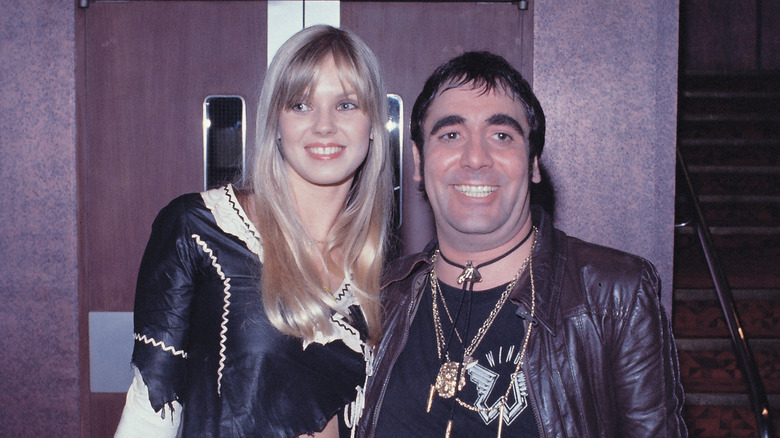
As one-quarter of The Who, Keith Moon's virtuoso skills on the drums were unparalleled. So too were legendary stories about "Moon the Loon," and his wild antics became legendary (a lengthy and destructive list that included barhopping while costumed in a Nazi uniform, driving a Lincoln Continental into the swimming pool of a Holiday Inn, and routinely blowing up hotel room toilets with cherry bombs).
That behavior was fueled by copious amounts of alcohol. By the mid-1970s, Moon's appetites had grown out of control, while his behavior had grown erratic and his drumming skills noticeably declined. "It was quite clear that he was on a downward slide, and there was very little I could do," The Who's guitarist, Pete Townshend, said during an Audible Original "Words + Music" podcast titled "Somebody Saved Me" (via People). "He was a very complicated character."
He'd been prescribed a medication called Heminevrin, a sedative to lessen the withdrawal symptoms as he attempted to reduce his alcohol intake. In September 1976, he passed away after accidentally overdosing on the drug that had been intended to save his life. He was just 32. He remains among the musicians who partied way too hard — and paid a fatal price for it. Decades later, Moon's tragic death continues to be a cautionary tale in the world of rock.
The Columbia Records 'Drugola' Scandal
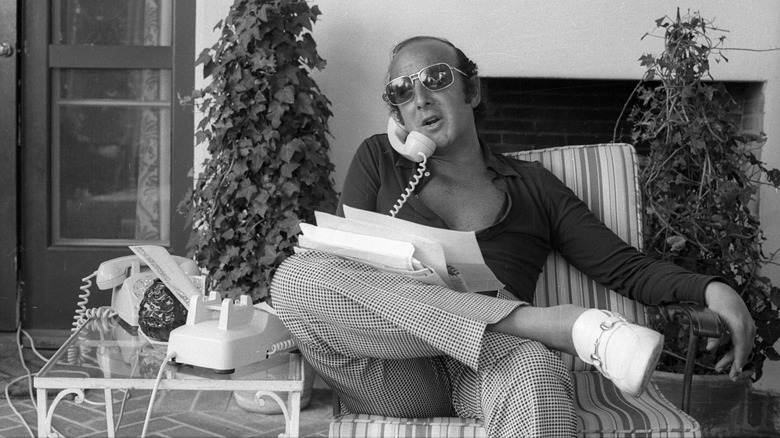
Columbia Records, the esteemed label of such artists as Bob Dylan, Barbra Streisand, and Bruce Springsteen, was at the center of a major controversy that recalled the payola scandals of the past — while also linking the label with the mob. Dubbed "drugola," a federal investigation looked into claims that label representatives were bribing disc jockeys with cash, cocaine, and heroin.
The label's president, Clive Davis, was fired in disgrace. He was also sued by the label over accusations that he'd embezzled nearly $90,000 in corporate funds for his own private use. The label, however, denied that Davis' firing was connected to the "drugola" allegations, although the timing was certainly suspect.
A grand jury investigation continued, looking into claims that the Mafia had infiltrated the music industry, but Davis bounced back quickly. The following year, he was hired as a consultant by Columbia Pictures. He went on to stage an epic comeback, founding Arista Records, and ultimately became one of the most esteemed figures in the music industry, as the "drugola" scandal faded away.