

5 Rock Songs From 1976 That Sound Even Cooler Today
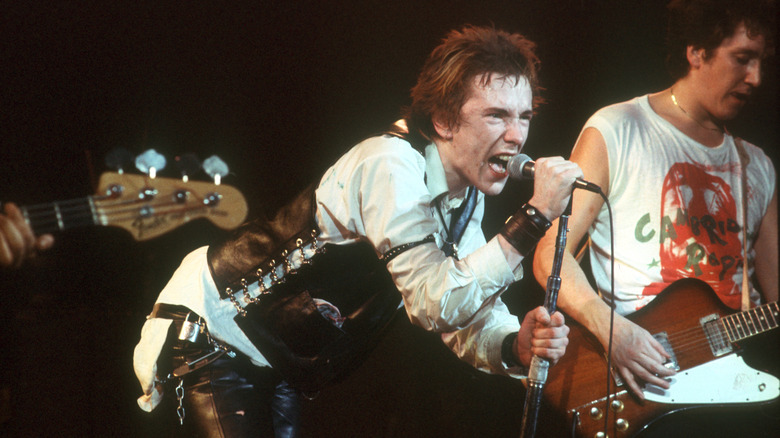
When it comes to '70s rock music, 1976 was arguably the most seismic year of that decade. Indeed, the rock music industry hadn't seen such radical changes to the musical landscape since the dawn of Beatlemania more than a decade earlier, which opened the door to the British Invasion. That was the year punk exploded, returning to rock music the primitive rawness that characterized many of its pioneering artists, reminding the world that anyone, regardless of ability, could transform themselves into a rock star with only a few chords and a rebellious attitude. Though considered nothing more than a fad by certain portions of the music press, the dawn of punk has continued to exert an enormous influence on rock musicians ever since.
It is arguably only a small exaggeration to say that punk changed everything. However, the truth is that for many established strands of rock music, such as hard rock, business carried on as usual, with such sounds continuing to find large, enthusiastic audiences. Here are five songs from 1976, both punk and non-punk, that have stood the test of time.
The Ramones – Blitzkrieg Bop
The ultimate U.S. punk number, The Ramones' breakout single encapsulates everything that was exciting about the new genre. The New York band had formed in 1974 as a trio, but added manager Tommy Ramone (all members had adopted the name for the stage) as drummer and quickly established itself as one of the most exciting acts on the scene, thanks to its ferocious embrace of proto-punk influences and a notable residency at the famous CBGB club.
Having signed a record deal — the first for a punk band — at the start of 1976, The Ramones released its debut album, "Ramones," in the spring of that year, with "Blitzkrieg Bop" as the record's opening track. With its infectious "Hey! Ho! Let's go!" chant and its simple, aggressive three-chord structure, it was a statement of intent and a call to arms for would-be punks everywhere. Though the debut album would stall at No. 111 on the Billboard 200 — and "Blitzkrieg Bop" never made the charts at all — it would prove to be a huge hit in the U.K., and become especially influential for a number of bands that would then turn punk rock to their own ends.
Sex Pistols – Anarchy in the U.K.
One of the bands that proved instrumental in moulding the sound of U.K. punk was the Sex Pistols. Fronted by the mercurial vocalist Johnny Rotten, the Sex Pistols was a snarling unit that signalled danger to the British establishment of the mid-1970s, with "Anarchy in the U.K." seeming to suggest that the band intended to destroy the status quo exactly in the manner that the British tabloid press feared.
That the song was an undeniable rocker, with far more in common with the hard rock of the early 1970s than the new generation of punks might have liked to have admitted at the time, goes some way to explaining how it managed to be such a huge commercial hit, for a time at least. Signed to record label EMI, the band released "Anarchy" as their debut single amid a storm of controversy: it managed to sell 55,000 copies in Britain and hit No. 38 in the singles charts, before it was banned by the BBC and pulled from sale by the band's label, which also dropped Sex Pistols from its roster.
Perhaps because of the controversy, the Sex Pistols became the de facto British punk band of the generation. The ensuing album, "Never Mind the B*******, Here's The Sex Pistols," which was released on the Virgin label, contained the banned single and has gone down as a classic punk album. Though the Sex Pistols failed to establish any real longevity, the fear instilled in some sections of the public by the release of the band's first single, which has lost none of its snarl, demonstrated punk's aggressive power.
Thin Lizzy – The Boys Are Back in Town
In 1976, hard rock was continuing to hit huge commercial heights, as demonstrated by Irish band Thin Lizzy's international smash "The Boys Are Back in Town." The song, which remains as catchy as anything released in the mid-1970s, has become a bona fide classic, featuring prominently in the hit movie "Toy Story" and remaining a crowd-pleasing feature at public events, particularly in the world of sports.
"The Boys Are Back in Town" is now so universally loved that it might seem unbelievable that at the time of its release, "Thin Lizzy" was struggling to establish itself as an international hard rock band of note. Apart from their cover of the trad Irish song "Whiskey in the Jar," which charted across Europe earlier in the decade, they had failed to capitalize on its success with any world-beating hits, with U.S. audiences generally ambivalent. Until, that is, the arrival of "The Boys Are Back in Town," which climbed to No. 12 on the Billboard Hot 100 and buoyed its parent album, "Jailbreak," which eventually went gold in the U.S.
Thin Lizzy's most timeless year remains 1976, and the upbeat "The Boys Are Back in Town" is emblematic of what made the band so great, with its combination of tough-guy lyricism, upbeat tempo, and irresistible hooks. For a harder version you may not be as familiar with, try 1979's "Live and Dangerous," the live album that may be Thin Lizzy's masterpiece.
Blue Öyster Cult – (Don't Fear) The Reaper
Hard rock isn't generally known for using existential angst as subject matter, but Blue Öyster Cult was a more ambitious unit. The Long Island band had a wide range of subject matter that might have made it more akin to a prog rock band, if it weren't for its ability to treat audiences to irresistible grooves. And no track encapsulates what made Blue Öyster Cult special quite like the band's biggest hit, "(Don't Fear) The Reaper," a 1976 single that spent 20 weeks on the Billboard Hot 100, peaking at No. 12.
"(Don't Fear) The Reaper" was named Rolling Stone magazine's song of the year, which is quite an achievement in a year bursting at the seams with incredible rock music. Few songs with death as the subject have enjoyed such commercial success, but "(Don't Fear) The Reaper" has proven irresistible to generations of listeners thanks to its unique jaunty-yet-melancholic atmosphere, iconic riffs, heart-pounding guitar solo, and memorable vocal performances.
Boston – More Than A Feeling
Boston's "More Than A Feeling" is somewhat controversial among fans of classic rock. For some, the 1976 hit, which hit No. 5 on the Billboard Hot 100, is reflective of the slick, bloated style that other, more cutting-edge musicians were working against. Indeed, the fact that "More Than A Feeling" became a radio staple for years after its release also resulted in a certain amount of animosity.
But the fact is that Boston's biggest track — the stand-out of the band's debut album — is a masterclass in emotionally charged power balladry, with lead singer Brad Delp's powerful vocals layered multiple times to create incredible harmonies on the song's soaring chorus. Paired with the guitar stylings of Tom Scholz — the Boston founder and principal songwriter who reportedly spent around five years crafting "More Than A Feeling" — it is an undeniable crowd-pleaser that sounds utterly pristine to modern ears.
The Eagles – Hotel California
1976 was the year that The Eagles became one of the biggest-selling rock bands of all time, thanks to "Hotel California," which became its defining album and the undoubted high point of the band's long career. The band members had each traveled to Los Angeles, as did many budding entertainers at the time, to try to find success in the music industry. While the move ultimately worked out for them, they shared a sense of being outsiders, whose stay in the city resembled life in a hotel in its superficiality — the hidden meaning of The Eagles' "Hotel California."
The song emerged from guitar parts created by guitarist Don Felder, which were arranged to a reggae-infused rhythm influenced by Bob Marley & The Wailers. However, rather than sounding like a goofy imitation, such as Led Zeppelin's "D'Yer Mak'er," the song became something singular and mysterious. Worked on in painstaking detail by the band, who repeatedly altered the lyrics and even changed the entire key of the song at one point, it was destined to catch the ear of the listening public.
The "Hotel California" LP was critically acclaimed and has been certified 26 times platinum in the years since its release in 1976. The chart success of the album was buoyed the following year when the title track was finally released as a single, hitting No. 1 on the Billboard Hot 100. It remains rock at its most classic.
Boz Scaggs – Lido Shuffle
Versatile vocalist and guitarist Boz Scaggs became a superstar in 1976, thanks to the release of his album "Silk Degrees," which showed his adeptness at soul and R&B. Classic tracks include the smooth and danceable "Lowdown," which reached No. 3 on the Billboard Hot 100, and remains a much-sampled classic.
But it wasn't just fans of soul and R&B who were lapping up Scaggs' releases in 1976. The single "Lido Shuffle," which came late the same year, is a rockier number that has also come to be considered one of the key tracks in Scaggs' oeuvre. With an ice-cold set of lyrics describing the life of a hustler drifting from town to town, and an infectious shuffle beat that Scaggs later admitted is a shameless lift from Fats Domino's "The Fat Man," the song has kept its edge as the coolest slice of soft rock you're likely to hear.
The Damned – New Rose
The Sex Pistols may be the band best associated with the 1976 punk explosion in the U.K., but the honor of having cut the very first British punk single belongs to Midlands legends The Damned. Released in October 1976, five weeks before the arrival of "Anarchy for the U.K.," "New Rose" introduced the first generation of British punk fans to charismatic frontman Dave Vanian, relentless bassist Captain Sensible, and riotous guitarist Brian James, the last of whom also wrote the singular paean to angst-ridden love.
From Rat Scabies' driving drum intro to its yelled refrain and the guitar solo buried so low in the mix it can barely be heard, "New Rose" represented the joyous high-energy sound of British punk at its most primal. The song's DIY aesthetic, courtesy of producer Nick Lowe, continues to give license to generations of punk and garage bands that are willing to wear their lack of innate or learned musicality as a badge of honor.
AC/DC – Dirty Deeds Done Dirt Cheap
"Dirty Deeds Done Dirt Cheap" was originally released in most markets toward the end of 1976, when the Australian band was still on its way to worldwide stardom. However, it holds a special place in the hearts of American AC/DC fans who followed the band during its heyday. For whatever reason, "Dirty Deeds" failed to find U.S. distribution in the 1970s, only becoming available to American record-buyers in 1981, by which point AC/DC was one of the biggest bands in the world thanks to their multi-platinum 1980 classic "Back in Black."
One of the main criticisms of AC/DC's discography is that all their albums sound pretty much the same. That, of course, is no problem for their fans, for whom an AC/DC record need do no more than fulfil their expectations. Though in many ways "Dirty Deeds" gave hungry AC/DC fans more of the same, it also offered a fresh insight into the band's early years, when they were fronted by their original vocalist, Bon Scott, who died in tragic circumstances in February 1980, to be replaced by Brian Johnson.
The title track of the album is certainly in the classic AC/DC mould, and demonstrates how Scott's piercing vocal was an essential part of the band's early sound. Johnson has proven to be a worthy replacement, but for many fans, no singer was cooler than Bon Scott.
Fleetwood Mac – Go Your Own Way
Fleetwood Mac's "Go Your Own Way" was released in December 1976, the lead single from what would become the biggest album of the band's career, 1977's "Rumours." Eventually peaking at No. 10 on the Billboard Hot 100 chart, the song made for a fitting introduction to the classic album's mood.
"Go Your Own Way" chronicles a bitter end to a relationship: that of the song's principal songwriter Lindsey Buckingham — who also provides the song's perfect guitar parts, most notably the solo — and vocalist-songwriter Stevie Nicks. The two had joined Fleetwood Mac as a unit after an abortive career as a duo, and the breakdown of Buckingham and Nicks' relationship, as painful as it must have been, propelled both artists to produce their finest work. The song in question shows Buckingham's genius for folk-infused pop rock, its upbeat tempo belying the venom of the lyrics. The roaring chorus, which is still invigorating 50 years on, is one of the most cathartic moments in classic rock.