

This Classic Rock Band Actually Got Better When It Replaced Its Lead Singer

At the time, it was nothing short of a hard rock catastrophe. In 1985, after a decade with its lineup that released six classic albums that defined American hard rock — including the blockbuster "1984," which generated hit singles and MTV staples "Jump," "Panama," and "Hot For Teacher" — Van Halen split apart. Charismatic, self-aggrandizing, growling, and howling frontman David Lee Roth embraced his celebrity and embarked on a solo career and other projects while the rest of Van Halen scrambled to find a new singer if it wanted to remain the biggest band in rock. Its selection of "I Can't Drive 55"-singing solo star Sammy Hagar would be regarded by some as one of the most unfortunate musician replacements in rock history. Ever since, fans of Van Halen have split the history of the band into the Roth and Hagar eras, with most taking the position that the band was great with the former at the helm, and mediocre at best when the latter took over.
Here's the thing: Van Halen was just as good — if not better — when it became what fans derisively nicknamed "Van Hagar." The veteran singer with an impossibly high register and distinctive heavy metal rumble brought new dimensions and skills to the band, which enabled it to not just survive but thrive for another decade. It stands to reason that Van Halen was better with Sammy Hagar than it was with David Lee Roth.
Sammy Hagar and Van Halen were destined for each other
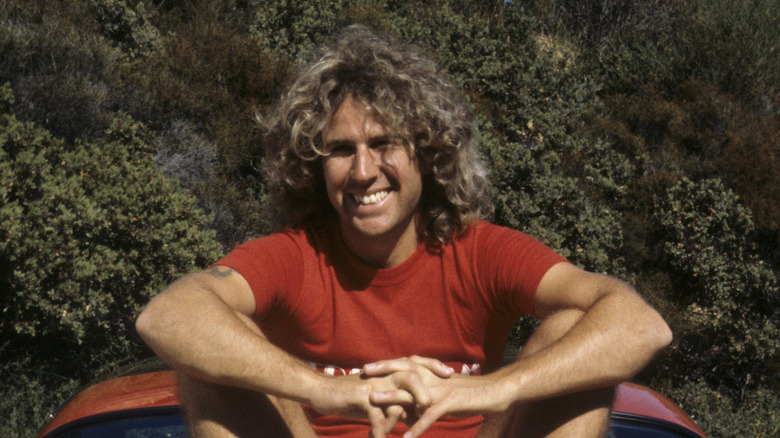
A weird thing you may not have known about Eddie Van Halen is that he was a major fan of Montrose, a '70s musical act the world forgot about. When it came time to record his band's first, self-titled album in 1977, Van Halen told producer Ted Templeman to emulate and aspire to the sound he'd laid down on Montrose's records. In its early years, Van Halen even covered some Montrose tunes. The lead singer of that band, Sammy Hagar, and Templeman nearly brought him in to replace original Van Halen frontman David Lee Roth when the band was recording that debut LP. "Every time I heard him get pitchy or completely miss a note, I worried that the public was going to be turned off by this band ... ," Templeman wrote in "Ted Templeman: A Platinum Producer's Life in Music" (via Van Halen News Desk). It probably wouldn't have taken much convincing of Eddie Van Halen to dump Roth in favor of Hagar, whose work he already admired.
Because Hagar's pre-Van Halen music was such an inspiration to Van Halen, Hagar and Eddie Van Halen shared a similar musical vision. They finally got to collaborate in 1985, and then for a decade after.
Sammy Hagar took Van Halen to new and higher levels
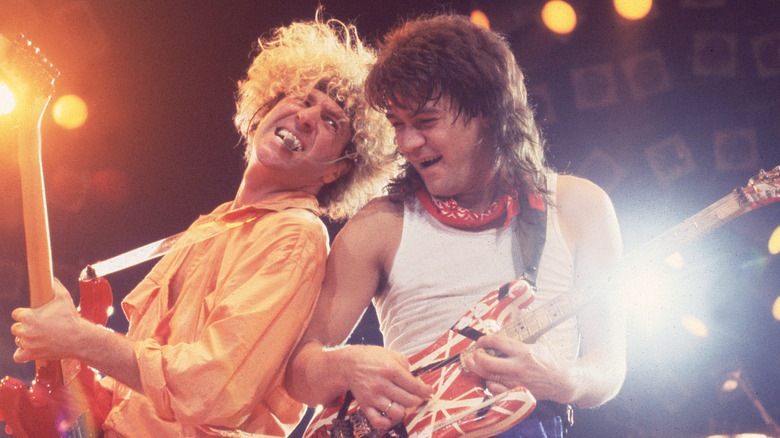
A big argument for why Sammy Hagar's Van Halen trailed David Lee Roth's Van Halen is because the band's sound changed. Its first two albums in the new era, "5150" and "OU812," prominently featured love songs and synthesizers, two things that Van Halen didn't much attempt under Roth, who preferred to squeal about carnal pleasures under pounding drums and shredding guitars. While vocal Van Halen fans didn't approve, the general public did. Hagar-sung songs like "Why Can't This Be Love," "Dreams," "Love Walks In," and "When It's Love" were all Top 20 hits in the U.S. rock charts.
Van Halen found a way to tap into the new and changing sound of '80s rock. Had they stuck with Roth, there was danger of sounding like a dated '70s throwback. Hagar had songwriting ability and a pop sensibility, and he used those skills to continue Van Halen's evolution. That transformation actually started before Hagar joined the band, and that's part of how he fit in so well. The "1984" album had keyboards (played by childhood piano prodigy Eddie Van Halen) all over it; Roth hated all that, but Hagar embraced it.
When rock skewed harder in the 1990s, Van Halen followed suit with the heavy and edgy "For Unlawful Carnal Knowledge" and "Balance." Hagar was ultimately responsible for some of the most popular Van Halen songs of all time, including late-period songs like "Right Now" and "Can't Stop Lovin' You." Hagar just worked with Van Halen, until he didn't, what with his contentious 1996 departure.