

5 Classic Rock Songs From The '90s That Don't Sound 30 Years Old
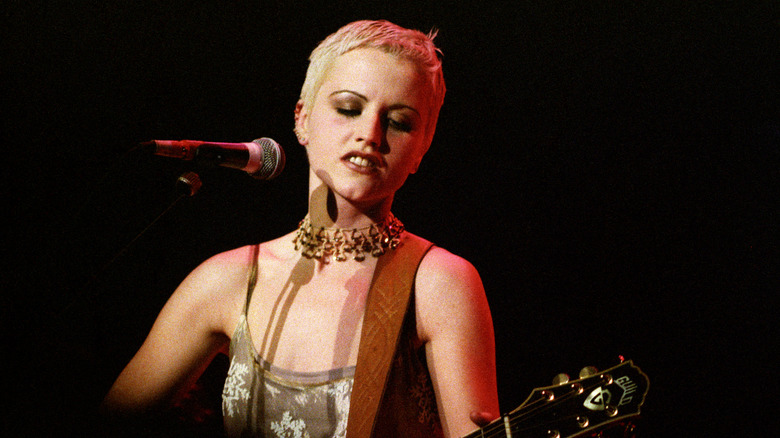
The music of the 1990s was a smorgasbord of sounds, offering something to please just about every section of society. East Coast gangsta rap rubbed shoulders with the riot-grrrl movement, while urban R&B and pop jostled for chart dominance with grunge and indie rock, and deft production values made it all go down a storm. Whatever you were into, there was a soundtrack for it.
This colourful tapestry served as a backdrop to a landscape that is eerily echoed in the 21st century: Social and political division were everywhere, while cable TV, cellphones, and the nascent internet provided a means of escape. Millions of us sought solace in our favorite bands, and '90s rock provided a supply of hook-laden songs that plugged into how we felt.
Frustrated with authority? So were Rage Against the Machine and The Cranberries. Feeling overwhelmed and anxious? Green Day proved you weren't alone. Thirty years on, we're still facing many of the same challenges, but we think that the snarling guitars, thumping drums, and cris-de-coeur lyrics of these five songs remain so cool and so relevant, they could have been written yesterday.
Nirvana — Smells Like Teen Spirit
The 1990s was a golden decade for guitar rock, but three kids from Seattle sparked the grunge fire that, despite the hate, still burns to this day. There are several tracks among Nirvana's back catalogue that sound as if they were dropped yesterday (we see you "Come As You Are" and "Lithium"), but none have the immediacy of "Smells Like Teen Spirit."
The opening solo guitar is an infectious head turner. Your feet are tapping in rhythm before Krist Novoselic's bass and Dave Grohl's gut-busting drums kick in and we're headbanging away, only to be slowed by Kurt Cobain's gravelly, almost drawled singing. While Novoselic later admitted he didn't really get the meaning behind Cobain's looping verses, millions of fans heard their own frustrations in the words. "And I forget just why I taste/ Oh, yeah, I guess it makes me smile/ I found it hard, it's hard to find/ Oh, well, whatever, never mind."
Three decades later, Cobain and Nirvana may be long consigned to the past, but the electric jolt originally discharged by "Smells Like Teen Spirit" in 1991 hasn't diminished one iota. Each musical element is as crisp and fresh as the day it was recorded, making rocking out to it a total joy, while a new audience has found their confusion and conflicts reflected in Cobain's eternally relevant lyrics.
Rage Against the Machine — Killing in the Name
The most powerful messages are often the simplest ones, and they don't come more unvarnished than Rage Against the Machine's expletive-laden, 1992 track "Killing in the Name." What started life as an instrumental piece, sparked by a riff Tom Morello created while teaching drop D tuning of all things, was enhanced by the now-iconic beat and bass. As for the pull-no-punches lyrics? They're all the work of former frontman Zack de la Rocha.
"Some of those that work forces/ Are the same that burn crosses," and "Those who died are justified/ For wearin' the badge, they're the chosen whites." The words — and the sense of menace de la Rocha is pointing a crooked finger at — slowly build to the sinister line: "And now you do what they told ya," before he explodes in repeated shouts of defiance: "F*** you, I won't do what you tell me!"
It made zero impact on the Billboard 100 the first time around, but as a protest song, "Killing in the Name" has found audiences all over the world in the 30-odd years since its release. The snarling guitars and screeching halts in pace are just as impossible to ignore today as they were in the '90s, while the in-your-face message has lost none of its potency. Who among us isn't fed up with doing what we're told?
4 Non Blondes — What's Up?
Singer-songwriter Linda Perry of 4 Non Blondes found herself grappling for meaning at a time when, for many people, there was very little to be found. Although she wrote "What's Up?" in the 1980s when Ronald Reagan was president, it was released in 1993 and still struck a powerful chord.
The opening line: "Twenty-five years and my life is still/ Tryin' to get up that great big hill of hope/ For a destination," speaks to anyone who is facing tough challenges, whether it's against the corporate machine, trying to get through the education system, or keeping their mental health on an even keel. But "What's Up?" doesn't just address the problem; it offers us a kind of primal scream therapy with the belt-it-out chorus.
In 2021, the song broke through 1 billion views on YouTube, and two years later, living legend Dolly Parton covered "What's Up?" for her "Rockstar" album (possibly the bigger honor). Perry knows her song is one for the ages and will likely never need updating. "It's going to be good 10 years from now, when we're in another crisis or something else," she told Lyndsanity. "It's just got a message that's relatable and consistent, because somebody's always trying to f*** with us." She's 100% right.
The Cranberries — Zombie
Rock has always provided a platform for fans to vent their emotions, from how it feels to be a misfit to sticking it to the Man. The Cranberries' lead singer Dolores O'Riordan used it in a different way for the band's monster 1994 hit "Zombie." Until then, they'd been an almost whimsical Irish outfit, with two solid singles, "Dreams" and "Linger," under their belts. The 1993 IRA bombing in Warrington, in the United Kingdom, changed that.
Two children died in the atrocity, and O'Riordan was shocked to her core; "Zombie" was born out of a compulsion to reject the bombing and all the people carrying it out stood for. "But you see, it's not me, it's not my family/ In your head, in your head, they are fightin'," the lyrics cry. She later explained to Vox, "It's not Ireland, it's some idiots living in the past, living for a dream."
More than 30 years later, even after lead singer O'Riordan's untimely death in 2018, "Zombie" sounds brand new. The hurt and rage that pour from the lines "With their tanks and their bombs and their bombs and their guns/ In your head, in your head, they are dyin'," touch nerves that are raw in countries and communities everywhere. Backed by that relentless drumbeat and growling guitar, it's also an anthem that allows us to ask the most awkward of questions: "What's in your head, in your head?/ Zombie, zombie, zombie."
Green Day — Basket Case
Some people stumbled across them by accident, others were recommended by a (true) friend. It was irrelevant how they found Green Day, but once they did, everything changed, especially once they heard "Basket Case." The second single from their seminal album "Dookie," it kicks off with front man Billie Joe Armstrong's bristling guitar, as he explains where he's at: "I am one of those melodramatic fools/ Neurotic to the bone, no doubt about it."
"Basket Case" lets rip into what's now an iconic chorus, as Armstrong ponders whether he's losing his mind to paranoia or drugs. The singer revealed in his 2021 audiobook autobiography, "Welcome to My Panic," that he'd suffered panic attacks as a child, but it was taboo to speak about them to his family and friends, and that he wrote "Basket Case" while using speed, initially hating the lyrics. Yet then and now, they perfectly describe how it feels to not have a handle on things: "It all keeps adding up/ I think I'm cracking up."
The mile-a-minute drums and melody feel like the racing heartbeat of our anxiety, and the song is full of attempts to shrug off or downplay all our negative thoughts. Attitudes to mental health have thankfully improved since "Basket Case" became a worldwide smash in 1994, but it still goes hard musically in the 21st century. Could AI technology better Tré Cool's frenetic drumming? Absolutely not.
If you or someone you know needs help with mental health, please contact the Crisis Text Line by texting HOME to 741741, call the National Alliance on Mental Illness helpline at 1-800-950-NAMI (6264), or visit the National Institute of Mental Health website.