

5 Songs From 1971 That Nail The Meaning Of Life
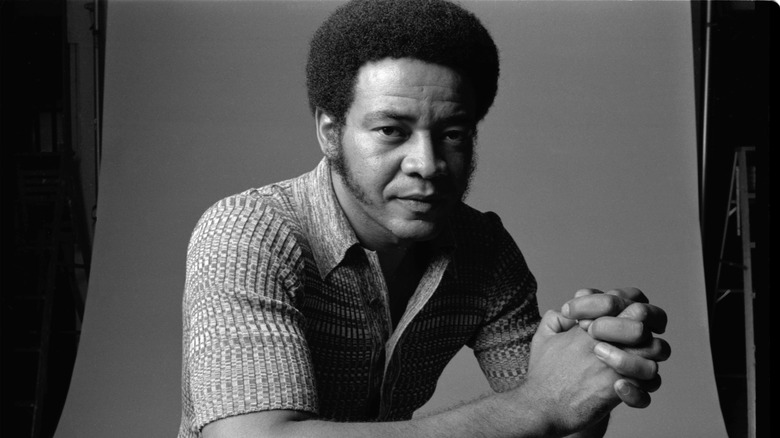
In 1971, 500,000 anti-Vietnam War activists marched on Washington, D.C., as the conflict raged on, the Charles Manson trials ended with murder convictions, and the KKK was bombing school buses. Yet, society progressed. The U.S. landed on the moon twice with Apollo 14 and 15, Gloria Steinem helped launch feminist voices in Ms. Magazine, and Jesse Jackson created the civil rights organization People United to Serve Humanity. It was against this backdrop that artists like Bill Withers, Dolly Parton, Carole King, Marvin Gaye, and John Denver released songs that invited people to step back from the headlines and remember life on a deeper, personal level.
We think the songs we chose for this article do just that, but when compiling a list of songs that nail the meaning of life, we realize that the meaning of life has been pondered for thousands of years and may be different for different people. For our purposes, though, we're focusing on lyrics that are universally relatable with themes about what gives life the most meaning — our relationships and how we show up for others.
This list purposely leaves out songs focused on romantic love because that's its own animal, and we want to stay focused on the bigger picture regarding humanity as a whole. The songs chosen here that came out in 1971 delve into the intrinsic nature of unconditional love, the poignant memories love creates, and the all-important message of hope, each of which gives life a lot of its meaning. Let's get deep.
What's Going On? — Marvin Gaye
When Marvin Gaye called Motown founder Berry Gordy to tell him about his new song, "What's Going On?," Gordy asked him, "Marvin, why do you want to ruin your career?" (via Performing Songwriter). Motown was strongly against producing songs that could be contentious, and "What's Going On?" was a protest song. While Gaye wasn't the original songwriter — Obie Benson of the Four Tops came up with it and had help from another Motown songwriter named Al Cleveland — Gaye added lyrics and flourishes and made it his own. "People were confused and needed reassurance," Gaye said of the impetus behind "What's Going On?"
The song did well, climbing to No. 2 on the Billboard Hot 100 in April 1971, likely because the messaging was sadly relatable. Too many mothers were devastated by the loss of their children in the Vietnam War, as the song goes. Gaye even pointedly sang, "brother, brother, brother/ there's far too many of you dying." His song was a plea for change that was anchored in hope. He acknowledged the darkness and reminded us how to find the light. "We don't need to escalate / you see, war is not the answer / For only love can conquer hate / You know we've got to find a way / to bring some lovin' here today."
That messaging about love showed staying power as it made its way to around 125 million Super Bowl LX viewers 55 years later, when halftime performer Bad Bunny ended his show with a billboard that read, "The only thing more powerful than hate is love," reiterating Gaye's message, which still nails the meaning of life.
You've Got a Friend — Carole King
Carole King said writing "You've Got a Friend" was easy, but they aren't all like that. Some songs, she said, take a lot of work. King explained in an interview posted on her Facebook page that in this case, "It just sort of came to me ... It was almost as if something was writing through me rather than me writing it." "You've Got a Friend" was included on her iconic "Tapestry" album released in 1971, but it didn't make the Billboard charts for King; however, it went to No. 1 for James Taylor in July of that year. Taylor and King were close friends and collaborators, and he covered the song and even won the male best pop vocal performance Grammy for it in 1972. King won the Grammy for song of the year with "You've Got a Friend."
While King said she didn't write it with anyone in particular in mind, it was inspired by the line in Taylor's song, "Fire and Rain," that goes, "I've seen lonely times when I could not find a friend." To that relatable moment, King created a timeless platonic love song that expresses her willingness to drop everything to support a friend. Many of us have been on either side of that coin, and we know how important friendship is to navigating life.
Similar to "What's Going On?," King points out that life can be difficult, singing, "Ain't it good to know that you've got a friend / When people can be so cold / They'll hurt you, and desert you / And take your soul if you let them, oh yeah, don't you let 'em now," but if and when that happens, she reminds the listener, "All you have to do is call / And I'll be there." If the meaning of life is loving and supporting each other, then King nails it with this one.
Grandma's Hands — Bill Withers
Just the name of our next song, "Grandma's Hands," brings to mind so many memories for anyone lucky enough to have had loving, involved grandparents. There is something about those aged hands that have done so much in life that they almost tell a story of their own. In Withers' description, he remembers his deceased grandmother for how she always made him feel loved and cared for with lines like "Grandma's hands used to hand me a piece of candy / Grandma's hands picked me up each time I fell."
The devout woman he described warned him of dangers, protected him from violent adults, and used those hands to comfort others too, like the "unwed mother" whose face she lifted out of her shame to tell the young woman she understood. Withers' song gets to the meaning of life with its simple descriptions of how a wizened woman with weathered hands showed him what compassion and caring for others looked like.
The song was released on his debut album, "Just As I Am," in 1971 and only made it to No. 42 on the Billboard Hot 100, but when he performed "Grandma's Hands" at the BBC in 1973, he said it was his favorite thing he'd written at that time.
"Most of us, at some point in our lives, have somebody that means more to us than anybody else has ever meant before or will ever mean again," Withers said (via Rolling Stone). "In my case, I really learned to love somebody — not a pretty lady, not that point in her life — who used some very gnarled hands to make life kind of nice for me at that time, when I really needed somebody."
Take Me Home, Country Roads — John Denver
Even though John Denver's first hit as a performer — not just a songwriter — became the official state song of West Virginia, the song wasn't inspired by that state, and John Denver didn't come up with the idea. "Take Me Home, Country Roads" originated with singer-songwriters Bill Danoff and Taffy Nivert. They showed the song to Denver and he helped finish it, then he recorded it for his 1971 album "Poems, Prayers, and Promises," and it made it to No. 2 on the Billboard Hot 100 in August that year. Danoff told the Library of Congress in 2023, "I did get the idea riding down a country road in Maryland, but it was the idea of country roads anywhere that inspired the song. Driving down that road felt familiar, and I thought that was a feeling everybody could relate to."
This song nails the meaning of life for its allusions to home, whether or not we take a country road to get there. The home it alludes to is more than brick and mortar; it's the place where we find belonging, deep memories, and people we love. The song hints at the cyclical nature of time with lines like, "Life is old there / Older than the trees / Younger than the mountains / Growin' like a breeze." It pulls at something intrinsic in us, that feeling we get when we leave home and realize how much it means to us, and then the appreciation of driving back and reveling in the feeling of that place that touches us like no other.
Coat of Many Colors — Dolly Parton
It's evident that Dolly Parton's mother instilled a certain set of values in her children. Parton told the Today Show that her mom would say, "We're not poor. We just ain't got a lot of stuff, but there's a lot of stuff we do have," imparting the importance of gratitude, or focusing on what you do have instead of what you don't.
"Coat of Many Colors" is a true story from Parton's life, telling the tale of a little girl whose mother sewed her a coat made from leftover fabric of various colors because their family was poor and that's all they had. When she wore it to school, the other kids laughed at her. In the song, Parton says, "But they didn't understand it for I felt I was rich / And I told them of the love my mama sewed in every stitch / And I told them all the story mama told me while she sewed / And how my coat of many colors was worth more than all their clothes." The song is about "acceptance and hope," Parton told E! Insider. "It's about a philosophy, an attitude, and a feeling."
"Coat of Many Colors" lent its name to her eighth album, and it rose to No. 4 on Billboard's Hot Country Songs chart in 1971. Its theme of knowing that we are loved and cared for and how that helps us in the face of adversity is similar to the themes of other songs on this list that nail the meaning of life. It takes into account that we will always have difficult times, but perspective is everything, and knowing you have a loving support system means you have something more precious than money can buy.