

Strange Things From The Early Days Of MTV You Didn't Know
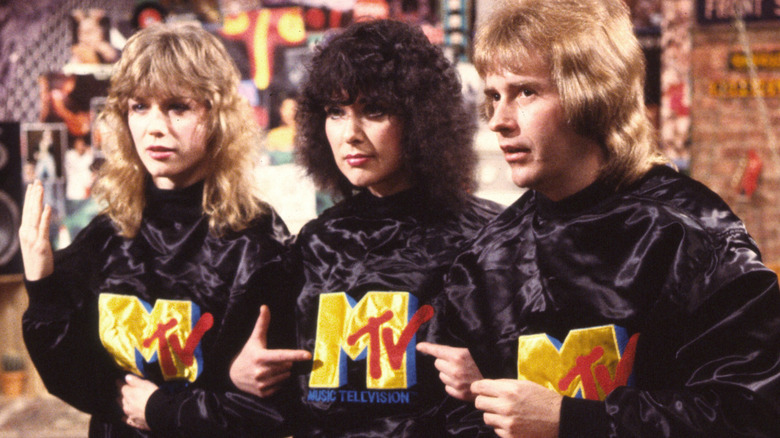
When MTV first hit cable television in 1981, and through its first decade, it was a destination for music videos and more, and a lot of it was so strange, rollicking, and spontaneous that it made for some of the weirdest moments in TV history. The biggest thing in music in the 1980s wasn't a band, singer, or style: It was MTV. While music videos — clips of musicians lip-syncing to their singles or starring in little art films — weren't new, MTV provided an outlet for them to unspool all day and all night. Audio met video, and it influenced mainstream music forever.
While it would eventually evolve into a channel full of reruns and reality shows, '80s MTV dictated youth culture and entertainment trends. Behind the scenes, at least in its first years, MTV wasn't exactly a well-oiled machine, with its employees constantly trying to see what exactly would work. This resulted in some wild and fascinating stories about the network's early operations. Here's a bunch of weird things that happened on MTV — or to MTV or because of MTV — back in the 1980s.
The first day of MTV was a mess
While the notion of a channel devoted to a 24-hour schedule of music videos advanced through every checkpoint — including funding and securing transponder space — to the point that it was scheduled to launch on August 1, 1981, MTV programmers lacked one crucial element: a vast library of music videos. It was still an emerging and novel media form in 1981, with only a relative handful of artists bothering to record them as tools to promote singles. As MTV's debut approached, the network had only amassed 250 videos, with 62 deemed broadcast-worthy. The very first one shown: "Video Killed the Radio Star" by The Buggles. "It was too obvious not to do it," MTV executive Bob Pittman said in "I Want My MTV: The Uncensored Story of the Music Video Revolution," by Rob Tannenbaum. There was some pushback by founders, however, because the artist and song weren't well known in the U.S. "Nobody wanted to launch with 'Video Killed the Radio Star,'" executive Steve Casey claimed. "I said, 'Nobody's going to be watching. It's symbolic.'"
Casey's supposition of low initial viewership also meant that few people would have witnessed the numerous glitches and gaffes that beset the first day of MTV. Prerecorded on-air personality introductions didn't air when they were supposed to, and music videos appeared in the wrong order. Some packages abruptly and incorrectly cut out, while dead air was almost as prevalent as low-budget music videos.
Wherever MTV aired, it generated record sales
When MTV arrived in 1981, it was only available in a few places, including New Jersey and Kansas City. Operators started adding it to subscription packages, and it affected record sales. MTV executives Tom Freston and John Sykes took a trip to early MTV adopter Tulsa, Oklahoma, and discovered that one record store had sold out its inventory of LPs by The Buggles. "Within three weeks, we had full-page ads in every music sheet in America saying MTV sells records," Sykes said in "MTV Uncensored." The duo also found that Tulsa radio stations were bombarded with requests for songs after the companion videos had aired on MTV. That's how Duran Duran and the Stray Cats got some of their first airplay and sales.
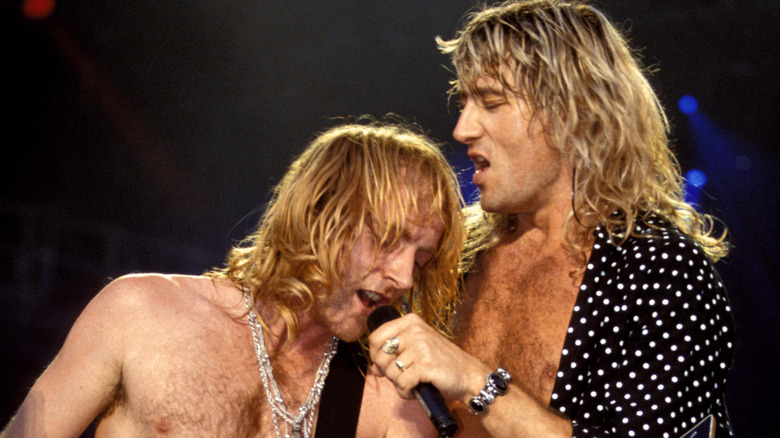
Def Leppard's 1981 album "High 'n' Dry" didn't sell well in the U.S. at first, except in Lowell, Massachusetts, one of the few jurisdictions with MTV. Viewers went out and bought the LP because they liked the "Bringin' on the Heartbreak" video. Columbia Records didn't have high hopes for Australian band Men at Work's album "Business as Usual" and pressed 7,700 copies for the U.S. But when MTV put "Who Can It Be Now?" in rotation, that created such demand that Columbia had to press more copies. "Business as Usual" went to No. 1 on the album chart and stayed there for 15 weeks.
Viewers really, really wanted their MTV
In 1981, MTV made an impact only in the scattered locales where it was available. Just before its one-year anniversary, MTV faced shutdown if it couldn't get itself onto a lot more cable systems. Executives hired media promoters George Lois and Dale Pon, best known for a memorable ad campaign for oatmeal company Maypo, which featured athletes Wilt Chamberlain and Mickey Mantle crying and screaming, "I want my Maypo!" Lois and Pon wanted to riff on that idea, with ads airing in MTV-free places featuring rock stars yelling, "I want my MTV!" That was a call to action — these ads would encourage people to call their TV provider and similarly bellow, "I want my MTV!"
It took some coaxing, but various MTV suits personally convinced Mick Jagger, David Bowie, and Pete Townshend of the Who to record "I want my MTV!" spots. After those figures said yes, it was easier to convince the next slate of stars, such as Pat Benatar, Billy Idol, Cyndi Lauper, and The Police.
The concept and catchphrase came full circle in Dire Straits' "Money for Nothing," a No. 1 hit in 1985, by which time MTV had not only been saved but had also become a national institution. In the song, laborers complained about and mocked the rock stars they saw on MTV, while The Police's Sting added backing vocals, cooing "I want my MTV" to a melody like his band's "Don't Stand So Close to Me."
The VJs that could've been
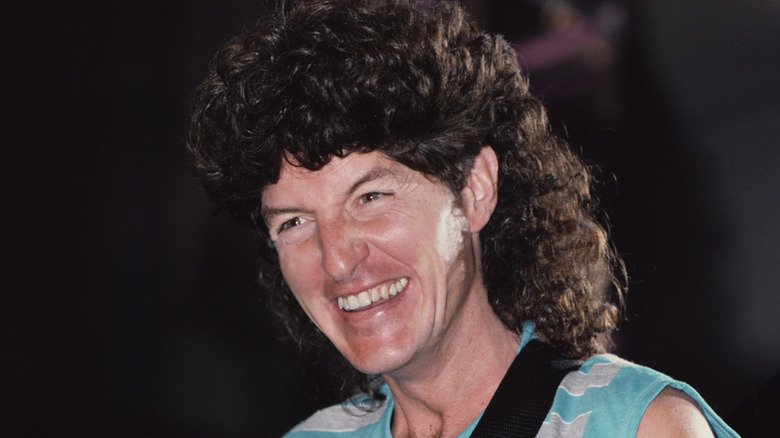
Around the time that MTV was getting started, one of the biggest bands around was REO Speedwagon. A purveyor of power ballads that would change rock forever, REO Speedwagon was also immensely important to the very earliest days of MTV. On its first programming day in August 1981, the channel played eight REO Speedwagon videos in excess of 12 times altogether. The pop-rock group was also the reason for MTV breaking its promised and touted format of music videos 24 hours a day — within a week of the channel's debut, it aired an REO Speedwagon show, live from Denver.
REO Speedwagon was nearly an even bigger part of young MTV. Before deciding on hiring journalists and radio personalities to be its on-air talent or "VJs" (short for "video jockeys"), MTV executives wanted to get actual rock stars to introduce the rock videos. The staff considered likable musicians with whom they were acquainted, including Steven Tyler of Aerosmith, Alice Cooper, Peter Wolf of J. Geils Band, and Kevin Cronin of REO Speedwagon, whose rejection of the job killed the idea. "I was the first one they approached, and I was like — everyone on your list is currently touring, and there's no way," Cronin recalled on the "Sound Up!" podcast (via Parade). "We will all have to quit our bands to sit in a room."
MTV at first only played videos by white artists
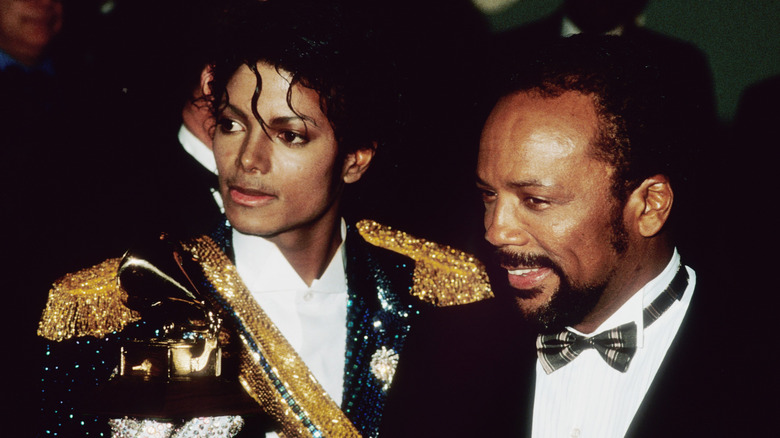
The release of "Billie Jean" as a single is what set off the chain of events in which the late Michael Jackson, who some people are convinced is still alive, made "Thriller" the top-selling studio album ever. "Billie Jean" went on to spend seven weeks at No. 1, and that was without MTV initially supporting the song or enjoying the high viewership numbers that would've come by airing the video. As of early 1983, MTV had a strict policy: Because it was modeled after a rock radio station, it rarely played anything by R&B or pop artists, or made by Black performers, like Jackson.
Walter Yetnikoff, head of Jackson's label group, CBS Records, personally tried and failed to convince MTV executive Bob Pittman to pick up the "Billie Jean" video. "That's great. I'm pulling all my stuff. Then I'm gonna tell the whole world what your attitude is towards Black people," Yetnikoff recalled in "I Want My MTV." After threatening to not only pull every CBS Records artist's video from MTV, but also get "Thriller" producer and music industry titan Quincy Jones to speak about the matter with Pittman's boss, his friend Steve Ross, Pittman relented.
People really did win on MTV
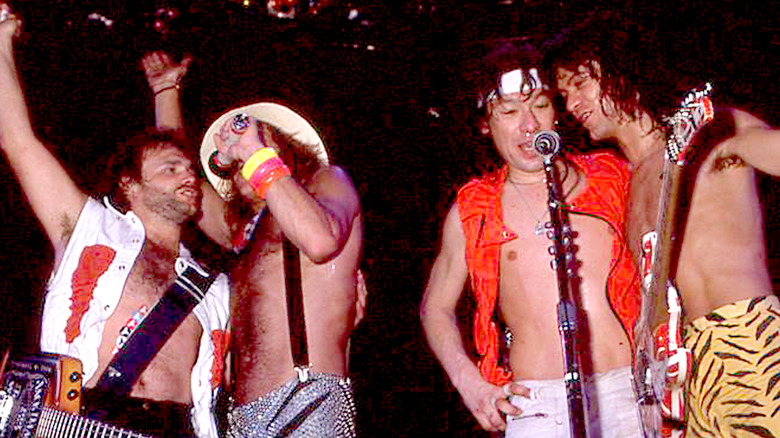
In the 1980s, MTV both promoted itself and made it stand out from older and more sedate legacy media operations with a series of audacious, outlandish, and even dangerous contests. "People really do win on MTV," a narrator intoned on promotional spots and wrap-up clip packages to let viewers know that they could be just like other MTV fans who got to do things like attend a last-minute Who concert or go on a Beatles-themed tour in England.
John Sykes, MTV's director of promotion and artist relations at the time, engineered most of those publicity stunts. One of the first: "Paint the Mutha Pink." John Mellencamp, who considers himself the luckiest guy ever, helped an also lucky entrant win the deed to a house in the musician's home base of Bloomington, Indiana, and then paint it pink, as in Mellencamp's 1983 song "Pink Houses." In another contest, an MTV diehard was gifted the home where Jon Bon Jovi grew up. The most notorious of all MTV contests was "The Lost Weekend." In 1984, Kurt Jefferis and his guest, friend Tom Winnick, got to spend about 48 hours engaging in copious drinking sessions with the famed party animals of Van Halen.
The members of KISS showed their real faces on MTV
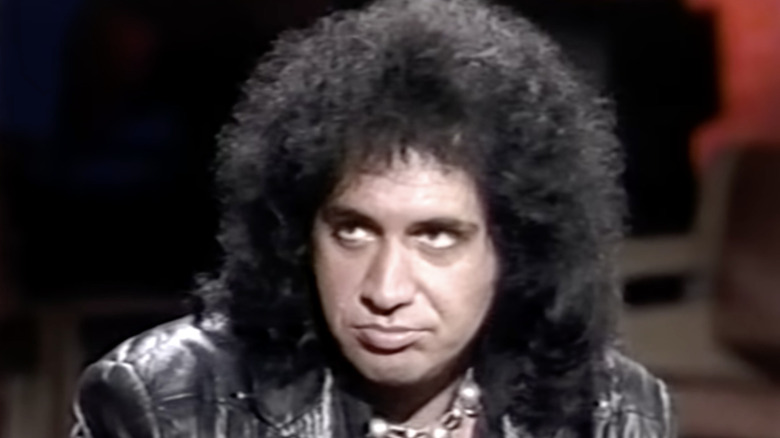
Such was the nature of the messed-up reality of KISS that the hard rock band whose members affected sci-fi personas and performed in elaborate costumes and face paint patterns found its growing stale with the public in the early 1980s. Ironically, the most visually oriented band of the 1970s had fallen from the forefront with the rise of MTV, a network that married images to music. The 1981 concept album "Music From 'The Elder'" flopped, and in advance of its 1983 LP "Lick It Up," KISS instigated a major change, and it turned to MTV to pull it off.
On September 18, 1983, in a solemn and overtly dramatic segment presented as a press conference, with no reporters present and anchored by MTV host J.J. Jackson, KISS publicly appeared without its distinctive makeup for the first time. As Jackson read off each of the four musicians' names, the camera panned between them, dissolving from a still of the man in makeup to a live studio shot. "It feels very, very comfortable. I mean, I hope it seems that way, I feel fine about it," KISS bassist Gene Simmons said before making a mock-panicked face.
MTV's first show was a comedy incubator
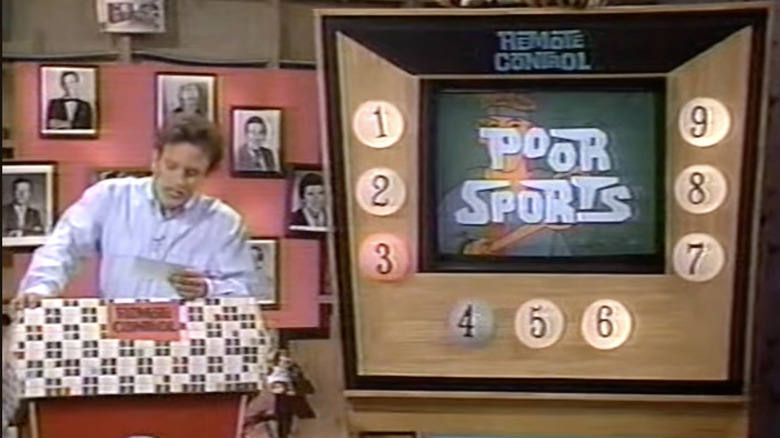
By 1987, the MTV mission and execution of nonstop music videos were starting to fade. Programmers plugged in music-adjacent, pop culture-based shows like the newsy "The Week in Rock," reruns of the '60s rock sitcom "The Monkees," and the dance show "Club MTV." Under that rollout, the first original, semi-scripted program in MTV history came, the game show "Remote Control." The idea of MTV airing regular shows instead of videos all the time rankled viewers and network employees, who made their displeasure known to the network. But "Remote Control" fortunately fit right in because it carried with it an anarchic, rock 'n' roll spirit.
"Remote Control" was as much a parody of game shows as it was a game show, celebrating and rewarding mental mastery of old TV and pop culture instead of highfalutin general knowledge. Comic Ken Ober got the hosting job, beating out former star of "The Partridge Family" Danny Bonaduce and Ben Stiller, who said no to the gig. Operating under the auspices that Ober was a TV addict who'd turned his campy suburban basement into a game show studio, contestants sat in rotting recliners instead of standing at podiums. Ober would pose some questions, while others would relate to comedy sketches or character pieces that would interrupt the proceedings. It's in those bits that the show's writers and hired actors got some of their first television exposure, including Adam Sandler, Colin Quinn, and Denis Leary.
MTV banned a lot of music videos
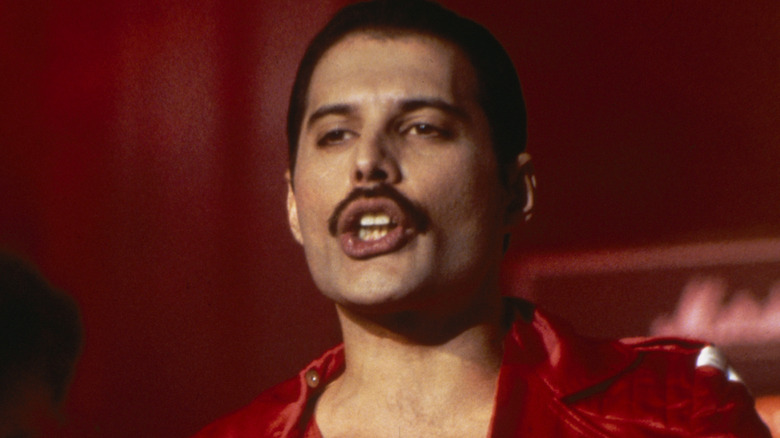
MTV, particularly in its early years, has often presented itself as an edgy, youth-oriented, envelope-pushing rabble-rouser. But that's just an image — MTV has always been a subsidiary of huge telecommunications conglomerates. Founder Warner sold its controlling interest in MTV Networks to Viacom in 1985, and Paramount took over Viacom in 1994. With the feelings of stockholders and advertisers to consider, MTV has operated from a relatively conservative viewpoint, rarely hesitating to refuse to broadcast or relegate to late-night slots any videos with content deemed objectionable.
One moment in the history of Queen is that its 1982 video "Body Language" was the first to ever be banned by MTV. It depicted barely clothed figures in a steam room and implied homosexual conduct. That same year, MTV seriously limited showings of Van Halen's "Oh, Pretty Woman" because of some sexual content and a character in drag. Two years later, MTV banned another Queen video, "I Want to Break Free," a soap opera parody that featured the male band members dressed as women. Neil Young's 1988 anti-consumerist satire "This Note's for You" derides several brands by name, and as many were MTV advertisers, the video was pulled. A minor tragedy in the life of Cher: MTV moved her video for "If I Could Turn Back Time" to post-9 p.m. showings because she was too scantily clad.
MTV's love-hate relationship with spring break
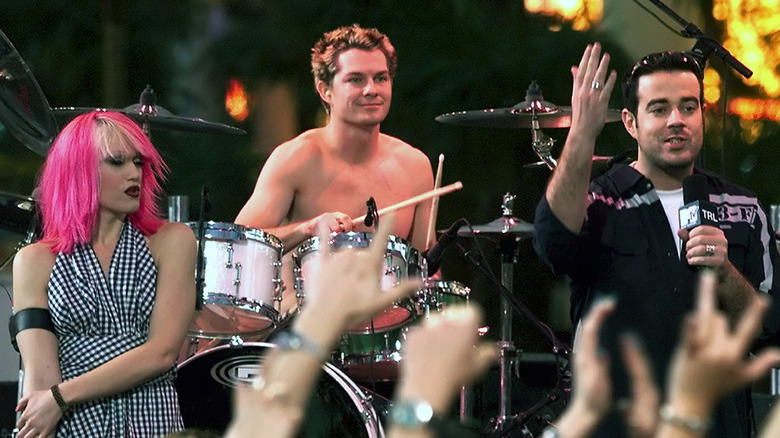
As of the mid-1980s, Daytona Beach, Florida, was known throughout the eastern U.S. and among college students as a place to spend spring break, the between-terms week. They'd drink and party on the beach and in adjacent hotels and bars, and in 1986, MTV began taping a week's worth of programming there, capturing it in all its salacious and scantily clad debauched glory. MTV's spring break coverage and original content like game shows and concerts proved so compelling that it made the crowds of college-age adults that descended on Daytona Beach larger each year, until it stressed out the city's leaders. Authorities feared that MTV gave the impression that Daytona was always like what viewers saw on TV during the spring break shoots, and that it was killing its year-round family tourist industry.
As of spring break 1994, MTV was no longer welcome in Daytona Beach, and so it sent its production crews to Mission Beach, outside San Diego. It wasn't a spring break hot spot, so MTV made it into one. It secured and built a 2.5-acre beachside resort and cleared 10 acres for vendors and sponsors to set up promotional booths and stunts.
MTV had some offshoots
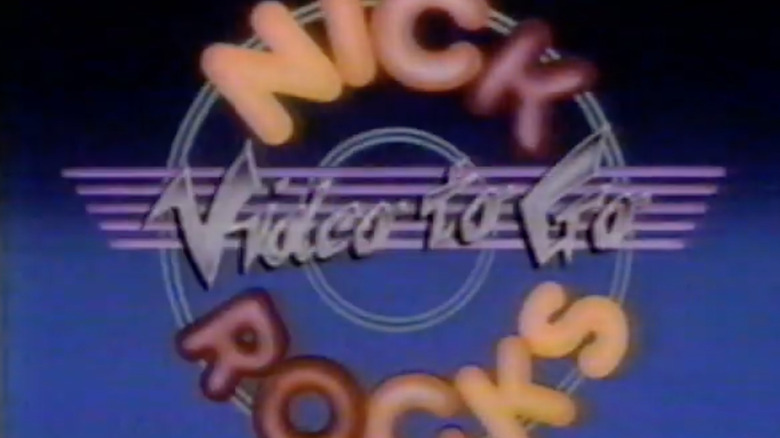
MTV was the flagship and most iconic brand in MTV Networks, a collection of related cable channels established in the wake of the success of all-music-video service. The kids' network Nickelodeon actually predated MTV, expanding from an Ohio-based outlet into a national concern in 1979. It was there in 1980 that Monkees member turned production company founder Michael Nesmith created "Popclips," a music video compilation series that proved MTV was a viable concept. After MTV's debut, the similar "Nick Rocks" aired on Nickelodeon.
The all-video channel got so much attention that competing media outlets wanted a piece of the action. In October 1984, Ted Turner's Turner Broadcasting unveiled a sibling to its CNN and WTBS networks: Cable Music Channel. CMC went dark after little more than three months, in part because MTV convinced so many cable systems to instead carry its soon-to-launch spin-off network VH1. That channel aired different videos than MTV, geared toward an older adult audience; CMC was merely an MTV clone.
MTV made 'Weird Al' Yankovic a star
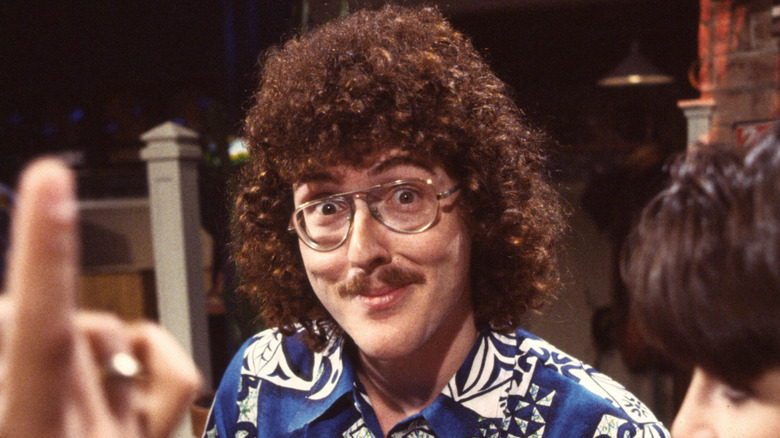
Song parody artist "Weird Al" Yankovic was a superstar on the rise on the syndicated novelty music radio program "The Dr. Demento Show" and went mainstream when MTV aired his videos. In 1983, Yankovic made his first video, for "Ricky," his "I Love Lucy"-themed parody of Toni Basil's "Mickey." That song became Yankovic's first single to enter the Hot 100 pop chart, while the campy, zany, black-and-white video proved a hit on MTV, as did subsequent clips like "Eat It," a take on Michael Jackson's "Beat It." "He made people stop and look at the TV and say, 'What the hell was that?'" MTV programming head Les Garland told The Washington Post. "And from that, he absolutely was an MTV star."
MTV acknowledged the symbiotic arrangement and enlisted Yankovic to star in occasional "AL-TV" specials that aired from 1984 to 2006. These were essentially sketch comedy shows presented under the premise that Yankovic had taken control of MTV to air his low-budget and kitschy entertainment packages. They memorably featured appearances by the not at all exceptional "Harvey the Wonder Hamster" and the musician pretending to interview celebrities — unrelated responses pasted onto Yankovic's queries. "MTV had to get permission from the artists," Yankovic wrote on his blog. "However, they only asked the artists if it was okay to use their interviews for 'another MTV special' they were doing — I'm pretty sure they didn't say their interviews were going to be ripped apart on AL-TV!"