

Classic Rock Drummers Who Left Their Original Group For Bands That Became Mega-Famous

We may receive a commission on purchases made from links.
While they don't always reap the glory and attention that lead singers or guitarists do, drummers are essential to the rock-band formula. They're the engine: They keep time and push songs forward while adding character and power with each flourish and fill. Led Zeppelin gets nowhere without the ferocious beat of John Bonham, and you can't think of The Who's classic era without imagining Keith Moon's flailing limbs behind the kit. Basically, to assemble a great band, you need a great drummer.
It's little wonder, then, that classic rock history is peppered with stories of drummers leaving their original groups to join acts that exploded in popularity. Time and again, that member became an iconic band's missing ingredient, the catalyst that makes the formula bubble over. The Beatles rose to stardom only after Ringo Starr quit working with another band to join the group in 1962. Similarly, Neil Peart left a fledgling Canadian band to join Rush on the cusp of its '70s success, and the Rolling Stones pinched Charlie Watts from both a band and a career in design.
In these cases and others, the loss to the drummers' original group was classic rock's gain. Rock from the '60s to the '80s simply wouldn't sound the same if these musicians hadn't jumped ship. Let's just hope it's all water under the bridge.
Ringo Starr sits in for The Beatles

Ringo Starr's drumming set the backbeat for the Beatlemania that made The Beatles the quintessential mega-famous band. Born Richard Starkey, he chose his stage name in 1959 — before becoming a mop top — when he was drummer for the skiffle band Rory and the Hurricanes. Like John Lennon, Paul McCartney, and George Harrison, he came up in the Liverpool scene, and in the early days, Starr's band was the more locally well-known.
In 1960, Starr got to know The Beatles, then with drummer Pete Best, when the bands split the stage at the Kaiserkeller club in Hamburg, Germany. He was impressed right off the bat: "I loved John, Paul, and George," Starr told AXS TV. "I'd be there for the last gig, just sitting there ... requesting songs." Back in Liverpool, Starr became an occasional fill-in drummer for The Beatles, sitting in when Best couldn't make it.
The band liked what they heard on those nights. Producer George Martin, who'd recorded their first sessions, urged the band to replace Best, and Starr emerged as a natural choice. As Harrison recalled in "The Beatles: Anthology," "Every time Ringo sat in, it seemed like 'this is it.'" When offered the job in August 1962, Starr accepted and left the Hurricanes on the spot. Parts of Liverpool didn't take the news well. At The Beatles' first Cavern Club appearance with their new drummer, Best fans heckled the band, and a backstage altercation left Harrison with a black eye. But before long, it was clear that the Fab Four were complete.
Neil Peart and his bag of drums elevated Rush
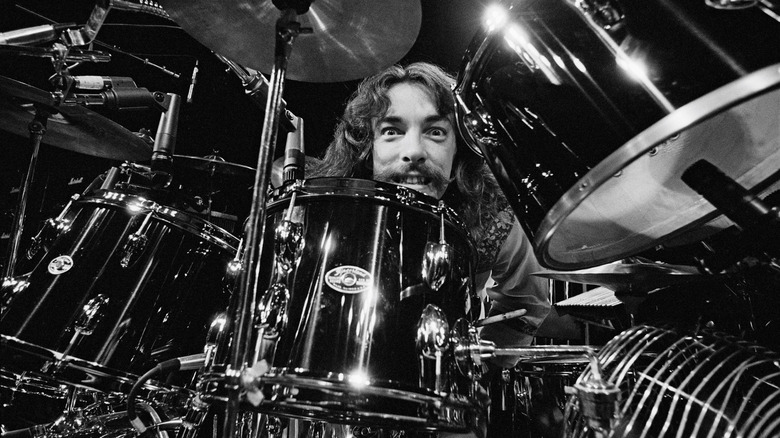
As any Rush fan can tell you, Neil Peart is one of rock's greatest drummers, and his playing elevated the Canadian prog-rock band to legendary status. While the group had already made a mark with a self-titled album released with original drummer John Rutsey, it wasn't until Peart joined the lineup that the band took off creatively and commercially. His virtuosic drumming and masterful lyrics on ambitious '70s albums like "2112" and "A Farewell to Kings" carried over into a commercial crest for Rush, with "Moving Pictures" peaking at No. 3 on the Billboard 200 in 1981.
But before all that, in 1974, a 21-year-old Peart was selling farm equipment full-time for his father while playing in bands around Southern Ontario, Canada. When he showed up to audition for the Toronto-based Rush, his kit was in garbage bags, and he was playing in a band called, of all things, Hush. "My first impression was that he was kinda goofy," frontman Geddy Lee recalled in the 2010 documentary "Rush: Beyond The Lighted Stage." But looks were deceiving, and Peart's legendary chops quickly won the band over.
It was a whirlwind. His membership became official in July 1974, leaving the young drummer just two weeks to learn his parts before departing for a U.S. tour. Well, we all know how it worked out. His live debut with the band, a support slot for Manfred Mann and Uriah Heep, was in front of 11,000 fans. For Peart and Rush, it was the start of the journey to "Xanadu" and beyond.
Phil Collins leaves his youth behind for Genesis

Since forming in 1967, Genesis has undergone many stylistic and lineup changes. By the time Phil Collins was hired in 1970, he became the band's fourth drummer and the last that'd have the job. His virtuosic chops helped the early Peter Gabriel-fronted prog-rock version of the band gain fans in the early '70s. And when Gabriel left in 1975 and auditions failed to find a replacement, Collins stepped up, taking on vocal duties. While the lead singer abandoning the band to go solo often spells doom, it was the opposite with Genesis. Adopting a poppier sound, the group hit commercial peaks in the '80s and '90s, including its first and only No. 1 single on the U.S. Billboard Hot 100 chart: 1986's "Invisible Touch."
When Collins auditioned for Genesis, he was drumming in a band called Flaming Youth, and he was frustrated. The group had put out an album that didn't sell, and performances were rare. After seeing an ad in "Melody Maker," Collins travelled to Peter Gabriel's parents' countryside house for tryouts. Hearing the other auditions while waiting his turn poolside, he learned the parts and walked in confident and prepared. Gabriel was immediately impressed, recalling on the "Ultimate Classic Rock Nights" radio show, "Something definitely changed when Phil joined the band. He was a real drummer." With Collins behind the group, and eventually in front, Genesis was set to scale new heights.
Charlie Watts gets poached by the Rolling Stones for a few pounds
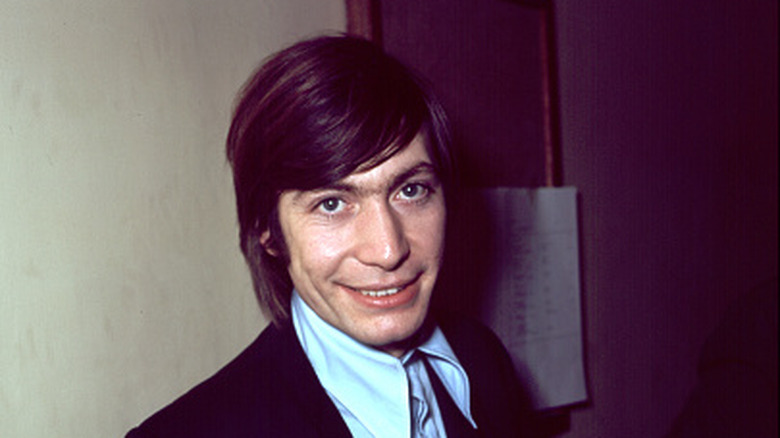
Charlie Watts was the engine of the Rolling Stones, his swinging style letting Mick Jagger howl and strut and Keith Richards wail. From joining up in 1963 until his final concert in 2019 — just two years prior to his death — he played every show and was part of every studio album the band released. On classic-rock bangers from "(I Can't Get No) Satisfaction" to "Sympathy for the Devil," his steady time and tasteful fills ground the flair and excess of the rest of the band.
Though he'd become a rock 'n' roll legend, Watts grew up playing jazz. He learned his instrument by playing along to favored records. "When I heard Charlie Parker play, I would play like Max Roach or Roy Haynes," he told Modern Drummer. In his late teens and early 20s, he held day jobs as a graphic designer and spent nights gigging around London's Soho in various projects. At one of those shows, drumming with R&B group Blues Incorporated, he caught Keith Richards and the rest of the Stones' attention. They set out to poach him.
The Rolling Stones formed in 1962, but original drummer Tony Chapman quit the same year. Since Watts had paying gigs and a steady job, it took convincing — a salary of £5 a week — for him to agree to join the fledgling band. And so on February 2, 1963, at the Ealing Jazz Club in London, he first took the seat he'd occupy for the next 58 years, counting off and cooly cueing his band night after night.