

How Barry Manilow's Boring First Job Helped Him Become The Ultimate Icon He Is Today
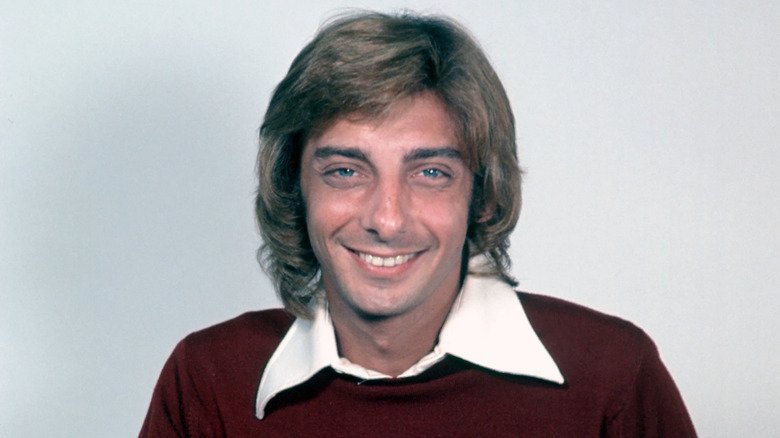
When it comes to musical icons, they don't come much bigger or better than Barry Manilow. During his over 50-year career, Manilow has notched up 13 No. 1 singles on Billboard's Adult Contemporary chart, has packed out Las Vegas and Radio City Music Hall, and sold more than 85 million albums around the world. In 2026, Manilow announced a farewell tour to give the octogenarian entertainer the mother of all professional send-offs, but it's worth remembering his road to success began in a CBS basement, light-years away from the spotlight.
As a youngster, Brooklyn-born Barry changed his surname from Pincus to Manilow, his mother's maiden name, and by 21 had landed a job at the New York headquarters of CBS. A family friend warned him to keep quiet about his musical ambitions, and Manilow told CBS News in 2006, "So I said, 'I just wanted to be an executive. And they hired me." He juggled working in the company mailroom with lessons at music school at night, but he didn't let the dull business of sorting letters hold him back. "They had a beautiful grand piano at CBS and I played it on my lunch break, every chance I could," he explained to Variety in 2019, nicknamed by all the performers at the broadcaster as "the piano-playing mail boy."
Not such a money-making musical instrument
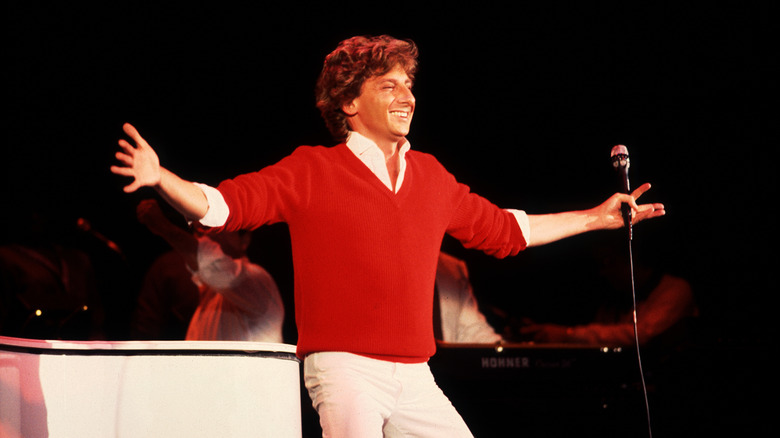
The piano in the CBS basement didn't just give the young Manilow something to play, it was also the instrument on which he composed countless jingles. After being promoted from the mail room to a job logging commercials, the budding musician was brimming with ideas for tunes. In the beginning, Manilow managed to get gigs writing, singing, or arranging several popular commercial jingles, but they didn't always pay very well, and Manilow faced plenty of competition for every ad campaign. In later years, the showman would delight his audience by unexpectedly adding one of his jingles during a performance, including Manilow's 1972 jingle that features one of the most iconic lines in commercial history.
His time at CBS didn't last long, and after about three years, he left to tour with singing partner Jeanne Lucas. Although Manilow's old boss at CBS was later fired, the singer recalled to Variety, "Ray Abel remembered me and called and asked me to be the music director of 'Callback.'"
That role gave the young Manilow a major education in television as well as arranging music, but it wasn't his only project. He was also taking night classes at the Institute of Musical Art (later known as Juilliard) and writing songs for an off-off-Broadway musical. "It still plays somewhere now and then, and I get a check for $27," he quipped.
From anonymous songwriter to worldwide sensation
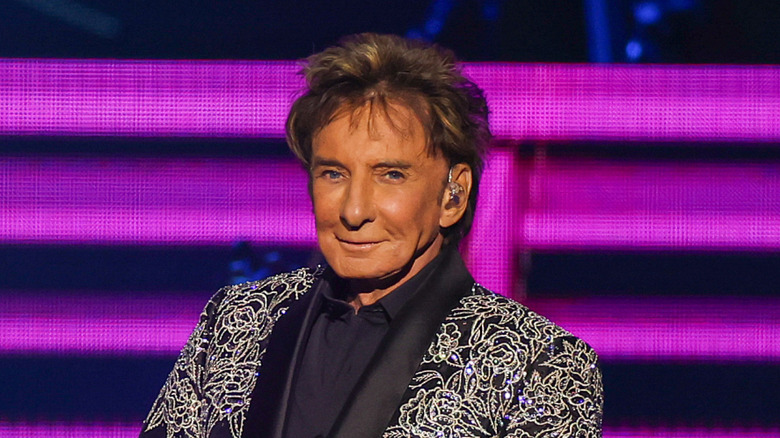
With lots of different creative balls to keep in the air, Manilow was — at least in the early days — not interested in being a front-of-stage singer as well. In 1971, a session band called Featherbed used his vocals for the song "Could It Be Magic," based on a prelude by classical composer Chopin. Three years later, Manilow's talent for turning musical arrangements on their head would be the key to his becoming a superstar.
Speaking about his breakthrough hit "Mandy" in an interview with Richard Niles, he explained how he took a guitar-based, up-tempo rock 'n' roll song and transformed it, saying, "I started it with a little piano and wound up at the top of the scale ... singing the high note with the orchestra screaming at the end." Manilow went on to recall, "I didn't change the plaintiveness of the song that the songwriter wrote, I would never tamper with that, but I found a different facet of the song and that's the most fun for me."
His ballad version was a No. 1 hit on Billboard's Hot 100, and was followed by legendary songs including "I Write the Songs," "Can't Smile Without You," "Copacabana (At the Copa)," and "Looks Like We Made It," the latter hit from 1977 being hands-down Manilow's saddest love song. Looking back at his time in the mailroom, it's hard to see how Manilow could ever have achieved his ambition of being a corporate executive, which he himself echoed to CBS News: "It wasn't that I wasn't happy at CBS. It's just that it didn't have anything to do with music."