

Hit Songs Initially Rejected By Other Artists
Some of the best-selling and most enduring songs in rock history became chart-topping classics thanks to a singer or band that wasn't the composer's first choice — the artists for whom they were intended passed on the chance to record them. While many acts write their own material or work closely with a handful of trusted collaborators, rock 'n' roll has historically operated transactionally. Songwriters shop songs around to the major acts that seem best suited to them or most likely to transform what's on the page into a big hit single. But very often, it would seem, those A-list talents turn down the songwriters and their works.
They've got their reasons — they dislike the tune, don't feel it's appropriate for their skill set or image, or just can't find the time, for example. But what's definitive: Stars saying no to songs leaves the door open for others to record them and make them hits. Throughout the decades of 20th-century rock and pop, several artists declined a song, allowing a second- or third-choice musician to step in, step up, and meet one of their signature tracks.
The Boys of Summer
Mike Campbell, guitarist for Tom Petty and the Heartbreakers, recorded a demo for a potential new track in his home studio in the early 1980s. He laid out the guitar parts and a beat with a drum machine but didn't include lyrics. Neither Petty nor their producer Jimmy Iovine was impressed with the piece. "In Tom's defense, when I got to the chorus, I went to a different chord," Campbell recalled on the podcast "The Moment" (via Ultimate Classic Rock). "It was kind of like a minor chord. As the song ended up, on the chorus it goes to that big major chord. You know, it lifts up."
Iovine recommended Campbell change that transition, so he did. Afterward, still devastated over the rejection by his own band, he took the producer up on his offer to propose the song to former Eagles drummer Don Henley, who was in the midst of recording a solo album. Campbell and Henley listened together, and Henley agreed to give it a try. He wrote his own lyrics — both nostalgic and exploring the concept of nostalgia. "I have a thing about looking back," Henley said on "The Howard Stern Show" regarding what he ultimately titled "The Boys of Summer." It peaked at No. 5 on the Billboard Hot 100 in early 1985.
Golden Years
In 1976, David Bowie released "Station to Station," and one of the first songs he recorded for the LP was its first single, the warm and gently funky "Golden Years." The track was his second Top 10 hit in the United States (peaking at No. 10 on the Billboard Hot 100 in April 1976), and he very easily could've passed up on such a commercial breakthrough. Around the same time that Bowie was working on "Station to Station," he'd reached out to a certified rock legend who was less creative than you might think: Elvis Presley. Through business arrangements, Presley got royalty-generating songwriting credits on numerous songs he didn't actually help compose. In other words, he had to rely on other musicians for his songs, and Bowie wanted to make a song for the King of Rock 'n' Roll. "Golden Years" could've been the one.
"Apparently Elvis heard the demos, because we were both on RCA, and Colonel Tom [Parker, Presley's manager] thought I should write some Elvis songs," Bowie recalled in David Buckley's "Strange Fascination: David Bowie, the Definitive Story." "There was talk between our offices that I should be introduced to Elvis and maybe start working with him in a production-writer capacity. But it never came to pass."
Call Me
To score his 1980 sex worker drama "American Gigolo," filmmaker Paul Schrader brought in Giorgio Moroder, best known at the time as a producer for progressive disco artists like Donna Summer and as a movie music writer who favored electronic instrumentation. Moroder wanted to include a pop-style theme song for the film, and so he wrote "Man-Machine," suggested by the main character's almost robotic existence of being constantly summoned to perform in order to earn a living. English wasn't Moroder's primary language, and he needed a singer — specifically a female artist — to not just record "Man-Machine" but write new lyrics, too. Moroder's dream candidate was singer-songwriter Stevie Nicks, at the time one of the biggest stars in the world thanks to her time in Fleetwood Mac. Unfortunately, she was too busy with all of that to take up Moroder on his offer.
Moroder then asked Debbie Harry, breakout star of the genre-hopping band Blondie. The musician got to watch an early cut of "American Gigolo" — with just the "Man-Machine"-based music in the appropriate parts — and was instantly inspired. "He was on call, so to speak," Harry said in "The Billboard Book of Number 1 Hits" regarding Richard Gere's titular character. "I went home and wrote the song immediately," she later added. Credited to Blondie, Harry's revision retitled "Call Me" was a massive hit. It held the No. 1 spot on the Hot 100 for six weeks, and Billboard later named it the top hit of 1980.
Don't You (Forget About Me)
The 1985 John Hughes teen dramedy "The Breakfast Club" featured the same tune in its opening and end sequences: "Don't You (Forget About Me)." Keith Forsey composed it just for the movie, and although Hughes was a successful filmmaker, the songwriter had a hard time getting major artists to record the song. "The original guy I had in mind was Bryan Ferry," Forsey said in "The Billboard Book of Number 1 Hits." However, the singer of Roxy Music said no, as did '80s pop-rock superstar Billy Idol.
Even the act that did wind up heading into the studio to make "Don't You (Forget About Me)" didn't really want to do so at first. Scottish band Simple Minds flat out refused at first because it rarely performed material written by people not in the group, nor was it persuaded by a screening of an early edit of "The Breakfast Club." Simple Minds leader Jim Kerr agreed to do it because his then-wife Chrissie Hynde of The Pretenders enjoyed the song and he got along well with Forsey. "Don't You (Forget About Me)" introduced Simple Minds to the U.S. market, and the track wasn't just its first charting single there but also its most successful, going to No. 1 on the Billboard Hot 100 in May 1985.
Seasons in the Sun
The Poppy Family — consisting of married couple Terry and Susan Jacks — scored two big hits in 1970: "Which Way You Goin', Billy?" and "That's Where I Went Wrong." By the time the pair split professionally and personally in 1973, Terry was working in the periphery of the music industry and was closely associated with The Beach Boys. Invited to a recording session, he offered an idea to the band: They ought to cover "Le Moribond," which translates to "the dying man." Jacques Brel composed the original, with French lyrics, in 1961, and then three years later The Kingston Trio attempted an English translation written by poet Rod McKuen. That one, "Seasons in the Sun," is extremely bittersweet — a series of recollections from a man near death about a life well lived.
The Beach Boys went ahead and took a shot at the song that Terry had presented but then rejected it after the fact, opting not to let the public hear it. It was up for grabs, and for Terry, it gained even more poignancy after the death of a friend. He recorded "Seasons in the Sun" himself, and in March 1974, the ballad spent three weeks at No. 1 on the Billboard Hot 100 in the U.S.
What's Love Got to Do With It
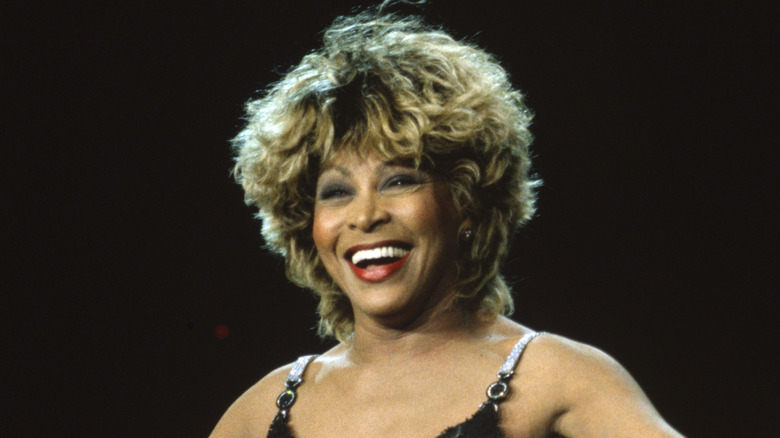
The melancholy, conflicted, and decidedly mature and world-weary love song "What's Love Got to Do With It" was the work of songwriters Terry Britten and Graham Lyle. In the early '80s, the song went out for consideration to several soft rock and soul artists of the era, among them U.K. star Cliff Richard, disco-turned pop singer Donna Summer, and Phyllis Hyman. They all said no.
A while later, Tina Turner, once half of the dynamic duo Ike & Tina Turner, was mounting a comeback following almost a decade of mainstream obscurity after leaving her husband, abuser, and musical partner. One of the producers employed to create Turner's 1984 LP "Private Dancer" was Britten, who suggested she give "What's Love Got to Do With It" a listen. After hearing Britten's demo, she briefly joined the ranks of Richard, Summer, and Hyman. "I rejected the song? Crazy to think about that now," Turner admitted on Instagram in 2021.
Britten offered to rework the song to make it better suited to Turner's voice and vibe, and then she finally fell in love with it. "What's Love Got to Do With It" enjoyed a three-week run at No. 1 on the Billboard Hot 100 in 1984, solidified Turner's comeback, and won two of the most prominent Grammy Awards: song of the year and record of the year.
Something to Talk About
Songs powered by the sweet and subtle voice of Anne Murray routinely ratcheted up the charts in the 1970s and early 1980s, like "You Needed Me," "Danny's Song," and "Snowbird." A few years after her last top 40 hit, she missed out on a potential rock-oriented smash in the mid-1980s. Canadian songwriter Shirley Eikhard, working in the Nashville-based country music industry, wrote a flirtatious and wordy love song called "Something to Talk About." Eikhard gave Murray first crack at the song and gave her a demo. "I loved it, playing it in my car for more than a year," Murray declared in "All of Me." "I knew it would be a hit."
Murray presented the song to three producers, and none of them liked it. "I should have insisted, but I didn't, so I never recorded the song," she wrote. Nevertheless, Murray used "Something to Talk About" as the name of her 1986 LP, and after many more years of shopping, Eikhard found a taker — Bonnie Raitt. The singer and guitarist included her searing, blues guitar-heavy take on her 1991 album "Luck of the Draw." It zoomed to No. 5 on the Billboard Hot 100 and won the Grammy Award for best pop vocal performance, female.
The Long and Winding Road
Along with all the garage rock bands with a radio-friendly sensibility, the British Invasion of the 1960s encompassed other kinds of music made by musicians from elsewhere in Great Britain. Tom Jones, a crooner from Wales, was very popular with American and British audiences in the 1960s with big, showy tunes like "It's Not Unusual" and "What's New Pussycat?" At the decade's end, he nearly collaborated with notable British Invasion act The Beatles. A record company prevented that from happening.
One evening, he ran into Paul McCartney at a London nightclub and suggested that the Beatle compose a song for him. "He said, 'Aye, I will then.' Then not long after he sent a song around to my house, which was 'The Long and Winding Road,'" Jones recalled to Wales Online in 2012. But first rights to the epic ballad came with a caveat from McCartney: Jones would have to record and put it out immediately. But he already had a single, "Without Love," approaching its street date, and to suddenly cancel that was a non-starter for Decca Records. Jones was forced to pass. As for "The Long and Winding Road," it became a Beatles song — the group's 20th and final No. 1 single in 1970, the same year in which The Beatles broke up.
The Night the Lights Went Out in Georgia
A sad and gloomy story song in the Southern Gothic tradition, "The Night the Lights Went Out in Georgia" isn't the kind of thing that usually hits No. 1 on Billboard's pop chart, but it did manage that feat in April 1973. The tune is narrated by a woman who tells the tragic tale of her brother, who gets caught up in a web of infidelity and small-town police corruption and is executed for a murder he didn't commit. There's even a twist: The song's narrator, the sister of the wrongfully killed, was the real murderer.
Another twist: "The Night the Lights Went Out in Georgia" is a very serious song sung by a not-so-serious person: Vicki Lawrence, at the time a cast member on the highly rated sketch-variety program "The Carol Burnett Show." "The Night the Lights Went Out in Georgia" was the work of composer Bobby Russell, Lawrence's husband at that point. As a musician, Lawrence was something of a last resort. Many singers and their representatives declined to record "The Night the Lights Went Out in Georgia," among them Cher. Sonny Bono, her husband and musical partner, said no on his wife's behalf, afraid that the tune would upset Cher's fans in the Southern United States.
Wind Beneath My Wings
In 1989, Bette Midler rescued her dying musical career with one song: "Wind Beneath My Wings," which soared to No. 1 on the Billboard Hot 100. Midler hadn't enjoyed a top 10 hit since "The Rose" in 1980, as she spent most of the '80s focusing on her successful acting career. Written by composers Larry Henley and Jeff Silbar in 1982, "Wind Beneath My Wings" became a hit after Midler sang it in her movie "Beaches." It was inspired by a poem Henley had once written for his wife — the songwriting duo's publisher felt it was appropriate for soft-rock acts, and a demo went out to a giant of the genre: Kenny Rogers.
While Roger Whitaker, Sheena Easton, Lou Rawls, Lee Greenwood, and B.J. Thomas all recorded versions, it's Rogers who regrets not taking the opportunity to cut the record. "I heard it and something about it didn't sit right with me," Rogers told Stuff. "I turned it down. Then I heard it when Bette did it and I went, 'Wow, can't believe I turned that down.'"
Can't Get Enough
Popular U.K. band Mott the Hoople was a '70s one-hit wonder in the U.S., with the 1972 single "All the Young Dudes," the group's sole top 40 entry. While still a member of Mott the Hoople, guitarist Mick Ralphs wrote the bluesy, joyful, and hard-charging "Can't Get Enough," among other songs that the group never even tried to record because they were too far of a reach for lead singer Ian Hunter. "This is not a derogatory remark toward Ian — they were just not his style," Ralphs told Guitar Player. "He was more into screaming about politics, and I was into singing about being on the road and the usual things blues songs are about, the day-to-day things."
Creative tensions between Ralphs and Hunter proved so detrimental that in 1973, Ralphs exited Mott the Hoople and found a compatriot in former Free singer Paul Rodgers, also unhappy with his band, Peace. That pairing became the basis of Bad Company, one of the best supergroups in history. The combo's first album was triggered by a desire to record the songs by Ralphs and Rodgers that their other groups had rejected, including "Can't Get Enough." The first single released by Bad Company, it was the biggest hit that the Rock & Roll Hall of Fame-enshrined band would ever have — "Can't Get Enough" hit No. 5 on the Billboard Hot 100 in 1974.
Raindrops Keep Fallin' on My Head
The 1969 film "Butch Cassidy and the Sundance Kid" is based on the real-life activities of an 1890s train-robbing criminal gang, but it still includes a romantic subplot. Director George Roy Hill wanted some special music for a bike riding scene featuring Butch (Paul Newman) and Etta Place (Katharine Ross), and score composer Burt Bacharach — half of a venerable hit-making partnership with Hal David — suggested a showcase song with lyrics. The duo came up with a tender, understated ballad called "Raindrops Keep Fallin' on My Head."
The first singer approached to record it: Bob Dylan. Regardless of an arrangement suited to his voice and range, Dylan passed. Next, the production brought in Ray Stevens, well liked for comedy songs like "Gitarzan" and "Harry the Hairy Ape," to watch the film and listen to a demo. "Ray Stevens hated the movie and he hated the song," Bacharach wrote in "Anyone Who Had a Heart: My Life and Music." "Time was running out so we took it to B.J. Thomas." That singer, coming off a few hit singles, including the 1969 Hot 100 No. 5 "Hooked on a Feeling," needed just five takes to perfect the song, despite having laryngitis at the time. After it was included in the final cut of "Butch Cassidy and the Sundance Kid," "Raindrops Keep Fallin' on My Head" made it to No. 1 on Billboard's pop chart in January 1970.